
As the energy landscape undergoes a seismic shift, the introduction of 765-kV transmission technology marks a historic turning point for the Texas power grid. Christopher Hailstone, a seasoned expert in energy management and electricity delivery, joins us to discuss the ambitious expansion efforts led by Oncor and LCRA. With extensive experience in grid reliability and renewable integration, Hailstone offers a deep dive into the technical, financial, and logistical challenges of modernizing the ERCOT system to handle unprecedented industrial demand.
This conversation explores the technical transition to ultra-high-voltage standards, the strategies for managing a massive 255 GW data center queue, and the complex realities of building hundreds of miles of infrastructure across the Permian Basin. We also examine the financial structures of billion-dollar utility projects and the delicate balance between state-wide energy security and local community impact.
Texas is introducing 765-kV lines to the regional grid for the first time. What technical hurdles do engineers face when implementing this specific high-voltage standard, and how does this increased capacity improve bi-directional power flow compared to the existing infrastructure?
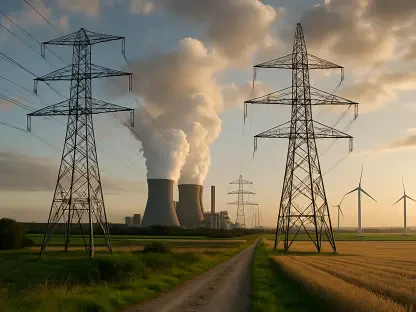
Transitioning to 765-kV is a monumental leap for Texas because it requires a completely new tier of engineering standards that we haven’t utilized locally before. Engineers must account for significantly larger tower structures and wider rights-of-way to manage the intense electromagnetic fields and insulation requirements inherent in such high voltages. By moving to this standard, we aren’t just adding a little more room; we are creating a high-capacity superhighway that allows for the seamless movement of power both into and out of regions like the Permian Basin. This bi-directional capability is vital for grid resilience, ensuring that while we support the massive 11,132 MW load expected this year, we can also balance the system as demand scales toward nearly 24,000 MW by 2030. It effectively eliminates the bottlenecks that often plague lower-voltage lines, providing a robust backbone that can withstand the dynamic shifts of a modern energy economy.
The interconnection queue for data centers and industrial sectors has reached hundreds of gigawatts. How do utility providers prioritize these massive load requests, and what specific grid enhancements are necessary to ensure that one industrial sector’s growth does not compromise the reliability of the broader system?
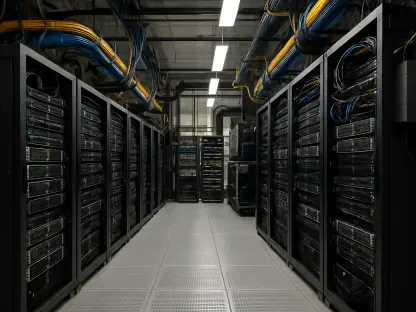
Managing a queue that includes 255 GW from data centers and another 18 GW from other industrial sectors requires a disciplined, data-driven prioritization strategy. Utility providers look at the readiness of the project and its economic impact, but the primary focus remains on maintaining the equilibrium of the Electric Reliability Council of Texas (ERCOT) region. To prevent one sector from overwhelming the grid, we are implementing large-scale reliability plans that involve multi-state-of-the-art switching stations, like the work being done at the Bell County East Switch. These enhancements act as shock absorbers for the system, allowing us to integrate high-density loads without triggering cascading failures or local outages. It is about building a system that is as flexible as it is strong, ensuring that the lights stay on for residential consumers even as industrial demand spikes.
Demand in the Permian Basin is expected to more than double by the late 2030s. What are the logistical complexities of constructing over 200 miles of transmission line across multiple counties, and how do you ensure the project remains on schedule to be energized by 2030?
Constructing a line that spans 214 to 244 miles is a logistical marathon that involves coordinating thousands of workers and moving massive amounts of specialized steel and equipment. We are currently navigating a timeline that requires a final route selection by September 2026 to ensure we meet our 2030 energization goal. The sheer scale of crossing multiple counties means we have to manage varying terrain and local regulations simultaneously while maintaining a rigid supply chain for high-voltage components. To stay on schedule, we use a phased approach where site preparation and procurement happen in parallel with the regulatory approvals, minimizing the “dead time” between a decision and actual construction. It is a high-stakes environment where any delay in station costs or material delivery can ripple through the entire six-year development cycle.
Project costs for these high-voltage expansions can reach nearly $2 billion, excluding substation upgrades. How are these massive capital expenditures managed between joint owners, and what metrics are used to justify such a significant investment to regulators and the public?
For a project of this magnitude, Oncor and LCRA have entered into a 50% divided ownership interest, which allows both entities to share the financial weight and the technical risks. We are looking at an estimated investment of $1.6 billion to $1.9 billion for the line alone, plus nearly $400 million for essential station upgrades, making transparency with the Public Utility Commission of Texas (PUCT) absolutely critical. We justify these costs by pointing to the “cost of inaction”—without these lines, the Permian Basin could face severe energy shortages as demand reaches 26,400 MW by 2038. Regulators evaluate the long-term reliability benefits and the economic growth facilitated by the 255 GW of potential commercial load, ensuring that the investment serves the public interest. It’s a calculated move to future-proof the Texas economy against the rising costs of energy instability and infrastructure deficits.
With a final route selection often occurring years before a project is completed, how do you navigate the environmental and community impact assessments? What strategies are used to balance the needs of local landowners with the state’s urgent requirement for increased power import capability?
Navigating route selection is one of the most sensitive parts of the process because it directly touches the lives and property of Texans. We work closely with the PUCT to evaluate multiple route options, weighing the environmental footprint against the technical necessity of the 765-kV infrastructure. Our strategy centers on open communication and early engagement with landowners to address concerns about land use and visibility before the final path is locked in. We strive to utilize existing corridors whenever possible to minimize the impact on virgin land, but the urgent need to support the state’s massive industrial growth sometimes requires difficult trade-offs. Ultimately, we aim for a solution that provides the necessary power import capability while showing the deepest possible respect for the communities that host this critical infrastructure.
What is your forecast for the Texas grid expansion?
I forecast that the current 765-kV buildout is only the beginning of a sustained, decades-long era of infrastructure “hyper-growth” for the Texas grid. As industrial load in the Permian Basin climbs from 11,132 MW today to over 26,000 MW in the late 2030s, we will likely see several more of these ultra-high-voltage loops proposed to encircle major economic hubs. The sheer volume of the 255 GW data center queue suggests that Texas is positioning itself as the global epicenter for energy-intensive industries, which will necessitate even more sophisticated bi-directional flow capabilities. While the financial and logistical hurdles are high, the state’s aggressive commitment to these multi-billion dollar projects ensures that ERCOT will remain one of the most resilient and capacity-rich grids in the world. Expect to see a more interconnected, high-voltage network that serves as a blueprint for other states facing similar rapid industrialization.