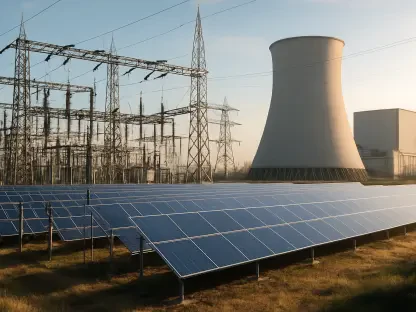

The immense weight of New York’s climate ambitions now rests squarely on the shoulders of its public power authority, tasked with a monumental challenge that pits green energy goals against the economic realities facing every ratepayer. As the state hurtles toward one of the most aggressive clean energy deadlines in the nation, the New York Power Authority (NYPA) finds itself at the center of a complex transition. The authority must not only catalyze a massive build-out of renewable generation but also safeguard the grid’s reliability and protect consumers from the steep costs inherent in such a transformation. This delicate balancing act defines NYPA’s updated strategic plan, a blueprint that will shape the state’s energy landscape for decades to come.
New York’s Public Powerhouse NYPA’s Pivotal Role in the Energy Transition
As a public entity, the New York Power Authority is uniquely positioned to steer the state’s energy future. Its core mission extends beyond simply generating power; it is fundamentally tasked with implementing New York’s aggressive climate mandates, including sourcing 70% of its electricity from renewables by 2030 and achieving a completely zero-emission grid by 2040. This places NYPA in a pivotal role, acting as both a developer and a market stabilizer to ensure these ambitious goals are met reliably and affordably.
Achieving this transition is not a solitary effort. NYPA operates within a dynamic ecosystem of public and private entities, each playing a critical role. Key private sector partners, including major developers like Forward Power, EDF Renewable Energy, and AES, are essential for constructing the large-scale wind and solar projects outlined in the state’s plans. Simultaneously, the state’s grid operator provides the crucial oversight needed to maintain stability, issuing warnings and guidance that directly influence the pacing and prioritization of new energy resources.
This strategic planning is heavily influenced by the rapid evolution of renewable technologies. The increasing viability of large-scale solar farms, next-generation wind turbines, and, critically, innovative long-duration energy storage solutions forms the bedrock of NYPA’s strategy. These technologies are no longer aspirational but are now integral components for building a resilient grid that can accommodate the intermittent nature of renewables, making them central to every decision the authority makes.
The 5.5-Gigawatt Blueprint Strategy Scale and Projections
From Aspiration to Action The Dynamic Evolution of NYPA’s Renewable Strategy
NYPA’s current renewable energy plan is the product of a significant strategic recalibration, reflecting a pragmatic response to shifting market conditions and project viability. The authority’s goals have evolved dynamically, initially starting with a 3-gigawatt (GW) plan before expanding to a more ambitious 7-GW proposal. The final approved 5.5-GW portfolio represents a calculated adjustment, balancing the urgency of the state’s mandates with the tangible economic and logistical realities of project development.
This evolution has also driven a clear trend toward portfolio diversification, moving beyond a singular focus to embrace a mix of technologies crucial for grid health. The strategic inclusion of 1,425 megawatts (MW) of large-scale solar, 800 MW of new wind projects, and 700 MW of advanced energy storage is designed to create a more robust and reliable energy system. This balanced approach helps mitigate the risks associated with dependency on a single energy source and enhances the grid’s ability to manage fluctuations in power generation.
By the Numbers Deconstructing NYPA’s Project Pipeline and Financial Commitments
The 5.5-GW plan is anchored by concrete project allocations and significant financial backing. The framework details specific capacities, with solar power constituting the largest portion of new development, followed by substantial investments in both onshore wind and distributed storage. This blueprint translates abstract goals into a tangible pipeline of projects set to be developed in partnership with established industry leaders.
Key performance indicators are tied to specific, high-impact facilities and partnerships. A standout project is the 500-MW compressed air energy storage facility, a venture that signals a serious investment in long-duration storage technology. This project, alongside wind farms developed by Forward Power and solar arrays by EDF and AES, forms the core of the build-out. To fund these initiatives, NYPA’s financial plan for 2026-2028 allocates a formidable $699 million specifically for renewable energy development, underscoring its commitment to turning this strategy into reality.
Navigating the Headwinds The Trilemma of Cost Reliability and Policy
At the forefront of NYPA’s challenges is the critical issue of consumer affordability. The transition to clean energy requires massive capital investment, the costs of which are ultimately borne by New Yorkers. Recognizing this, NYPA has publicly committed to pursuing the most cost-effective projects available, employing efficient and low-risk strategies to mitigate the financial burden on households and businesses across the state.
This financial pressure is compounded by significant policy instability and economic headwinds. Political shifts at the federal level can create an uncertain environment for renewable energy development, while economic factors like import tariffs on solar panels and wind turbine components, coupled with broader inflation, directly increase project costs. These external pressures force NYPA to constantly re-evaluate project economics and timelines, adding a layer of complexity to its planning.
Beyond cost, the risk to grid reliability looms large. The state’s grid operator has issued stark warnings of potential power shortages over the next five years if the pace of new generation and transmission upgrades does not keep up with demand and plant retirements. This places immense pressure on NYPA and its partners for timely project execution, as any delays could jeopardize the stability of New York’s electricity supply.
The Mandate and the Constraints How Legislation Shapes NYPA’s Path
A landmark 2023 legislative decision significantly expanded NYPA’s authority, empowering it to directly own and operate renewable generation assets. This was a strategic move designed to position NYPA to supplement private sector development, stepping in to build crucial projects when the private market is unable or unwilling. This clarifies NYPA’s role not as the sole provider of New York’s clean energy, but as a strategic intervenor ensuring the state stays on track to meet its goals.
The primary driver behind all of NYPA’s actions remains New York’s legally binding clean energy targets. The mandates to achieve 70% renewable electricity by 2030 and a 100% zero-emission grid by 2040 are not mere suggestions; they are the law. These deadlines create a powerful and unyielding impetus for NYPA’s aggressive development schedule and strategic investments in new technologies.
However, NYPA’s ability to act is shaped by a critical regulatory constraint. The law requires the authority to maintain majority ownership in its projects, which prevents it from selling equity stakes to private investors. This restriction limits its ability to recycle capital; selling a mature asset could free up funds to invest in a pipeline of new projects. This structural limitation effectively slows the potential velocity of development, forcing NYPA to rely more heavily on its existing capital and debt capacity.
Powering Tomorrow Projecting NYPA’s Impact on New York’s Grid
Looking ahead, there is a noticeable gap between public expectations and NYPA’s defined role. Stakeholder feedback has often called for a massive 15-GW build-out by the public authority, yet NYPA’s mandate is more measured. Its purpose is to complement private investment to ensure the state’s transition is faster and more equitable, not to single-handedly achieve the state’s climate goals. This distinction will be crucial in managing public perception and guiding future policy.
The potential of emerging technologies stands to be a true game-changer for New York’s grid. The investment in projects like the large-scale compressed air energy storage facility represents a forward-thinking bet on technologies that can solve the long-standing challenge of renewable intermittency. Such innovations could act as market disruptors, fundamentally improving grid resilience and reducing reliance on fossil-fuel peaker plants.
Over the next decade, the interplay between accelerated renewable development and growing electricity demand will define the state’s energy landscape. As sectors like transportation and heating electrify, the need for clean, reliable power will only intensify. NYPA’s success will be measured by its ability to bring its 5.5-GW portfolio online while ensuring the grid remains stable and capable of meeting this rising demand.
The Final Verdict A Pragmatic Strategy for a High-Stakes Future
The core findings confirm that NYPA’s 5.5-GW plan is a substantial and necessary step forward, yet it is a strategy tempered by the hard realities of economics, policy, and engineering. The adjustment from a higher 7-GW target signals a pragmatic approach, prioritizing viable projects that can be delivered on time and within a manageable cost structure, rather than pursuing ambition at any price.
Ultimately, NYPA’s ability to succeed hinges on its capacity to manage a delicate balance. It must simultaneously pursue New York’s nation-leading climate goals with urgency while shielding consumers from the potentially prohibitive costs of such a rapid transition. This dual mandate places the authority in a high-stakes position where every decision carries significant weight for the state’s environmental and economic future.
To ensure a stable and affordable energy transition, several areas demand focus. Efficient project execution is paramount to meet reliability needs and control costs. Furthermore, exploring innovative financing models that work within existing legal constraints will be critical for maximizing capital. Finally, proactive policy advocacy is essential to create a stable regulatory environment that supports, rather than hinders, the path to a clean energy grid.