
Setting the Stage for a Renewable Revolution
Imagine a future where the sun powers a majority of the U.S. energy needs, slashing carbon footprints and reshaping how electricity flows across the nation. This isn’t a distant dream but a tangible reality unfolding right now in 2025, as solar energy dominates new power generation capacity. With an astounding 75% of all new installations attributed to solar this year, the stakes for understanding its impact on the power grid have never been higher. This market analysis dives deep into the forces propelling solar to the forefront, examines the hurdles it faces, and projects its trajectory over the next few years. The purpose here is to equip stakeholders—utilities, policymakers, and businesses—with critical insights into how solar will redefine energy markets by 2028, amidst rising demand and complex challenges. Let’s explore why this renewable giant is becoming the backbone of America’s power grid.
Market Dynamics: Solar’s Unstoppable Rise
Dominance in New Capacity Additions
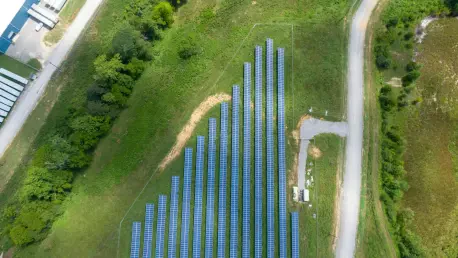
Solar energy has cemented its position as the titan of new power generation in the U.S. market. Data from the Federal Energy Regulatory Commission reveals that of the 28 gigawatts (GW) of new capacity installed so far this year, solar accounts for a staggering 21 GW—a commanding 75% share. This outstrips wind at 13% and natural gas at 11%, reflecting a seismic shift in energy investment priorities. The driving factors are clear: plummeting costs for photovoltaic technology and a robust appetite for power purchase agreements (PPAs) that lock in long-term revenue for developers. Yet, this rapid expansion strains existing transmission infrastructure, highlighting a pressing need for upgrades to maintain grid stability during peak solar production hours.
Cost Competitiveness and Demand Drivers
Beyond sheer volume, solar’s market edge lies in its economic appeal. The continuous decline in installation costs has made solar not just viable but often cheaper than traditional fossil fuels in many regions. Meanwhile, rising electricity demand—spurred by industrial growth, electrification of transport, and data center expansion—fuels the rush toward renewable solutions. Companies are increasingly signing PPAs to secure clean, cost-effective energy, a trend that strengthens solar’s foothold. However, intermittency remains a sticking point; without adequate storage solutions, reliance on solar during non-sunny periods could disrupt supply, posing risks to market confidence if not addressed swiftly.
Competitive Landscape: Solar vs. Other Sources
In the broader energy mix, solar’s ascent contrasts with the trajectories of competing sources. Natural gas, despite holding 42% of total installed capacity, is losing ground in new additions, while renewables collectively—solar, wind, and hydro—now sit at 31%. Coal continues its decline, with projections suggesting a complete phase-out by mid-century. Nuclear power, often pitched as a stable low-carbon option, lags far behind with minimal contributions to new capacity at just 0.2%. This competitive landscape underscores solar’s immediate dominance, though it must navigate a market where gas still wields significant influence and long-term nuclear growth looms after 2040.
Headwinds and Challenges in Solar’s Path
Policy Resistance and Regulatory Uncertainty
Despite its market momentum, solar faces substantial headwinds from political opposition. The current administration has taken steps to curb renewable growth, including the early termination of tax credits through recent legislation and heightened scrutiny on project approvals. Such policies have slowed some deployments, casting uncertainty over investor confidence. Nevertheless, the resilience of solar’s growth is evident, as market forces and prior commitments continue to drive installations. Balancing these regulatory challenges with the undeniable demand for clean energy will be crucial for sustaining momentum through 2028.
Grid Integration and Regional Disparities
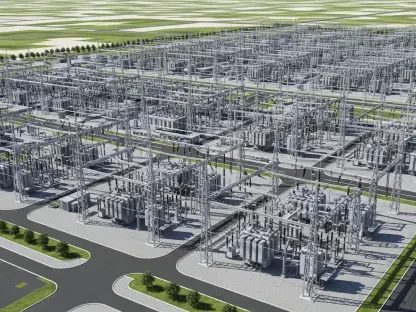
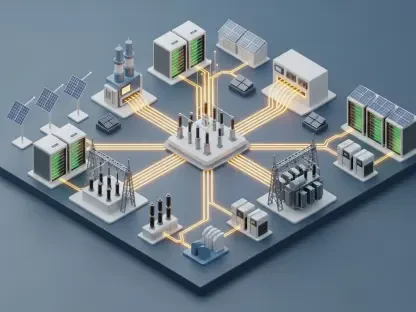
Integrating solar into the national grid presents technical and geographic complexities. High-solar states like California and Texas benefit from ample sunlight and supportive policies, yet other regions struggle with outdated infrastructure or regulatory barriers. Solutions like advanced energy storage and smart grid technologies are emerging, but their uneven adoption exacerbates disparities. Addressing these gaps demands coordinated federal and state efforts to modernize the grid, ensuring that solar’s benefits are not limited by location or capacity constraints, a challenge that could define market dynamics in the coming years.
Future Outlook: Solar’s Path to 2028 and Beyond
Looking ahead, solar energy is poised to peak in capacity additions by 2028, with projections estimating 91 GW of new installations, representing 67% of total anticipated capacity. This forecast, driven by sustained cost advantages and technological innovations such as improved battery storage, suggests solar will further reshape the energy mix. Regulatory landscapes remain a wildcard, with potential policy shifts either bolstering or hindering progress. Meanwhile, long-term trends point to a complementary role for nuclear power after 2040, while natural gas continues to displace coal. By 2028, solar’s influence could push renewables closer to overtaking gas, fundamentally altering grid composition.
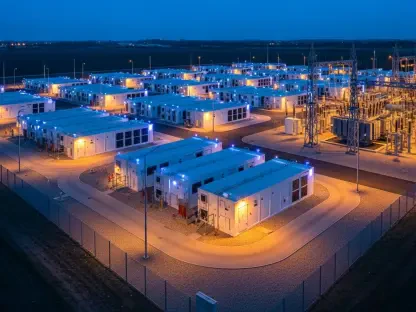
Technological advancements will play a pivotal role in this trajectory. Next-generation solar panels promise higher efficiency, while storage solutions mitigate intermittency, ensuring reliability. Market analysts anticipate that these innovations, coupled with growing corporate demand for sustainable energy, will solidify solar’s position. However, without strategic investments in transmission networks, bottlenecks could limit scalability. The path forward hinges on aligning infrastructure development with these market trends to meet escalating electricity needs over the next few years.
Reflecting on Solar’s Transformative Impact
Looking back, the analysis painted a vivid picture of solar energy’s meteoric rise, with 21 GW added this year alone, claiming 75% of new capacity. Challenges like policy pushback and grid integration issues tested the sector’s resilience, yet market drivers—cost declines and surging demand—proved stronger. The projection of 91 GW by 2028 underscored solar’s enduring dominance. For utilities and businesses, the takeaway was clear: invest in storage and grid modernization now to harness solar’s potential. Policymakers needed to prioritize balanced regulations that supported renewable growth without stifling innovation. As the energy landscape evolved, the strategic focus shifted to building a robust framework that could sustain this renewable wave, ensuring a cleaner, more secure power grid for future generations.