The very surfaces of our cities, from the shimmering glass of downtown skyscrapers to the vast brick walls of industrial complexes, represent an enormous, untapped reservoir of potential energy. A new generation of flexible, building-integrated photovoltaic technology, often described as “solar skin,” is poised to harness this potential, moving far beyond the conventional constraints of rigid, rooftop-mounted panels. This innovation promises to fundamentally reshape how buildings are designed and how urban environments generate power, offering a solution uniquely tailored to Michigan’s specific energy needs and architectural landscape. By turning the static fabric of urban structures into dynamic, power-generating assets, this technology could redefine the relationship between our cities and the energy that fuels them, paving the way for a more resilient and sustainable future.
The Constraints of Conventional Photovoltaics
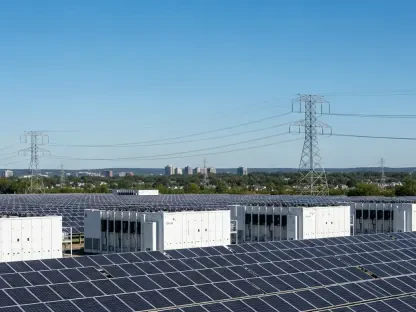
For decades, the expansion of solar energy has been defined by a static form factor: silicon-based, rigid panels mounted on rooftops or arranged in large, land-intensive solar farms. While this model has been instrumental in growing Michigan’s renewable energy capacity, it carries inherent limitations that are becoming increasingly apparent in modern urban contexts. This traditional approach is often impractical in dense city centers like Detroit, Grand Rapids, and Ann Arbor, where available rooftop space is a scarce and highly valuable commodity, frequently occupied by HVAC systems, green roofs, or recreational areas. Consequently, the conventional model fails to capitalize on the vast, untapped energy-generating potential of the vertical surfaces that constitute the majority of a building’s exterior, leaving a significant resource underutilized. This spatial inefficiency restricts the scalability of solar power in the very areas where energy demand is most concentrated, creating a significant barrier to achieving urban energy independence.
These limitations are particularly pronounced within Michigan’s unique economic and developmental profile, which presents a distinct set of structural and architectural challenges. The state’s landscape is characterized by a large inventory of industrial and commercial buildings, including sprawling automotive facilities, where strict roof load capacities can prohibit the installation of heavy, conventional solar arrays. Furthermore, the complex designs of many modern and historical buildings, featuring curved surfaces, intricate façades, and non-standard geometries, are incompatible with the rigid, rectangular nature of traditional panels. These architectural barriers effectively exclude a significant portion of the state’s building stock from participating in on-site solar generation. HelioSkin and similar flexible materials offer a direct solution to these obstacles by turning previously passive vertical and non-uniform surfaces into active power generators, thereby unlocking new design possibilities for Michigan’s architecture, construction, and real estate sectors.
A New Paradigm in Solar Integration
At the forefront of this technological evolution is HelioSkin, a cutting-edge photovoltaic material developed by researchers at Cornell University that represents a paradigm shift in how we envision solar energy. It is not a panel but rather a customizable “solar skin,” engineered with a bio-inspired design that mimics the way plants strategically orient themselves to maximize sunlight absorption throughout the day. This is achieved through a combination of advanced, flexible materials and sophisticated geometry that allows the material to capture light effectively across irregular and non-horizontal surfaces. Unlike its rigid predecessors, HelioSkin can be wrapped around the architectural elements of a building, seamlessly conforming to curved façades, support columns, and other structural features that are entirely incompatible with traditional solar hardware. This capability recasts the very structure of a building as a power-generating asset, integrating renewable energy directly into the architectural fabric rather than treating it as a subsequent, often obtrusive, addition.
While HelioSkin is still in the research and prototype phase and currently trails conventional panels in raw efficiency per square foot, its true promise lies in its immense scalability and versatile placement. The technology’s value is not derived from maximizing output on a small, ideal surface but from its ability to convert a significantly larger portion of a building’s total exterior into an active solar collector. By activating the vast, previously dormant real estate of vertical walls and complex architectural forms, the sheer scale of the energy-generating surface can more than compensate for a lower per-unit efficiency. This approach fundamentally alters the economic and logistical calculations for urban solar projects, making on-site generation feasible for a much wider range of buildings and environments. It shifts the focus from optimizing small, flat spaces to harvesting ambient energy from the entire built environment, creating a more holistic and integrated energy ecosystem within our cities.
Addressing Michigan’s Modern Energy Demands
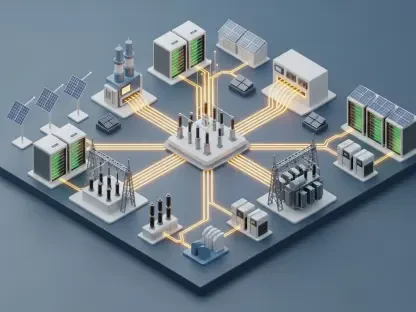
This technological innovation arrives at a critical juncture for Michigan’s energy grid, which is experiencing a significant and sustained surge in electricity demand. This increase is driven by a confluence of powerful trends, including the widespread electrification of transportation through the adoption of electric vehicles (EVs), the proliferation of energy-intensive AI data centers, and the ongoing modernization of the state’s advanced manufacturing base. In this context, HelioSkin and similar technologies emerge as a vital tool to help manage this rising demand by promoting distributed energy generation. By allowing individual buildings to produce their own power directly on-site, these integrated photovoltaics can alleviate strain on the central grid, particularly during peak demand periods. This enhances overall energy resilience, reduces transmission losses, and supports the state’s broader clean-energy objectives, providing a decentralized solution to a centralized challenge.
The value of building-integrated solar technology is further amplified by Michigan’s evolving state policy landscape. Recent changes, including a shift from traditional net metering to a more complex inflow/outflow compensation model for residential solar, are altering the financial incentives for energy producers. Simultaneously, new laws that limit the ability of homeowners’ associations (HOAs) to restrict rooftop solar installations signal a political will to expand access to renewable energy. In this dynamic environment, technologies that can expand solar generation without competing for limited or restricted roof space are exceptionally valuable. Solar skin provides a powerful alternative, enabling property owners in urban and suburban settings to circumvent spatial and aesthetic restrictions by integrating power generation directly into the building’s façade, thus aligning perfectly with both market trends and a supportive regulatory climate.
The Future Woven into Our Built Environment
The analysis concluded that while traditional flat panels were set to remain the cornerstone of Michigan’s solar energy growth for the foreseeable future, the next critical phase of innovation would focus on fundamentally expanding the definition of a solar-capable surface. The trend was clearly moving away from a singular focus on incrementally increasing the efficiency of a static form factor and toward creating a diverse ecosystem of solar solutions that were flexible, integrated, and architecturally harmonious. Innovations like HelioSkin signaled a future where solar power was not just placed upon buildings but was intricately woven into the very fabric of Michigan’s built environment. This profound shift from add-on to built-in technology held the potential to unlock vast new energy resources, particularly in the state’s dense urban and industrial centers. It was determined that this transition would be pivotal as Michigan navigated the complex interplay between its goals for economic development, the pressing need for grid reliability, and its long-term clean-energy aspirations.