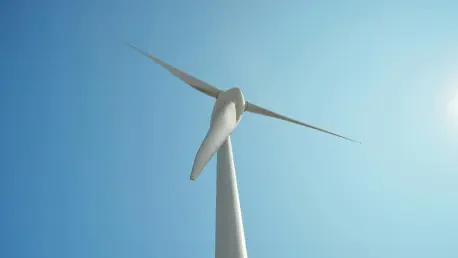

A recent video capturing a massive wind turbine shedding large sheets of ice while spinning through a blizzard has sparked widespread debate and confusion, challenging common perceptions about renewable energy’s reliability in extreme cold. For many viewers, the spectacle of ice being flung from the rotating blades appeared to be a sign of catastrophic failure, reinforcing a popular but inaccurate belief that turbines are fragile and freeze solid during winter storms. However, this dramatic display was not a malfunction. Instead, it showcased a sophisticated, intentionally designed feature that allows modern turbines to operate continuously and safely in the harshest of conditions. This behavior, which may seem alarming to the untrained eye, is the result of advanced engineering specifically developed to conquer icy weather, revealing a level of resilience that often goes unappreciated in public discourse. The phenomenon highlights a significant gap between public perception and the technological reality of today’s wind energy systems, which are increasingly built to withstand and even thrive in environments once thought to be prohibitive.
The Engineering Behind Winter Resilience
Active Ice Mitigation Systems
At the core of a wind turbine’s ability to combat severe icing is a suite of active ice mitigation technologies, primarily centered on sophisticated blade-heating systems. These are not rudimentary add-ons but are integrated directly into the blade’s structure during manufacturing. The most common methods involve circulating heated air through the hollow interior of the blades or embedding carbon fiber heating elements just beneath the blade’s surface. These systems work proactively, creating a crucial temperature differential that prevents ice from forming a strong, monolithic bond with the blade material. By maintaining the blade surface at a temperature just above freezing, any moisture that accumulates forms a weaker, more brittle layer of ice or a thin film of water at the interface. This engineered “weak point” is the key to the entire de-icing process, ensuring that the ice cannot adhere with enough force to disrupt the blade’s aerodynamic profile or create a dangerous imbalance. This controlled heating is a testament to the meticulous design that allows these structures to function in sub-zero temperatures.
The effectiveness of internal heating systems is magnified by the natural forces generated by the turbine’s own operation. Once the bond between the ice and the blade has been sufficiently weakened, the combination of centrifugal force from the rotation and the pull of gravity takes over. As the blades spin, the outward force exerts immense pressure on the loosened ice sheets, causing them to fracture and detach. This process is what creates the dramatic shedding effect seen in viral videos. It is a controlled, dynamic self-cleaning mechanism, not a chaotic failure. The operational vibrations of the turbine also play a subtle but important role, contributing to the cracking and dislodging of the ice. Engineers design these systems to work in concert, ensuring that ice is shed in a balanced and predictable manner to prevent rotor imbalance, which could otherwise damage the turbine. This synergy between internal technology and external physics allows the turbine to maintain operational efficiency and safety without requiring a complete shutdown during most icing events.
Designing for the Cold from the Ground Up
The resilience of wind turbines in frigid climates extends far beyond active de-icing systems; it is fundamentally embedded in their initial design and material composition. Turbines destined for cold-weather regions, such as those in Northern Europe, Canada, and parts of the United States, are constructed using specialized materials engineered to withstand extreme temperatures. Standard steel can become brittle and fracture below certain temperatures, so these turbines utilize advanced steel alloys and composite materials for the tower and blades that retain their ductility and strength in conditions as low as -30° C (-22° F). Furthermore, critical components like the gearbox, generator, and hydraulic systems are protected with specialized lubricants and insulation that prevent freezing and ensure smooth operation. Many turbines are also equipped with sophisticated sensors that monitor ice accumulation in real-time. If the buildup exceeds safe operational limits, the system can automatically pause operation to prevent damage, a programmed safety feature that is often misinterpreted as a system failure.
Interestingly, cold weather is not entirely an adversary to wind power generation; in some respects, it can be an advantage. A key principle of physics dictates that cold air is denser than warm air. This increased density means that for the same wind speed, a greater mass of air flows over the turbine’s blades per second. The increased mass flow translates directly into greater kinetic energy, which in turn allows the turbine to generate more power. This phenomenon can help offset any minor efficiency losses caused by the energy consumed by internal heating systems. While icing presents a significant engineering challenge that must be actively managed, the underlying atmospheric conditions of cold climates can simultaneously provide a more potent energy resource. This complex interplay demonstrates that the relationship between wind turbines and winter weather is far more nuanced than a simple battle against the cold, involving a calculated balance of risk mitigation and performance optimization to harness the power of the wind effectively, regardless of the season.
Challenging Misconceptions in the Digital Age
The Narrative Power of Viral Content
The viral TikTok video from the user @ntrxenergy serves as a powerful case study in how visual media can shape public understanding—or misunderstanding—of complex technology. The footage, showing a turbine actively shedding ice, was presented without technical context, leading many viewers to conclude that the machine was breaking apart. This interpretation quickly fueled a narrative that wind energy is unreliable and ill-suited for cold climates, a common talking point among critics of renewable energy. However, for industry experts and engineers, the video was a compelling, real-world demonstration of a highly effective de-icing system functioning exactly as intended. The incident highlights a critical vulnerability in the digital age: a visually dramatic but misunderstood event can spread rapidly across social media platforms, embedding a false narrative in the public consciousness far more effectively than a detailed technical explanation ever could. The gap between what was seen and what was actually happening underscores the urgent need for clear, accessible communication from the energy sector.
The widespread misinterpretation of the ice-shedding event reveals a broader challenge facing the renewable energy industry: overcoming deeply ingrained public skepticism with factual and engaging information. The perception of wind turbine fragility during winter storms, amplified by such viral moments, can have real-world consequences, influencing public opinion and potentially swaying policy decisions regarding energy infrastructure investments. Without a concerted effort to provide context, each video or image of an ice-covered turbine becomes another piece of “evidence” for those arguing against the viability of wind power. This dynamic places a significant burden on scientists, engineers, and communicators to proactively educate the public, using the very same digital platforms to disseminate accurate information. The goal is to transform moments of public confusion into educational opportunities, explaining that what appears to be a weakness is, in fact, a carefully engineered strength, thereby reframing the narrative from one of failure to one of innovation and resilience.
A Synthesis of Technology and Perception
The analysis of modern wind turbine capabilities ultimately confirmed that cold-weather adaptation is not a novel or reactive fix but a deeply integrated aspect of contemporary energy engineering. The technologies enabling turbines to operate in freezing conditions—from internal blade heating to the use of advanced, low-temperature materials—were developed over years of research and deployment in some of the world’s harshest climates. The industry’s approach has been holistic, addressing not only the obvious challenge of ice accumulation but also the less visible issues like material brittleness and lubricant performance. This has resulted in robust systems that are purposefully designed for their operational environments, a fact that stands in stark contrast to the persistent public image of them as delicate structures easily defeated by a winter storm. The effectiveness of these systems proved that the challenge of winter is a solved problem from an engineering standpoint.
Looking back, the viral video of the ice-shedding turbine served as an unintentional yet valuable educational moment. It exposed a significant disconnect between the reality of wind energy technology and the public’s perception of it, a gap largely fueled by a lack of accessible information. This event underscored that the next frontier for wind energy is not just technological but also communicational. As renewable systems become more prevalent, it will be crucial for the industry to move beyond simply building resilient infrastructure and focus on building public understanding and trust. The successful operation of a turbine in a blizzard was not the story; the real story was that so many people were surprised by it. This highlighted the need for more transparent and proactive communication strategies that can turn moments of potential misinformation into opportunities for demonstrating the remarkable resilience and reliability of modern renewable energy.