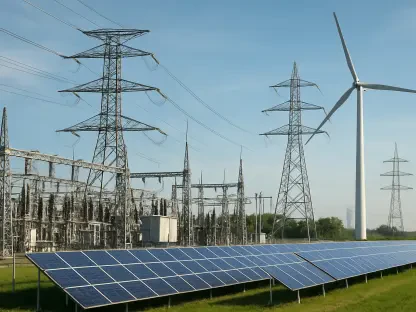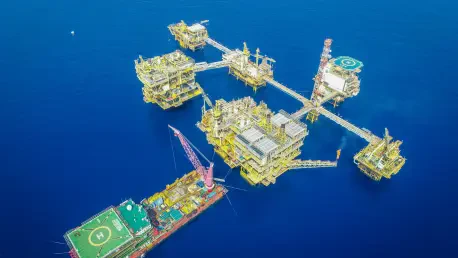

Offshore wind farms, while a cornerstone of renewable energy, present a notable paradox by occupying vast expanses of the ocean while the turbines themselves utilize less than one percent of this marine footprint. A groundbreaking review from researchers at the University of Surrey explores an innovative solution that could revolutionize how we harness the ocean’s power. By integrating multiple energy harvesting technologies—specifically wind, wave, tidal, and solar—onto single, shared offshore platforms, these hybrid systems promise to dramatically increase power output from a fixed area. This multidisciplinary strategy not only optimizes construction and operational costs but also enhances the stability and reliability of the energy supply, representing a significant leap forward in the sustainable exploitation of marine renewable resources.
Maximizing Efficiency and Economic Viability
Synergy in Power Generation
The core advantage of hybrid offshore platforms lies in the complementary nature of different renewable energy sources, which work in concert to create a far more stable and potent power supply than any single source could achieve alone. Data synthesized from key demonstration projects highlights this synergy, revealing that the integration of tidal turbines with offshore wind installations can increase total power generation by a remarkable 70 percent. This enhancement is not merely an additive effect; it stems from the fundamental differences in the availability of each resource. Wind is notoriously variable and intermittent, while tidal flows are highly predictable and consistent, driven by celestial mechanics. Similarly, ocean waves, generated by wind over large distances, often provide a more persistent energy source that can fill the gaps when wind speeds are low. This creates a balanced and smoothed power profile, significantly improving the overall reliability of the energy delivered to the grid.
This enhanced consistency has profound implications for the broader energy system, as it directly addresses one of the primary criticisms leveled against renewable sources: their intermittency. A more stable power output from a hybrid offshore platform reduces the need for expensive and carbon-intensive backup systems, such as natural gas peaker plants, which are typically kept on standby to compensate for fluctuations in renewable generation. The predictable and reliable nature of the combined output simplifies grid management and integration, allowing for a higher penetration of renewable energy without compromising grid stability. Projects like the multi-source NoviOcean platform have demonstrated the potential to achieve capacity factors approaching 40 percent, a substantial improvement over the performance of conventional offshore wind farms. This synergistic relationship between different marine energy forms transforms disparate, fluctuating sources into a cohesive, dependable, and highly efficient power generation asset.
Driving Down Costs
Beyond boosting power output, the integration of multiple energy technologies onto a single foundation yields substantial economic benefits, making offshore energy more competitive. A detailed analysis of pioneering projects, including Norway’s W2Power wind-wave system, has revealed that these hybrid configurations can achieve cost reductions of 10 to 15 percent in the levelized cost of electricity (LCOE) when compared to developing separate, single-source offshore wind farms. These savings are realized through the strategic sharing of high-cost infrastructure and logistical resources. A unified foundation, mooring system, and subsea power cable can serve multiple generation technologies, eliminating the redundant capital expenditures associated with building separate installations. This consolidation streamlines the entire construction and installation process, from manufacturing to deployment, leading to significant upfront cost reductions.
Furthermore, the economic advantages extend well into the operational phase of the platform’s life. Sharing a common structure simplifies and consolidates operations and maintenance (O&M) activities, which are a major cost driver for offshore energy projects. Maintenance crews can service wind turbines, wave energy converters, and tidal turbines during a single visit, reducing vessel transit times and associated fuel costs. This integrated approach also optimizes the use of specialized personnel and equipment. The long-term financial model is further strengthened by the increased revenue generated from the higher and more consistent power output. By maximizing the energy yield from a single leased sea area and its associated infrastructure, hybrid platforms offer a more attractive and de-risked investment proposition, accelerating the financial viability and commercial-scale deployment of offshore renewable energy.
Engineering Advancements and Remaining Hurdles
Enhancing Structural Integrity
A critical concern for any structure built to withstand the relentless forces of the open ocean is its long-term durability, and one might assume that adding more equipment would increase structural stress. However, research into hybrid platforms reveals a counterintuitive benefit: the integration of certain technologies can actively enhance the platform’s stability. For instance, studies have shown that incorporating wave energy converters (WECs) with floating wind turbines can improve the overall stability of the platform by mitigating unwanted motions, such as pitch and heave, by approximately 15 percent. These WECs act as dynamic dampers, absorbing and converting wave energy that would otherwise induce significant movement in the floating structure. This stabilizing effect is crucial for optimizing the performance of the wind turbine and reducing mechanical wear.
This inherent dynamic synergy has profound implications for the entire system’s longevity and operational reliability. By reducing the amplitude of platform motion, the integrated system significantly lessens the cyclic loading and mechanical stresses experienced by the tower foundation, mooring lines, and other critical structural components. This reduction in material fatigue can extend the functional lifespan of the entire infrastructure, a vital consideration for assets designed to operate for 20 to 30 years in a harsh marine environment. Moreover, a more stable platform allows the wind turbine to operate more efficiently across a wider range of sea states, further increasing its energy yield and overall economic return. This symbiotic relationship, where one technology enhances the performance and durability of another, represents a paradigm shift in offshore platform design, transforming a potential liability into a significant engineering advantage.
Assessing Technological Readiness
While the concept of hybrid offshore energy holds immense promise, the technological maturity of different system configurations varies significantly, influencing their immediate commercial prospects. Among the various combinations, wind-wave energy systems are currently the most technologically advanced. Having progressed through extensive research, development, and a series of pilot-scale demonstrations, several of these systems are already in operation at various locations globally. This progress is largely due to the natural co-location of strong wind and wave resources and the relative compatibility of their respective technologies. The accumulated operational data from these pilot projects is providing invaluable insights into performance, reliability, and economic feasibility, paving the way for the first commercial-scale deployments in the near future.
In contrast, other promising hybrid combinations are at an earlier stage of development. Systems that combine wind with solar or tidal energy, for example, are considered emergent and face distinct technological and economic hurdles that must be overcome to become commercially viable. Integrating large-scale solar arrays onto offshore platforms presents challenges related to corrosion, structural loading, and maintenance in a saline environment. Similarly, while the predictable nature of tidal energy is highly attractive, the engineering required to integrate tidal turbines into a floating platform alongside a wind turbine is complex and costly. Despite these challenges, advanced platforms that integrate three or more energy sources, such as the NoviOcean project, have already demonstrated their potential in pre-commercial trials, achieving impressive performance metrics that underscore the long-term value of continued research and development in these emergent configurations.
Overcoming Key Challenges
Despite the significant progress in hybrid offshore technology, critical gaps in knowledge remain, posing hurdles to immediate large-scale commercial deployment and widespread investor confidence. A major area of concern identified in recent analysis is the lack of comprehensive data on the resilience of these complex, multi-component systems during extreme marine events. The vast majority of existing studies, simulations, and pilot projects have focused on performance under idealized or typical operational conditions. There is a pressing need to understand how these integrated platforms will withstand the immense forces generated by rare but catastrophic events like hurricanes, earthquakes, and tsunamis. Without robust engineering frameworks and validated models for survivability in extreme seas, the perceived risk for investors and insurers remains high, potentially slowing the transition from demonstration to commercial-scale projects.
This need for real-world validation extends to the long-term mechanical and structural performance of the platforms themselves. The foundations, whether fixed or floating, will be subjected to relentless, complex cyclic forces from the combined action of wind, waves, and currents for decades. The long-term effects of this multi-source loading on material fatigue, corrosion, and structural integrity are not yet adequately understood. To bridge this knowledge gap and build the necessary industry confidence, the research community emphasizes the urgent need for accelerated testing protocols conducted in challenging, real-world offshore environments. This includes deploying full-scale prototypes in energetic sea states and instrumenting them to collect high-fidelity data on structural response and material degradation over extended periods. Only through such rigorous, evidence-based validation can the industry de-risk these innovative technologies and unlock their full commercial potential.
The Path to a Sustainable Future
Balancing Energy and Ecology
A paramount benefit of hybrid offshore platforms is their potential to significantly reduce the environmental footprint of marine energy generation. The efficient use of ocean space is a key ecological advantage underscored by experts in the field. By maximizing the energy output from a smaller physical and ecological area, hybrid systems can minimize spatial conflicts with other vital marine activities and ecosystems. A single, consolidated platform reduces the overall seabed area required for foundations and cabling compared to separate, sprawling installations for each energy type. This condensed footprint can help preserve sensitive marine habitats, protect commercial fisheries, and avoid interference with critical migratory paths for marine mammals, sea turtles, and birds, making energy development more compatible with ocean conservation goals.
However, realizing these environmental benefits requires a proactive and rigorous approach to ecological stewardship. To ensure that these innovative systems truly harmonize with marine ecosystems, researchers advocate for the implementation of extensive, long-term environmental monitoring programs to accompany all demonstration and commercial projects. This monitoring should assess a wide range of potential impacts, from underwater noise and electromagnetic fields to changes in local hydrodynamics and their effects on marine life. Collecting this data is critical for validating the low-impact claims of hybrid platforms and for developing adaptive management strategies to mitigate any unforeseen consequences. By integrating comprehensive environmental science with cutting-edge engineering from the outset, the industry can ensure the sustainability of these systems over their projected 20 to 30-year operational lifetimes and build public trust in the future of offshore renewable energy.
A Holistic Approach to Commercialization
The journey of hybrid offshore energy systems from promising concept to commercial reality ultimately depended on a holistic and integrated strategy that extended far beyond engineering innovation. The successful path to commercialization required a convergence of technical advancements with enabling public policies, supportive financial incentives, and strategic investments in grid infrastructure. Governments played a crucial role by establishing clear regulatory frameworks and offering mechanisms like contracts-for-difference or tax credits that de-risked early-stage projects and attracted private investment. Furthermore, the expansion of high-capacity subsea transmission networks was essential to carry the increased power output from these highly productive offshore hubs to onshore population centers, ensuring that the energy generated could be effectively utilized.
This multifaceted approach also necessitated the parallel development of a specialized supply chain and a skilled workforce. The unique demands of deploying and maintaining multi-technology platforms called for the creation of critical infrastructure, such as custom-built vessels optimized for complex installation and service operations. Concurrently, vocational training programs and university curricula were adapted to equip engineers, technicians, and marine operators with the cross-disciplinary skills required to manage these sophisticated systems. As the global community worked to decarbonize its energy sector and meet ambitious goals, such as Europe’s target of 42.5 percent renewable energy consumption by 2030, this coordinated effort proved instrumental. By synergizing technology, policy, finance, and human capital, hybrid offshore platforms were successfully positioned as a revolutionary solution, unlocking unprecedented gains in energy output and grid reliability while preserving marine ecosystems for a sustainable future.