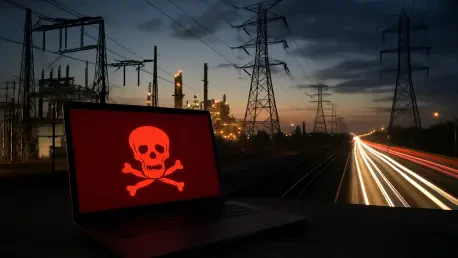

The digital battleground has shifted from mere data theft to the direct manipulation of the physical machinery that sustains modern American life, specifically targeting the electrical and water systems. Recent warnings issued by the Cybersecurity and Infrastructure Security Agency and the National Security Agency have identified “Iranian-affiliated” advanced persistent threat actors as the primary aggressors in this new era of operational technology warfare. These state-linked hackers are capitalizing on heightened geopolitical tensions to launch sophisticated strikes that bypass traditional IT defenses. By focusing on the technological backbones of American infrastructure, these actors are transforming cyber operations into a primary tool for international retaliation. This isn’t just about stealing secrets anymore; it’s about the ability to remotely disable power plants or contaminate water supplies from thousands of miles away, creating a scenario where code becomes a kinetic weapon capable of causing real-world chaos across the entire nation.
Institutional Defense: Monitoring and Response Strategies
In response to these active threats, federal agencies and industry watchdogs have moved into a state of high alert to protect the North American energy sector from potential disruptions. The North American Electric Reliability Corp. is currently working alongside the Department of Energy to monitor the national grid for any signs of compromise or unauthorized access. This coordinated effort focuses on the rapid sharing of actionable intelligence through the Electricity Information Sharing and Analysis Center, which serves as a central hub for threat data. By lowering the threshold for reporting suspicious activity, authorities hope to create a culture of hyper-vigilance among facility managers and engineers. This shift in reporting standards ensures that even minor anomalies are scrutinized by federal analysts. The objective is to identify and neutralize threats before they trigger cascading failures across the interconnected national network, where a single localized failure could potentially snowball into a regional blackout.
Beyond just monitoring, the collaboration between the National Security Agency and the Department of Energy involves the deployment of advanced sensor technologies across critical nodes of the infrastructure. These sensors are designed to detect subtle attacks where hackers might remain dormant for months while mapping out internal system architectures. This proactive stance is essential because traditional antivirus software is often ineffective against the bespoke malware used by state-sponsored groups. Furthermore, the information sharing center is now facilitating real-time data exchanges between private utility owners and government intelligence assets. This synergy allows for the dissemination of specific indicators of compromise, such as unusual traffic patterns or unauthorized firmware updates, within minutes of detection. The strategy hinges on the belief that a collective defense is the only way to safeguard a decentralized grid. This institutional framework creates a safety net that bridges the gap between private enterprise and national security interests effectively.
Systemic Risks: Structural Vulnerabilities and Legacy Hardware
The scale of the threat is magnified by the sheer volume of vulnerable endpoints, with experts estimating that between 50% and 80% of U.S. grid control points rely on programmable logic controllers. These ruggedized industrial computers are the invisible workhorses of modern infrastructure, responsible for automating physical processes such as controlling the flow of water or managing electrical distribution within a substation. There are as many as two million of these controllers currently deployed across various critical sectors, many of which were integrated during previous infrastructure expansion cycles. The primary danger lies in the ability of hackers to infiltrate these devices and alter software configurations or provide false data to human-machine interfaces. Such malicious interactions allow attackers to deceive human operators into believing a system is functioning normally when it is actually being sabotaged. This systemic vulnerability threatens a wide range of manufacturers and risks both physical shutdowns and massive financial damage across the sector.
Compounding this issue is the reality that many of these units are legacy systems designed decades ago, long before the era of sophisticated cyber warfare became a primary concern for national security. These older units often lack the modern encryption or robust authentication protocols necessary to block state-sponsored hackers who utilize specialized tools to exploit unpatched firmware. Upgrading this massive installed base of outdated technology is a monumental task, as many of these systems are embedded in critical components that cannot be easily taken offline for maintenance. This creates a vast and persistent attack surface that is extremely difficult to secure quickly, even with the increased funding and attention of 2026. Furthermore, many of these devices were built with the assumption of security through obscurity, a concept that has been thoroughly dismantled by the accessibility of industrial control system manuals online. As a result, the very hardware meant to provide stability to the grid has become one of its most significant liabilities.
Operational Security: Resilience and the Path Forward
Industry leaders, including the Edison Electric Institute, emphasize that defending against such threats is a long-standing priority and that public-private partnerships are key to national resilience. Through the Electricity Subsector Coordinating Council, utilities are continuously refining their security protocols and sharing real-time data to stay ahead of adversaries who are constantly evolving their tactics. This collaboration ensures that the nation’s power supply remains stable even under the pressure of targeted digital strikes, though the complexity of the current threat landscape requires constant adaptation. Utilities are now investing heavily in redundant communication paths and hardware-based security modules to isolate critical control logic from the open internet. These measures are designed to create a fail-safe environment where even if the external network is breached, the core operational functions remain intact. This approach shifts the focus from purely preventing entry to ensuring that the system can survive and recover.
The transition toward more secure architectures also involves the adoption of zero-trust principles within operational technology environments. In this model, every user and device must be continuously verified, regardless of their location on the network, which significantly limits the lateral movement of an attacker who manages to gain an initial foothold. This is a departure from older perimeter-based security models that assumed everything inside the network was inherently safe. Building on this foundation, many utility companies are now implementing advanced behavioral analytics that monitor for deviations in normal system behavior. If a controller suddenly starts communicating with an unknown external server or attempts to modify its own logic outside of a scheduled maintenance window, the system can automatically trigger a lockdown. This type of proactive, automated response is becoming the standard for 2026, as human operators alone cannot react fast enough to the speed of modern cyber-attacks. These investments are critical for maintaining public trust in the grid.
Strategic Oversight: Auditing in a Volatile Geopolitical Climate
Despite the efforts of utility companies, cybersecurity experts warned that the current situation must serve as an urgent wake-up call for the entire infrastructure sector. The focus shifted toward operational resilience, which assumed the environment could not be fully trusted and required systems to function even during an active compromise. Utilities were urged to conduct deep-dive audits to discover sleeper malware or hidden vulnerabilities that foreign actors might have already planted. These inspections focused on verifying the integrity of firmware and auditing all remote access points that could be exploited. Operators implemented rigorous configuration management to ensure that any unauthorized change was immediately flagged and reversed. Furthermore, organizations prioritized the training of specialized incident response teams capable of navigating the unique challenges of industrial control systems. These proactive measures represented a critical shift in strategy, ensuring that the defense of the nation’s water and power remained robust against the persistent threats from adversaries.
To maintain this momentum, infrastructure providers prioritized the decoupling of sensitive control networks from business systems that were more susceptible to phishing and other common entry vectors. This physical and logical segmentation ensured that a breach in the corporate office did not translate into a blackout in the field. Engineers also looked toward the implementation of immutable logging systems, which prevented attackers from deleting their tracks after a compromise. These logs provided the forensic evidence needed to understand the scope of an intrusion and prevented similar attacks from succeeding in the future. By moving toward a posture of continuous monitoring and rapid recovery, the industry moved away from reactive defense and toward a more durable state of preparedness. These steps provided a blueprint for other sectors, such as transportation and healthcare, to follow as they faced similar digital threats. The collective effort served to harden the nation against the invisible front lines of modern international conflict and secured the services that citizens relied upon daily.