
In the complex world of energy, few transitions are as dramatic and telling as the one currently unfolding in California. To help us understand this monumental shift, we’re speaking with Christopher Hailstone, a leading expert in energy management and grid reliability. With years of experience on the front lines of electricity delivery, he offers a unique perspective on the seismic changes happening as solar power surges and natural gas recedes. Our conversation will explore the operational realities behind the steep decline in natural gas, the technological and economic drivers of the battery storage boom, the critical infrastructure challenges that lie ahead, and how grid operators are learning to manage an increasingly renewable-powered system in the face of climate volatility.
The EIA reports natural gas saw its “largest year-over-year drop” in 2025, declining 17% from 2024. Beyond the growth of solar, what specific market or operational factors drove this sharp decline, and can you describe the minute-by-minute adjustments grid operators make when solar generation ramps up?
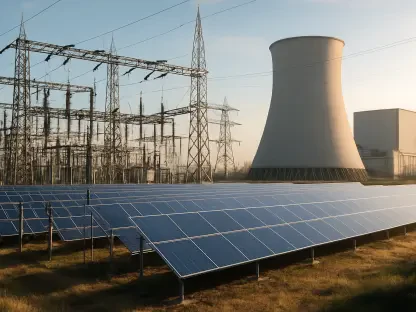
That 17% drop is a staggering figure, and it speaks to a fundamental rewiring of our grid’s economics and operations. The most obvious driver is the sheer volume of solar energy flooding the grid during the day. But behind the scenes, it’s about the declining profitability of natural gas “peaker” plants. These plants are designed to turn on quickly to meet demand, but they’re expensive to run. With solar providing so much cheap power midday, the run times for these gas plants are shrinking dramatically. They might sit idle all morning, ramp up for only a few hours in the evening, and then shut down again. That’s a very inefficient and uneconomical way to operate.
Inside a grid control room, it’s a constant, delicate dance. As the sun rises, you can literally watch on the monitors as the solar output, which now hits over 18 GW on a good day, climbs in a massive wave across the state. Operators are seeing this predictable wave and proactively ramping down the natural gas plants. It’s not a simple on-off switch; they are constantly adjusting the output of dozens of facilities, sometimes minute by minute, to perfectly balance the load. They have to anticipate cloud cover and other weather events, but the primary challenge has shifted from “How do we meet midday demand?” to “Where do we put all this midday solar?”
The article notes that evening battery generation grew from under 1 GW in 2022 to 4.9 GW in 2025, displacing natural gas. Can you walk me through the key economic and technological milestones that enabled this rapid growth and explain the process of charging and deploying this energy?
The explosion of battery storage is one of the most exciting stories in energy. The growth from less than a gigawatt to nearly five in just a few years is phenomenal, and it was driven by a perfect storm of factors. Technologically, the cost of lithium-ion batteries has plummeted, thanks in large part to the scaling of the electric vehicle industry. This made grid-scale projects financially viable for the first time. Economically, state policies and new market rules created a clear business case. Grid operators began to properly value the service batteries provide—not just storing energy, but also stabilizing the grid frequency and providing capacity.
The process itself is beautifully simple in concept. During those midday hours when solar generation is at its peak, the wholesale price of electricity can sometimes fall to zero or even go negative because there’s so much supply. That’s the signal for these massive battery facilities to start charging, essentially “soaking up” that cheap, abundant clean energy that might otherwise be wasted. They’ll hold that charge for several hours. Then, as the sun sets and solar generation drops off right as people are coming home and turning on their lights, air conditioners, and TVs, the evening demand spike begins. The batteries then discharge their stored energy back onto the grid, selling it at a much higher price and displacing the expensive natural gas peaker plants that traditionally served that evening ramp.
With solar generation at 40.3 BkWh nearly matching natural gas at 45.5 BkWh for the first eight months of this year, what are the next crucial infrastructure hurdles to overcome? Please share an anecdote about a recent project that illustrates the challenges of integrating more solar onto the grid.
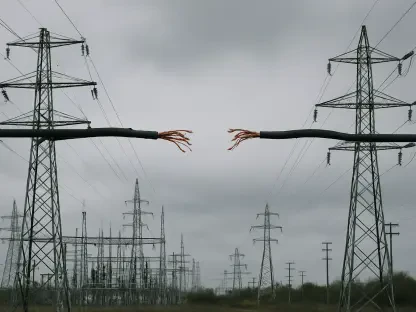
We’ve gotten very good at building solar farms, but we’re hitting a wall with getting that power to the cities where it’s needed. The next great hurdle is transmission. The sunniest places in California are often in remote desert regions, far from the coastal population centers. The fact that solar is now essentially level with natural gas in terms of raw generation makes this the single most critical challenge we face. We simply don’t have enough high-voltage power lines to carry all that clean electricity.
I was recently involved in a project in the Mojave Desert—a massive, state-of-the-art solar and storage facility. The panels were up, the batteries were installed, everything was ready to go. But it sat there, unable to connect to the grid for almost a year. Why? The new transmission line required to connect it was mired in permitting disputes and right-of-way issues across multiple counties. It’s a classic story. We can get a solar farm approved and built in two years, but the transmission line it needs can take five to ten years. It’s like building a giant factory with no roads leading to it. We have the generation, but if we can’t solve this transmission bottleneck, our clean energy goals will remain just out of reach.
The report mentions natural gas generation peaked in 2021 due to reduced hydroelectric output from a drought. How have grid management strategies evolved since then to better balance these variable renewable sources, and what metrics are used to predict and mitigate the impact of future climate events?
The 2021 drought was a real wake-up call. It showed us the danger of having our two largest carbon-free sources—solar and hydro—both being vulnerable to weather. We were forced to rely heavily on natural gas to keep the lights on. Since then, the entire strategy has shifted from being reactive to being intensely proactive and data-driven. We’ve moved far beyond just looking at yesterday’s load to predict today’s. Now, grid managers are using sophisticated AI and machine learning models that incorporate vast amounts of data.
The metrics we use have become much more granular. We don’t just measure reservoir levels; we monitor snowpack density in the Sierra Nevada mountains to forecast spring runoff months in advance. We use satellite imagery and advanced weather models to predict solar irradiance not just for the next day, but for the next hour. This allows operators to plan ahead, ensuring battery resources are fully charged and demand-response programs are on standby before a heatwave hits or a cloud bank moves in. The goal is to build a system with enough diversity and foresight to ride out climate-driven events like a drought without having to fall back on fossil fuels.
What is your forecast for the future of California’s grid?
I believe we are at a tipping point. The decline of natural gas will accelerate even faster than people expect, becoming a secondary, supporting resource rather than a primary one within the next decade. The real star of the show will be the integration of distributed resources—rooftop solar, home batteries, and electric vehicles all networked together into “virtual power plants” that can be dispatched by the grid operator. This creates a more resilient, decentralized system. However, the biggest challenge remains the physical grid. My forecast is one of cautious optimism: the technology and the economics are on the side of a clean grid, but our progress will be paced entirely by our ability to permit and build the thousands of miles of new transmission lines needed to make it a reality.