
The global transition to a green future is uncovering a troubling paradox, where the very projects designed to heal the planet are threatening to inflict new wounds on its most vulnerable communities. As the United States invests billions in renewable energy, a critical question emerges: is this new energy revolution simply repeating the historical injustices of the past? The contentious Goldendale Energy Storage Project in Washington state serves as a stark case study, placing the urgent need for clean power in direct conflict with the sacred land and treaty rights of the Yakama Nation. This clash is not just about technology or infrastructure; it is a modern-day reckoning with a long history of sacrificing Indigenous heritage in the name of progress. The outcome of this conflict could set a precedent for how the nation balances its climate ambitions with its moral and legal obligations to its first peoples, forcing a difficult conversation about who bears the true cost of a sustainable future and whether clean energy can truly be considered clean if it is built upon a foundation of desecration and displacement.
The Promise of a Green Battery
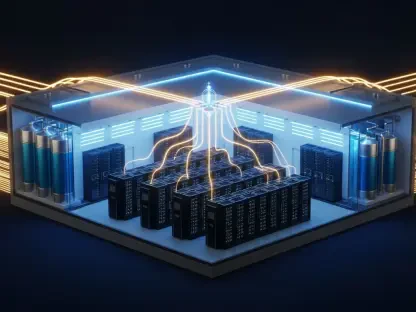
Federal energy regulators recently granted a 40-year license for the development of the approximately $2 billion Goldendale Energy Storage Project, a massive undertaking designed to function as a giant battery for the Pacific Northwest. Spearheaded by Rye Development, this pumped storage hydropower facility represents a significant technological investment in grid stability. The engineering concept involves two reservoirs; a man-made one on a bluff overlooking the Columbia River and a lower one. During peak demand, 2.3 billion gallons of water would be released from the upper reservoir, plunging around 2,000 feet through a 29-foot-diameter tunnel to spin turbines, generating enough electricity to power an estimated 500,000 homes for up to 12 hours. Conversely, during periods of surplus energy from intermittent sources like wind and solar, that same water would be pumped back to the top, effectively storing vast amounts of energy for when it is needed most. This project is poised to be the first of its kind in Washington state and the first major pumped storage facility built in the U.S. in roughly three decades.
Proponents hail the project as an indispensable solution to a looming regional energy crisis. Erik Steimle of Rye Development described the federal license as a “landmark moment for the Pacific Northwest,” arguing that the facility is critical for managing the escalating electricity consumption driven by power-hungry data centers. This surge in demand is straining existing infrastructure and jeopardizing the climate goals of both Washington and Oregon. The Goldendale project is presented as a vital tool for grid stability, providing a reliable power source when renewables are not producing and helping maintain affordable energy prices for consumers. Developers emphasize that the site was chosen for its specific geological suitability on private land that was previously partially industrialized as an aluminum smelter. They assert that the facility will enable Washington to meet its clean energy objectives with what they characterize as “minimal environmental impact,” positioning it as a cornerstone of the region’s green energy future, with construction slated to begin in 2027.
A Sacred Land Under Threat
For the Yakama Nation, the project site is not a vacant industrial lot but a sacred landscape known as Pushpum, which translates to “Mother of all roots.” This area holds immense spiritual, cultural, and historical significance, having served as a village location for the Nation’s Kamíłpa Band since time immemorial. It remains an active and vital center for religious ceremonies, treaty-reserved fishing, and the gathering of culturally essential plants. Elaine Harvey, a conservation scientist and member of the Kamíłpa Band, explains that Pushpum functions as a crucial seed bank for nearly three dozen types of roots, flowers, and shrubs, some of which are found nowhere else. The area is particularly prized for its early-season Indian celery, a key component in longhouse ceremonies that draws tribal members from various communities to gather there each February. The project, therefore, does not just threaten a piece of land; it threatens the continuity of cultural practices, spiritual beliefs, and the ecological knowledge passed down through generations.
The opposition to the Goldendale project is widespread and deeply felt, representing a unified front against what is perceived as a profound act of desecration. Yakama Tribal Council Chairman Gerald Lewis condemned the permit approval, framing it as a reward for “bad actors who have spent years finding loopholes to target a new wave of industrial development on top of Indigenous sites.” He poignantly argued that if a small Christian shrine occupied the site, its sacredness would be instinctively understood and respected by decision-makers, highlighting a perceived double standard in how Indigenous spirituality is valued. This sentiment is shared by a powerful coalition that includes not only the Yakama Nation but also 17 other tribal governments, the National Congress of American Indians, and the Affiliated Tribes of Northwest Indians. Their collective stance underscores the project’s severe impact on Indigenous rights and heritage. Even a state review of the project acknowledged that it would have “significant and unavoidable adverse impacts” on the Nation’s historic sites and culturally important plants, validating the deep concerns of the tribal communities.
Echoes of a Painful Past
This contemporary conflict is haunted by the ghosts of past injustices, representing for many the continuation of a painful history of displacement for the sake of energy production. For Elaine Harvey’s family, this is the third time a hydropower project has threatened their home and heritage. Her ancestors were first forced from their village in the 1950s by the construction of The Dalles Dam. Just a decade later, the family was removed again to make way for the flooding caused by the John Day Dam. Harvey recounts the tragedy of her grandparents being told to leave and being left homeless, all under the banner of “green energy.” This personal and communal history frames the current conflict as a deeply traumatic cycle, where the burden of progress is once again being placed squarely on the shoulders of Indigenous communities. The site is part of 12 million acres ceded by the Yakama Nation in an 1855 treaty, which explicitly enshrined their rights to continue fishing, hunting, and gathering at traditional locations like Pushpum into U.S. law, a promise that now appears to be in jeopardy.
Critics argue that destroying this sacred site for 40 years of power is an unacceptable and short-sighted trade-off, particularly given the region’s long and devastating history of sacrificing irreplaceable cultural landmarks for infrastructure. The specter of Celilo Falls, which was the longest continuously inhabited site in North America before being submerged by The Dalles Dam, looms large over this debate. The destruction of Celilo Falls was a profound cultural loss from which the region’s tribes have never fully recovered, and many see the threat to Pushpum as a direct echo of that tragedy. They contend that the pursuit of renewable energy cannot be used as a justification to repeat these historical wrongs. The argument is not against clean energy itself, but against a model of development that fails to respect treaty rights and continues to treat Indigenous sacred lands as expendable. This conflict forces a broader examination of what it means to create a truly just and sustainable energy system, one that does not perpetuate the patterns of colonial extraction and dispossession.
The Battle for the Future
The federal license granted to the Goldendale project was described as the final legal approval needed for construction, but the fight was far from over. Opponents, including the Yakama Nation and the environmental group Columbia Riverkeeper, immediately prepared for the next phase of legal recourse. A 30-day window following the license’s publication was established to file a challenge, a deadline that was expected to trigger further legal battles that could delay or derail the project indefinitely. The Yakama Nation and Columbia Riverkeeper were already engaged in a fight against the project’s water-quality certification in a state appeals court, demonstrating their resolve to use every available legal avenue. Developers at Rye Development acknowledged that the project still faced these challenges but announced their intention to move forward. Meanwhile, tribal members like Elaine Harvey vowed to continue their cultural practices at Pushpum, underscoring their unwavering commitment to protecting the site through direct action and spiritual presence. The situation was poised at a critical juncture, balancing the urgent regional demand for renewable energy storage against the legally protected rights and sacred traditions of the Yakama Nation, with the final outcome likely to be determined in the courts.