
Christopher Hailstone brings a wealth of knowledge to the complex intersection of federal mandate and local utility management. With the Department of Energy recently extending coal operations in Indiana, his perspective on the Federal Power Act is vital for understanding how the grid remains resilient during extreme weather. As an expert in grid reliability and security, he provides a detailed look at the costs and operational realities of keeping aging power plants online well past their expected retirement dates.
How does Section 202(c) authority balance immediate grid stability against scheduled retirement plans, and what technical criteria must a facility meet to justify its necessity during periods of high demand? Please provide specific examples of how these assessments are conducted.
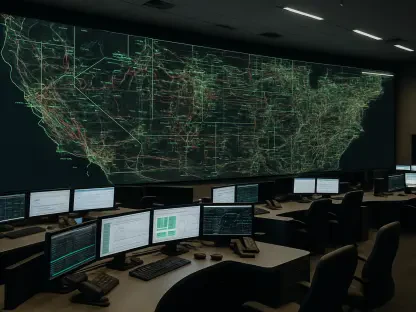
Section 202(c) of the Federal Power Act is essentially the “break glass in case of emergency” button for our national power grid. It allows the government to override local retirement schedules when the stability of the entire system is at risk, specifically during periods where high demand clashes with low production from intermittent sources like wind and solar. For example, the 104 MW Unit 2 at the F.B. Culley station was originally slated to shut down in December, but it was deemed “critical” to keep the Midcontinent ISO region functioning. These assessments are cold, technical evaluations that weigh the nameplate capacity of a plant—like the combined 369 MW at Culley—against the projected shortfall during a crisis. It is a high-stakes balancing act where the immediate need to prevent a blackout outweighs the long-term transition plans of the utility.
During the peak of Winter Storm Fern, certain coal units provided hundreds of megawatts to the regional grid; how does this reliability compare to intermittent energy production, and what happens to grid security if an emergency unit is non-functional?
During the brutal stretch of Winter Storm Fern from January 23 to February 1, we saw the stark reality of grid dependence. The Schahfer station units were pumping out over 285 MW every single day, providing a steady, rhythmic hum of power while other sources struggled to keep up with the shivering demand. However, the security of the grid is only as strong as its functioning parts, and we saw a major red flag when Schahfer Unit 18 remained non-functional despite the emergency order. If a massive 423.5 MW coal unit is counted on for reliability but cannot actually fire up, the entire regional security profile starts to feel like a house of cards. It creates a false sense of safety that can lead to disastrous consequences if the remaining units cannot shoulder the extra burden during a deep freeze.
Estimates suggest keeping older units online can cost ratepayers over $170,000 per day; what specific mechanisms allow utilities to recover these costs, and how can companies balance affordability with the need for emergency generation?
The financial weight of these emergency orders is staggering, with the Schahfer plant alone carrying a net cost to consumers of approximately $174,000 every single day it stays in operation. Across the country, these types of federal interventions have added more than $280 million to consumer bills in just the last ten months. Utilities typically use regulatory recovery mechanisms to pass these operational expenses down to the public, though the timing of these “bill impacts” can vary significantly. CenterPoint Energy, for instance, operates the smaller Culley plant at a cost of about $21,000 a day and claims there are no immediate impacts, yet they are already planning for the future recovery of those funds. This creates a difficult tension for companies that must ensure the air conditioning stays on in the summer while trying to keep the monthly light bill from becoming a financial crisis for local families.
With operations now extended through mid-2026 for plants originally slated for closure, how does this change local decarbonization goals and what steps must plant operators take to maintain aging equipment for several additional years?
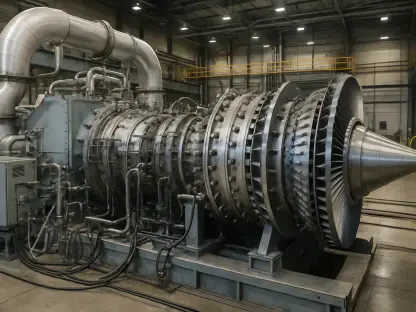
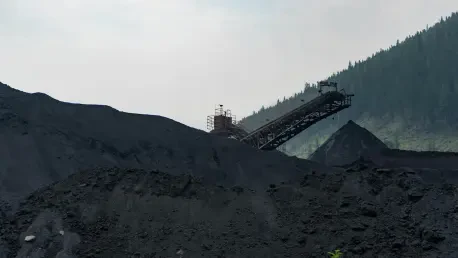
Punting the retirement of these units to June 21, 2026, effectively stalls local decarbonization efforts that were built around the assumption these plants would be dark by now. For the plant operators, this extension isn’t a gift; it is a grueling maintenance challenge that requires patching up boilers and turbines that were essentially in their twilight hours. You can feel the physical strain on the equipment as engineers perform “all measures necessary” to keep these decades-old machines from failing under the heat of a summer peak. It requires a shift from a “run-to-fail” mindset back into active, high-cost maintenance to ensure that parts don’t disintegrate during a critical load period. This delay means that for at least two more years, the carbon footprint of the region will remain stubbornly high while the transition to cleaner energy sits in a holding pattern.
Federal policy is shifting toward preserving existing generation sources to prevent capacity loss; what are the operational risks of using emergency orders for long-term extensions, and how should grid operators prepare for the eventual retirement of these assets?
The primary operational risk is that we are treating a temporary bandage as a permanent cure, which some critics argue twists emergency authority beyond its original intent. When we rely on these long-term extensions, we risk creating a “zombie grid” where assets are kept on the books but are increasingly prone to catastrophic mechanical failure due to their age. Grid operators must stop viewing these 2026 deadlines as flexible dates and start the hard work of building out replacement capacity with a sense of extreme urgency. Preparation requires a transparent look at the data—if a unit like Schahfer 18 is non-functional now, we cannot pretend it will be a reliable pillar of the grid two years from today. We need to be aggressively integrating new generation now, or we will find ourselves in a cycle of endless emergency orders that only serve to mask a crumbling infrastructure.
What is your forecast for coal-fired generation in the Midwest?
The Midwest is currently caught in a transition period that is proving to be much messier and more expensive than many initially predicted. My forecast is that we will see several more of these 202(c) extensions through 2026 and likely beyond, as the pace of new energy construction fails to keep up with the rising demand and extreme weather volatility. While the push for decarbonization is clear, the physical reality of the grid suggests that coal will remain a reluctant but necessary “security blanket” for the next three to five years. We are going to see a continued tug-of-war between federal mandates to keep plants running and local pressure to lower costs, resulting in a grid that is reliable but increasingly expensive for the average Midwestern family.