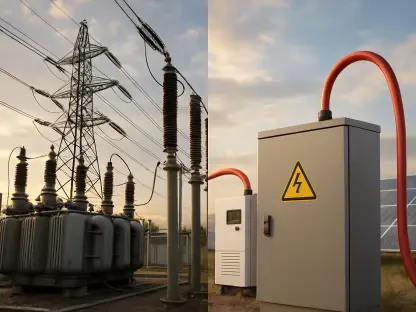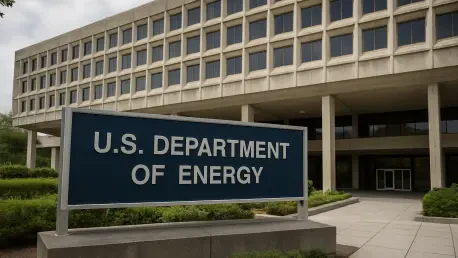

A multi-year strategic plan, meticulously crafted to transition a community away from coal, was abruptly overturned by a federal decree just twenty-four hours before a power plant’s final shutdown. This last-minute intervention by the U.S. Department of Energy (DOE) has ignited a fierce legal battle in Colorado, raising fundamental questions about government authority, private property rights, and the future of America’s energy landscape. At the heart of the conflict is the Craig Generating Station’s Unit 1, whose owners now argue that the federal government has engaged in an unconstitutional seizure of their assets under the guise of an unproven regional emergency. This case has become a critical flashpoint, challenging the very mechanisms of federal power and setting a precedent that could ripple across the nation’s energy sector.
An Eleventh Hour Mandate Halts a Power Plant’s Sunset
The conflict began on December 30, when Energy Secretary Chris Wright invoked emergency powers under the Federal Power Act. This order compelled the continued operation of the 427-megawatt coal-fired Unit 1, a generator that its owners, the Tri-State Generation and Transmission Association and the Platte River Power Authority, had scheduled for permanent retirement the very next day. The plant’s closure was a key component of the utilities’ long-term resource plan to shift toward cleaner and more economical energy sources.
The DOE’s justification for this dramatic, last-minute intervention was a declared power supply emergency across a vast seven-state region, including Colorado, Idaho, Montana, and Washington. However, the plant’s owners vehemently dispute this claim, asserting that the federal agency has failed to provide any substantial evidence of an impending crisis. They argue that the order disrupts a carefully managed transition and forces them to operate an asset they had already prepared to decommission, creating an operational and financial quagmire based on a contested emergency.
A Political Climate Favoring Federal Intervention
This action is not an isolated event but rather part of a broader pattern of federal intervention aimed at preserving fossil fuel infrastructure. The order to keep the Craig Generating Station online aligns with a consistent policy approach that has favored coal and natural gas plants over the development of renewable energy. The DOE has demonstrated a willingness to use its emergency authority to halt the planned retirement of aging generators, effectively overriding the strategic decisions of utility companies.
In the past year alone, the department has issued similar orders to keep six power plants operational, representing approximately 4,300 megawatts of capacity that would otherwise have been retired. Of these, five are coal-fired units. This trend extends beyond coal, as the DOE has also mandated the continued operation of oil and gas units in Pennsylvania, signaling a nationwide strategy to prevent the shutdown of conventional power sources, irrespective of market forces or state-level energy goals.
Deconstructing the Case Against Federal Overreach
In their formal request for a rehearing, the plant owners lay out a multi-pronged legal challenge, with the primary argument centering on a violation of the U.S. Constitution. They contend that the DOE’s mandate constitutes an unconstitutional seizure of private property without the just compensation guaranteed by the Fifth Amendment. The legal framing asserts that by commandeering the generator’s availability, the government has executed both a “physical taking,” by occupying their property for public use, and a “regulatory taking,” by nullifying their economic and operational control over their asset.
Beyond the constitutional claim, Tri-State and Platte River contest the very foundation of the DOE’s order, labeling it an arbitrary and capricious use of federal power. They argue that simply declaring an “emergency” is insufficient; the government must provide concrete evidence of an acute situation that justifies such a drastic measure. The utilities assert that the order improperly circumvents their own comprehensive, multi-year resource planning, which had already accounted for regional energy needs and prepared for the unit’s retirement. This lack of demonstrated need, they argue, makes the federal intervention unreasonable and legally unsound.
The financial ramifications of the mandate are substantial and immediate. The Craig unit was scheduled for retirement precisely because it had become uneconomical, requiring frequent and expensive repairs to maintain operation. The DOE order not only reversed this decision but also forced the utilities to undertake new, costly repairs to bring the aging unit into compliance. These unexpected expenses are passed directly to their customers, including those in states like New Mexico and Nebraska who derive no direct benefit from the Colorado plant’s operation, creating a situation of taxation without representation for many ratepayers.
Moreover, the order creates a direct collision with the region’s clean energy transition. Tri-State had invested significantly in the 145-megawatt Axial Basin solar facility, which was strategically developed to utilize the transmission capacity being vacated by the Craig unit’s retirement. By forcing the coal plant to remain online, the DOE has created a high risk of transmission congestion. This gridlock could compel Tri-State to curtail the solar plant’s output, directly undermining its investment and sabotaging a key part of its strategy to replace fossil fuels with renewable sources.
The Jurisdictional Maze of Fair Compensation
A critical element of the utilities’ legal challenge is the argument that a viable pathway to “just compensation” does not exist. While the Federal Energy Regulatory Commission (FERC) manages a cost-recovery process for such orders, the owners contend this mechanism is fundamentally flawed. They argue that allowing them to recover costs from ratepayers is not compensation from the government for the taking of their property; it merely shifts the financial burden onto their customers, many of whom are already paying for the plant’s replacement.
This problem is compounded by a significant jurisdictional black hole. FERC has no regulatory authority over major federal power entities in the region, including the Bonneville Power Administration (BPA) and the Western Area Power Authority (WAPA). As a result, it is impossible for Tri-State and Platte River to recover costs from all the beneficiaries within the seven-state emergency zone. This gap leaves the plant owners and their specific members to unfairly shoulder a disproportionate share of the financial fallout from a federally mandated action intended to serve a much broader area.
The Path Forward Through Legal and Public Challenges
The legal fight against the DOE’s order is rapidly expanding, with a growing coalition of stakeholders formally opposing the mandate. Environmental and public advocacy organizations, including the Sierra Club, the Environmental Defense Fund, and Earthjustice, have filed their own separate requests for the DOE to reconsider its decision. Their involvement broadens the challenge beyond property rights to include environmental impacts and the public interest in a planned transition to cleaner energy.
The formal requests for rehearing filed by the plant owners and these advocacy groups are a required procedural step before the case can advance to the courts. If the DOE denies these requests or fails to act upon them, the coalition will have the legal standing to file a lawsuit in federal court seeking to have the emergency order overturned. This sets the stage for a protracted legal battle that will test the limits of the agency’s authority under the Federal Power Act.
This Colorado case is a bellwether for a much larger, national struggle over the federal government’s role in managing the energy grid. Similar lawsuits are already pending in the Upper Midwest and the Mid-Atlantic to overturn other DOE emergency orders, challenging the department’s justifications for overriding market-driven plant retirements. The outcome of these collective legal challenges will have profound implications for the future of energy policy, the rights of private industry, and the pace of the nation’s transition away from fossil fuels. The legal and political fallout from these interventions had established a contentious new front in the ongoing debate over America’s energy future, with consequences that would be felt for years to come.