
When the mercury plunges and the wind howls across the Cape, the Massachusetts power grid enters its most precarious and expensive hours of the entire year. These moments of peak demand have historically relied on “peaker” plants—oil and gas facilities that sit idle for most of the year only to charge exorbitant rates when the system is strained. However, a fundamental shift in state policy is now targeting these expensive hours as the primary catalyst for a total overhaul of the energy landscape. By focusing on the highest-cost segments of the grid, policymakers are attempting to dismantle the economic justification for fossil fuel infrastructure.
The state is increasingly moving past intermediate solutions like green hydrogen or renewable natural gas, which still rely on combustion and its associated thermal inefficiencies. Recent analysis suggests that a purely combustion-free power grid is not just a secondary environmental goal but is actually the most cost-effective path forward for the Commonwealth. This bold claim rests on the idea that the operational costs of maintaining legacy thermal plants far outweigh the investment needed for a localized, renewable-heavy system. What began as a legal mandate under a 2021 state law has now matured into a radical infrastructure blueprint that seeks to eliminate burning any fuel for electricity by mid-century.
Beyond Fossil Fuels: Massachusetts Redefines the Peak
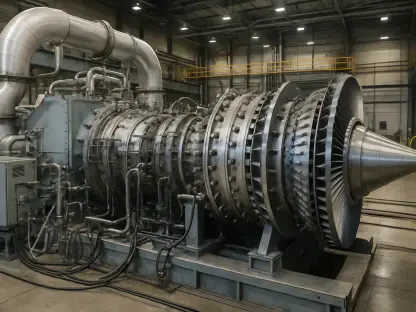
The high cost of maintaining “peaker” plants is the primary engine driving current climate policy, as these facilities represent the most expensive hours on the regional grid. These plants often run on fuel oil or natural gas and operate only during the hottest summer afternoons or the coldest winter nights, yet they require year-round payments to remain available. By targeting these specific intervals, the state aims to replace high-cost volatility with stable, renewable-based alternatives that do not rely on global fuel markets.
Moreover, the transition is moving decisively away from combustion-based “green” alternatives such as green hydrogen and renewable natural gas. While these fuels were once seen as necessary bridges, latest economic modeling indicates that a total combustion-free approach is the cheapest trajectory for ratepayers. This shift signifies a departure from the traditional view that some form of burning is required for grid stability, asserting instead that the true “least-cost” path is one that avoids the complexities and emissions of thermal generation entirely.
The Architecture of a Zero-Emission Energy Backbone
A sophisticated “Least-Cost” portfolio has been identified as the technical foundation for this transition, relying on a specific mix of wind, storage, and efficiency. According to recent findings, the system requires approximately 6.4 GW of combined onshore and offshore wind capacity to serve as the primary engine for the grid. Because wind speeds in New England are strongest during the winter, this resource is perfectly positioned to meet the high demand of a cold-weather climate, provided the infrastructure is built at scale.
To solve the inherent variability of renewables, the plan incorporates 6.9 GW of energy storage, with a critical emphasis on multi-day duration. Unlike standard lithium-ion batteries that provide only a few hours of power, these multi-day systems are designed to bridge the “dark doldrums”—extended periods of low wind and solar output. Complementing this is a demand-side revolution utilizing 4.2 GW of efficiency and consumer response, which effectively lowers the grid’s “ceiling” and reduces the total amount of physical infrastructure required to keep the lights on.
Navigating the Shift: From Summer Cooling to Winter Heating
The state is currently preparing for a monumental pivot in the mid-2030s when the Massachusetts grid is projected to flip from a summer-peaking system to a winter-peaking one. This change is driven by the rapid electrification of building heat through heat pumps and the widespread adoption of electric vehicles. As households move away from heating oil and natural gas, the electricity demand during the coldest months will eventually eclipse the peaks currently seen during the height of summer air conditioning use.
This seasonal shift exposes the limitations of solar power, as shorter winter days and lower sun angles provide significantly less energy when the grid needs it most. Consequently, the strategy necessitates a strategic pivot toward offshore wind and long-duration storage as the primary reliability tools for the winter. Beyond mere physics, the transition is supported by the “social cost of carbon,” which factors in the economic gains from improved public health and avoided climate disasters. By quantifying these externalities, the state justifies the higher upfront capital costs of a renewable backbone as a long-term saving for the public.
Market Friction: The Reliability Tug-of-War
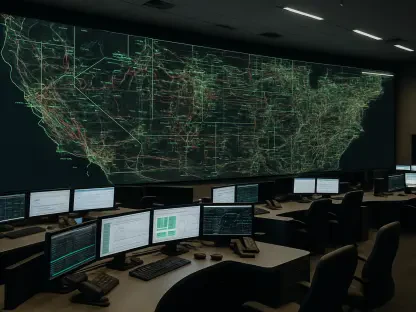
Significant market friction remains as the regional grid operator, ISO New England, continues to utilize market structures that many argue favor legacy fossil-fuel generators. The current “forward capacity market” model was designed for a world of predictable, fuel-burning plants and often struggles to accurately value the contributions of intermittent renewables and storage. This institutional inertia has led to a protracted debate over capacity accreditation, where clean energy advocates and grid operators clash over how much “credit” a battery or wind farm should receive for reliability.
Industry pushback from power generators further complicates the transition, with many arguing for a philosophy of “energy addition” rather than the immediate retirement of thermal plants. These stakeholders point to past deep freezes and weather anomalies as evidence that the grid still needs a “security blanket” of oil or gas to prevent catastrophic failures. This tug-of-war highlights the tension between the theoretical reliability of a combustion-free system and the operational caution of those tasked with managing the grid in real-time.
A Blueprint for Implementation: Steps Toward 2050
The path toward a combustion-free future required a strategic prioritization of long-duration storage technologies. State agencies initiated programs to commercialize iron-air batteries and other non-lithium solutions that could provide days of backup power. These efforts were paired with aggressive siting and permitting reforms intended to overcome the local opposition that often stalled massive offshore wind projects. By streamlining the regulatory process, the state sought to ensure that the 6.4 GW wind target remained a physical reality rather than a conceptual goal.
Furthermore, implementation involved a regulatory pivot that placed public health at the center of every infrastructure decision. State boards were directed to treat climate externalities as primary factors in utility rate cases, effectively tilting the economic scales toward clean energy. Policymakers also doubled down on efficiency mandates, offering significant incentives for weatherization to ensure the total volume of energy needed remained manageable. These coordinated actions established a clear framework for replacing the aging thermal fleet with a resilient, zero-emission backbone.