
As New York races against the clock to overhaul its power grid and simultaneously avert projected energy shortfalls, the state’s public power authority has committed to a monumental, yet carefully tempered, strategy designed to reshape its energy future for decades to come. The New York Power Authority (NYPA) board has formally approved a revised strategic plan targeting 5.5 gigawatts (GW) of renewable energy development, a decision that injects critical momentum into the state’s ambitious climate goals. This approval, however, arrives at a moment of significant uncertainty, navigating a landscape fraught with concerns over consumer affordability, volatile market conditions, and a shifting federal policy environment. The plan itself is a testament to this complex reality, representing a pragmatic retreat from a more ambitious summer proposal while still constituting a massive increase over its initial version.
A Grid on the Brink and a Plan to Match
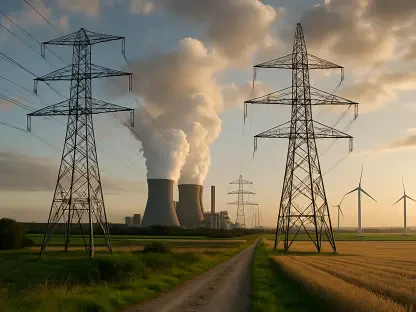
New York’s electrical grid is facing a period of unprecedented strain. The state’s grid operator has issued stark warnings about an increasing risk of power shortages over the next five years, a direct consequence of rising electricity demand and the retirement of fossil fuel plants. This looming reliability gap places immense pressure on state agencies and developers to accelerate the deployment of clean energy resources. The urgency is palpable, as every delayed project, from new transmission lines to offshore wind farms, tightens the margin for error and threatens the stability of the power supply for millions of New Yorkers.
In this high-stakes environment, NYPA’s 5.5 GW plan is positioned as a critical intervention. It is designed not merely to add clean megawatts to the grid, but to do so strategically to bolster resiliency and ensure the lights stay on. “The updated renewables strategic plan details the Power Authority’s comprehensive strategy to develop clean energy projects that will strengthen the resiliency of the grid and reduce our reliance on fossil fuel resources,” NYPA Chairman John Koelmel stated. This framing underscores the dual mandate of the plan: to champion decarbonization while directly addressing the urgent, practical need for a reliable power system capable of meeting New York’s growing electric demand.
The Legislative Spark for a Clean Energy Revolution
The foundation for this expanded public role in energy development was firmly established three years ago, in 2023, when the New York Legislature passed a landmark law. This legislation granted NYPA new and explicit authority to develop, own, and operate its own renewable energy projects. Previously, the authority’s role was more limited, but this legislative action fundamentally repurposed NYPA as an active and direct participant in building the state’s clean energy infrastructure. The move was a deliberate policy choice aimed at ensuring New York could meet its own aggressive, legally binding clean energy targets.
This mandate is one of the most ambitious in the nation. State law requires New York to generate 70% of its electricity from renewable sources by 2030 and to achieve a completely zero-emission power system by 2040. Without a public entity like NYPA actively driving development, lawmakers feared that market forces alone would be insufficient to reach these goals on schedule. The 2023 law therefore empowered NYPA to step in where the private sector might hesitate, filling gaps in the development pipeline and ensuring the state’s climate objectives remain within reach.
Deconstructing the 5.5 Gigawatt Blueprint
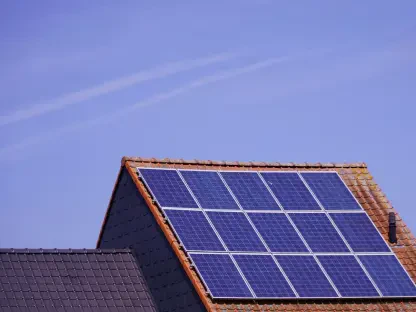
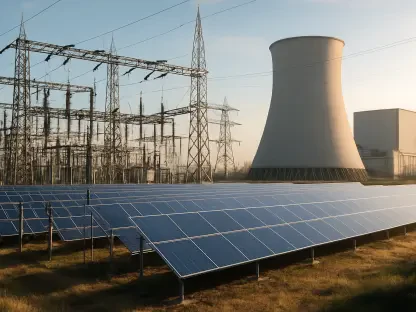
The newly approved 5.5 GW portfolio is a carefully curated mix of technologies designed to create a diverse and resilient clean energy supply. The plan calls for adding approximately 2.5 GW of new capacity, broken down into 1,425 megawatts (MW) of solar power and 800 MW of new land-based wind projects. Critically, it also includes a major investment in energy storage to help balance the intermittency of renewables. This includes 700 MW of distributed energy storage systems and a large-scale, 500-MW compressed air energy storage facility being developed by Antelope Energy Storage, a significant project that highlights a commitment to long-duration storage solutions.
This final blueprint is the product of a dynamic and responsive planning process. It is a more conservative revision of a 7-GW proposal floated in the summer but still represents a nearly twofold increase from the initial 3-GW plan adopted in January. This evolution reflects NYPA’s effort to balance soaring ambition with the pragmatic realities of project development. The portfolio itself has been significantly reshaped, with 15 projects from the original plan dropped and 20 new ones added, bringing the total number of initiatives to 40. This revision process has solidified partnerships with key private sector developers, including Forward Power for 700 MW of wind, EDF Renewable Energy for 790 MW of solar, AES for 225 MW of solar, and Orenda for 675 MW of distributed storage.
Balancing State Ambition with Consumer Reality
Woven throughout the strategic plan is a clear and persistent focus on consumer protection. As New York undergoes this massive energy transition, the question of who pays for it—and how much—is paramount. The plan document confronts this issue directly, stating, “While NYPA provides an opportunity to develop renewable energy for New York more affordably and equitably, there are still costs associated with this transition that will ultimately be paid by New Yorkers.” This acknowledgment sets the stage for NYPA’s commitment to mitigating the financial burden on residents and businesses across the state.
To achieve this, the authority has pledged to relentlessly pursue cost-effective projects and to manage their development in the “most efficient and lowest-risk ways.” The strategy is not static; it is designed as a living document. NYPA intends to continuously reassess its project portfolio and adjust its approach as development progresses, market conditions change, and new technologies emerge. This flexible approach is central to its promise of delivering a clean energy future that does not come at an unsustainable cost to the public.
Navigating the Financial and Political Headwinds
Despite the plan’s clear vision, its path forward is anything but certain. The document acknowledges a difficult operating environment, citing potential headwinds from federal policies that could hinder renewable energy development, alongside significant economic pressures. Increased project costs, driven by import tariffs on clean energy components and persistent inflation, continue to challenge the financial viability of large-scale renewable projects across the country. These macroeconomic factors create a complex and often unpredictable landscape for NYPA to navigate.
The financial framework for the plan is detailed in NYPA’s current financial plan, which spans through 2028 and earmarks $699 million for this renewable development. However, a key legislative constraint complicates the authority’s financial strategy. The law requires NYPA to maintain majority ownership in the projects it develops, a rule that prevents it from “selling down” its stakes to private investors. NYPA noted that the flexibility to sell down ownership at opportune moments would be a powerful tool, allowing it to recapitalize its funds and redeploy that capital into new projects, thereby accelerating the overall transition.
The updated plan also served to clarify NYPA’s precise role within the state’s broader strategy, tempering sky-high expectations from some stakeholders who called for a much larger, 15-GW program. NYPA emphasized that its mandate was not to single-handedly meet New York’s goals but to “supplement private sector energy development.” This supplementary role was defined as making the state’s transition “faster, more affordable, and more equitable” than it would have been if left to private industry alone. The approval of the 5.5 GW plan represented a major milestone, but it was also the starting point of a long and challenging journey. The success of this ambitious endeavor hinged on NYPA’s ability to execute its projects on time and on budget, all while navigating a turbulent economic and political climate and holding true to its core promise of protecting the New York consumer.