
The global energy market is currently witnessing a bizarre financial divergence where the sheer volume of deal-making continues to accelerate even as the total capital flowing into corporate coffers begins to tighten. This phenomenon suggests a fundamental shift in how investors perceive risk and value within the solar and energy storage sectors. While the era of limitless capital has largely concluded, the appetite for tangible, operational assets has reached a fever pitch, creating a market characterized by consolidation and tactical precision.
The Paradox: Declining Funding and Rising Acquisitions
The central theme of the current landscape involves a clear decoupling between corporate funding and project-level activity. Total corporate investment in solar and energy storage has seen a downward trend, yet the number of mergers and acquisitions continues to climb. This disparity stems from a macroeconomic environment defined by high interest rates and volatile company valuations, which have forced many firms to reconsider their expansion strategies in favor of stability.
As corporate valuations face downward pressure, late-stage, low-risk renewable projects have transformed into high-priority targets for global investors. These “hot commodities” offer predictable returns and immediate grid connection, making them far more attractive than speculative early-stage ventures. Consequently, the market is shifting away from broad equity bets toward the acquisition of de-risked infrastructure that can immediately contribute to a portfolio’s bottom line.
Contextualizing the 2025-2026 Renewable Energy Shift
The transition from the record-breaking funding levels observed in 2024 to the more selective environment of 2026 reflects a maturing industry. While 2024 benefited from a post-pandemic surge and aggressive legislative incentives, the current period is defined by a more sober assessment of inflationary pressures and evolving trade policies. This shift is critical for understanding how the energy sector maintains its momentum toward global decarbonization while navigating a more restrictive financial climate.
Understanding these trends is essential for grid modernization efforts. The adaptation to macroeconomic pressures has forced developers to be more efficient, ensuring that only the most viable projects reach the finish line. This selective investment environment ultimately strengthens the energy sector by weeding out undercapitalized players and rewarding those with robust domestic supply chains and clear regulatory pathways.
Research Methodology, Findings, and Implications
Methodology: Tracking the Global Transaction Landscape
The research utilized comprehensive data collection processes to monitor global transactions within the solar, storage, and smart grid sectors. Analysts tracked public and private deals to establish a clear picture of capital flow and asset transfer. By employing quantitative techniques, the study compared year-over-year funding levels to identify specific areas of growth and contraction across different sub-sectors of the clean energy economy.
Qualitative analysis played a significant role in interpreting these figures, as researchers engaged with investor sentiment and examined the impact of recent regulatory changes. This dual approach allowed for a deeper understanding of why certain sectors, such as smart grid technology, outperformed broader market trends. The methodology ensured that the findings reflected not just the dollar amounts exchanged, but the strategic intent behind each major acquisition.
Findings: Solar Gains and the Smart Grid Surge
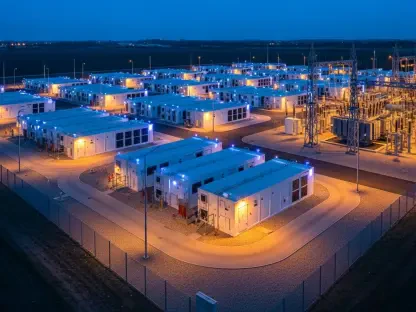
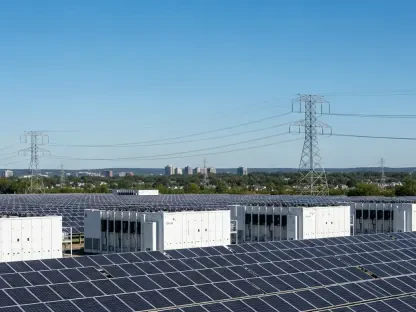
The data revealed a 17% increase in solar mergers and acquisitions transactions, even as venture capital and private equity funding experienced a notable decline. This trend was mirrored in the energy storage sector, where project acquisitions nearly doubled, jumping from 38 to 65 transactions over the observed period. These figures highlight a move toward project-level ownership rather than investment in the parent companies themselves.
In contrast to the general decline in corporate funding, the smart grid technology sector enjoyed a 38% surge in investment. This growth was largely propelled by the rapid integration of artificial intelligence into grid management systems. Investors are increasingly betting on AI to solve complex distribution challenges, making smart grid firms a unique outlier in an otherwise tightening financial market.
Implications: Consolidation and Selective Growth
The practical impact of declining valuations has allowed cash-rich investors and utilities to consolidate high-quality assets at more favorable prices. This consolidation is leading to a theoretical shift where project readiness is prioritized over speculative growth. Buyers are no longer willing to wait years for a return; they are targeting “shovel-ready” sites that can mitigate the risks associated with interconnection delays and supply chain instability.
Furthermore, the rise of AI-driven energy infrastructure carries significant societal implications. As global energy demand continues to climb, these technologies are becoming essential for managing the intermittent nature of renewable generation. The focus on intelligence and efficiency over raw capacity suggests that the next phase of the energy transition will be defined by how well the grid can think, not just how much power it can produce.
Reflection and Future Directions
Reflection: Market Resilience Under Pressure
The resilience of the mergers and acquisitions market served as a testament to the enduring value of renewable assets despite the end of the “easy capital” era. High borrowing costs did not stifle deal-making; instead, they refined it, forcing a focus on quality over quantity. However, analyzing this volatile market proved challenging due to regional outliers. Areas like CAISO and ERCOT showed signs of temporary saturation in storage, creating localized trends that differed from the broader global trajectory.
Researchers had to account for the disparity between total dollar value and the volume of deals. While the aggregate capital invested may have decreased, the sheer number of transactions indicated a vibrant and active secondary market. This suggests that while individual companies might be struggling to raise new equity, the underlying assets they have developed remain highly sought after by institutional buyers and infrastructure funds.
Future Directions: Regulatory Impact and AI Efficiency
Future research should investigate the long-term effects of “foreign entity of concern” rules on the maturity of domestic supply chains. As developers pivot toward local sourcing to comply with new regulations, the resulting cost increases and logistical hurdles will likely redefine project economics. It is essential to track how these compliance costs interact with potential interest rate cuts to determine the net impact on sector growth through the late 2020s.
Additional exploration into the impact of AI on smart grid efficiency is also necessary. If intelligent systems can significantly offset traditional funding shortages by maximizing existing capacity, the industry may rely less on massive capital infusions and more on software-driven optimization. Proposing studies that quantify the return on investment for AI integration will provide a roadmap for the next era of grid modernization.
Summary of the Evolving Financial Landscape
The shift toward project-level acquisitions acted as a safeguard against the volatility of corporate funding. While venture capital and private equity retreated, the fundamental demand for carbon-free generation ensured that high-quality assets remained in high demand. The industry proved that it could adapt to a higher interest rate environment by prioritizing de-risked projects and strategic consolidation over speculative expansion.
The transition to domestic sourcing and a focus on operational efficiency defined a new era for the renewable energy sector. Although the financial landscape grew more complex, the commitment to grid modernization remained unshaken. Industry leaders navigated the challenges of trade policy and inflationary pressure by doubling down on technological integration, ensuring that the move toward a sustainable energy future remained robust and irreversible.