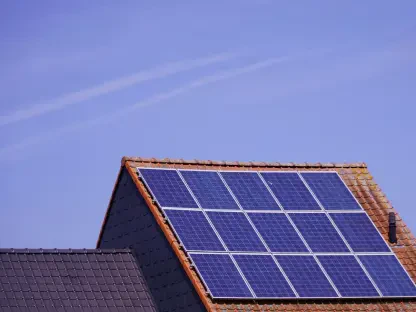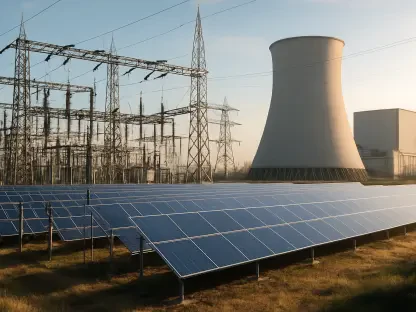
The once-simple promise of rooftop solar—to generate clean, free electricity from the sun—has evolved into a far more complex and interactive relationship with our energy infrastructure. As solar adoption has surged, its very success has introduced new, system-wide challenges for electrical grids not originally designed for millions of small, intermittent power plants. The massive influx of solar energy during midday hours can overwhelm local networks, while the sharp drop-off at sunset coincides with a spike in residential demand, creating significant operational hurdles. Consequently, the focus of solar innovation has pivoted away from merely maximizing raw power generation. The new frontier is intelligent system control, where solar installations are no longer passive contributors but active, responsive participants in a dynamic grid. This shift is being driven by a suite of technologies moving from pilot programs to mainstream application, including smarter inverters, adaptive export limits, and the strategic integration of battery storage and electric vehicles, fundamentally reshaping what it means to own a solar power system.
The Core Components of the Smart Solar Ecosystem
The Rise of System Intelligence
The solar inverter, long considered a behind-the-scenes workhorse, has stepped into the spotlight as the central intelligence hub of the modern home energy system. Its function has expanded dramatically beyond the basic task of converting direct current (DC) from panels into the alternating current (AC) used by household appliances. Contemporary smart inverters operate as sophisticated energy management controllers, continuously processing a stream of data to make autonomous, real-time decisions. They monitor a household’s electricity consumption patterns, track the fluctuating conditions of the local grid, respond to dynamic pricing signals from utility companies, and orchestrate the flow of energy between solar panels, the home, a battery, and the grid. Instead of following a rigid, pre-programmed set of rules, these advanced systems can determine the most economically and technically advantageous action at any given moment. This means intelligently deciding whether to direct solar energy for immediate use, store it for later during peak demand, or export it when the grid can benefit most, thereby maximizing the value of every kilowatt-hour produced.
This evolution from passive converter to active controller is being cemented by a new generation of regulatory standards that mandate grid interactivity as a baseline for new installations. Jurisdictions are increasingly implementing frameworks, such as Western Australia’s Common Smart Inverter Profile, that require all new inverters to be equipped with specific smart capabilities. This regulatory push means that features once considered premium add-ons are now becoming standard requirements. These include the ability to comply with dynamic export limits, receive remote firmware updates from network operators to adapt to changing grid needs, and provide active grid support services like voltage stabilization. This convergence of advanced technology and forward-thinking regulation is establishing a new industry benchmark where the intelligence of the inverter is no longer a luxury but a fundamental component, essential for the performance, compliance, and long-term financial viability of any solar installation. A system without these capabilities risks becoming a stranded asset in an increasingly interactive energy landscape.
Adapting to Grid Dynamics
The era of imposing blunt, static export limits on solar households—where a fixed cap permanently restricts the amount of energy sent back to the grid—is rapidly drawing to a close. This inflexible approach is being replaced by a far more nuanced and responsive system of dynamic export limits, a reality that is now commonplace for a growing number of solar owners. This model allows the permissible export capacity of a home’s solar system to fluctuate throughout the day in direct response to real-time local grid conditions. The logic behind this is straightforward: on a mild, sunny weekday, a neighborhood saturated with rooftop solar might generate more power than the local distribution network can safely absorb, necessitating a temporary, targeted reduction in exports to maintain grid stability. Conversely, later in the afternoon or on an overcast day, that same network may have ample capacity, making solar exports valuable. Dynamic limits empower network operators to intelligently tighten or loosen these permissions as needed, replacing permanent, one-size-fits-all restrictions with adaptive, surgical management.
This transition represents a profound shift in how the value of solar energy is captured and realized by homeowners. While the opportunity for continuous, maximum export may become less frequent in areas with high solar penetration, a smarter solar system is designed to turn this potential limitation into an advantage. Instead of allowing excess energy to be curtailed—effectively wasted—an intelligent system can react to signals from the grid. When export limits are tightened, the system can automatically divert the surplus solar generation to other valuable uses within the home. This could mean charging a home battery for evening use, powering up an electric vehicle parked in the driveway, or running energy-intensive appliances like hot water systems and pool pumps during the solar peak. This adaptive capability not only prevents the loss of valuable clean energy but also maximizes a household’s self-consumption, directly reducing reliance on grid electricity and delivering more consistent financial returns over the long term. It rewards households that can flexibly manage their energy, turning a potential grid constraint into an economic opportunity.
Expanding the Role of Energy Storage and Demand
From Individual to Community Storage Solutions
Home battery storage has transitioned from a niche product for early adopters into a practical and economically driven component of the mainstream energy ecosystem. The primary motivation for homeowners has shifted away from the ideals of achieving complete energy independence or solely seeking blackout protection. Instead, the decision to install a battery is increasingly guided by pragmatic financial drivers. As dynamic export limits become more prevalent and feed-in tariffs—the payments for exporting solar energy—remain modest, the most reliable strategy to maximize the value of rooftop generation is to store it for personal use. The focus in this mature phase is on “right-sizing” the storage capacity to align with a household’s typical evening energy demand. This transforms the battery from a simple backup power source into a strategic tool for “load shifting.” This practice involves capturing low-cost solar energy generated during the day and discharging it during the evening peak, when electricity drawn from the grid is at its most expensive. This is particularly effective for households with high evening consumption or those that need to charge electric vehicles after sunset, directly offsetting costly grid purchases with stored solar energy.
In parallel with individual home storage, community batteries are emerging as a vital “missing middle” solution designed to address the solar storage equity gap. A significant portion of the population, including renters, apartment dwellers, and households with financial or spatial constraints, is often excluded from the benefits of energy storage, even if their buildings are equipped with rooftop solar. Community batteries, which are neighborhood-scale storage systems typically installed at a central point in a local grid, are engineered to bridge this divide. These systems function by absorbing and storing surplus solar energy generated by numerous homes in the vicinity during the day. Later, when local demand peaks in the evening, the stored energy is discharged back into the local network, reducing strain and improving stability. From a grid operator’s perspective, this alleviates network congestion and helps stabilize voltage. For participating households, it provides a mechanism to preserve the value of their solar exports without requiring each home to make a substantial individual investment in a private battery, thereby democratizing access to the benefits of energy storage.
Integrating New Energy Assets
Virtual Power Plants (VPPs), which aggregate vast networks of distributed energy resources like residential batteries to operate as a single, coordinated power plant, have evolved from clever experiments into indispensable tools for modern grid management. VPPs are playing an increasingly significant role in helping network operators navigate the sharp peaks and deep troughs in energy supply and demand that characterize a grid with high levels of renewable generation. The key advancement in this phase of VPP development is a heightened focus on the homeowner experience, particularly in building trust through transparency. Early VPP programs often involved simple bill credits with little visibility for the participant into how or when their battery was being dispatched. In contrast, newer, more mature VPP models emphasize providing clear dispatch rules, predictable participation incentives, and transparent reporting. This allows homeowners to see precisely how often their system is called upon to support the grid and what financial or energy benefits they receive in return. This improved integration, where batteries, inverters, and retail energy plans are designed to work in concert, makes VPP participation less disruptive and better aligned with the needs and expectations of the household.
Simultaneously, the relationship between electric vehicles and the electrical grid is undergoing a fundamental transformation. EVs are increasingly viewed not as a passive new load that simply consumes power, but as an active, flexible energy asset with significant potential to support the grid. The focus is shifting from merely charging an EV to optimizing when and how that charging occurs. The widespread adoption of smart chargers is central to this trend. These intelligent devices can be programmed to align charging schedules with periods of high solar production or low grid electricity prices. For a household with rooftop solar, an EV can effectively act as a “solar sponge,” absorbing large amounts of midday solar energy that might otherwise be curtailed due to export limits. This synergy maximizes self-consumption of solar energy, dramatically reduces vehicle charging costs, and helps stabilize the local grid by soaking up surplus generation. While full-scale vehicle-to-home (V2H) and vehicle-to-grid (V2G) technologies, which allow an EV to discharge power back to the home or grid, are still in their early stages, the adoption of smart charging alone is already changing the energy dynamic, making EV readiness an integral part of planning for any new solar installation.
Future-Proofing the Solar Industry
Innovations in Hardware and Supply Chains
While solar panel technology continues to make steady progress, the most significant performance gains in the current market are derived from system intelligence rather than a revolutionary leap in panel chemistry. Nonetheless, next-generation cell technologies, particularly perovskite-silicon tandem panels, are moving closer to mainstream commercialization. These advanced panels function by layering a perovskite material atop a traditional silicon cell, a design that enables the panel to capture a wider spectrum of sunlight and convert it into electricity with significantly higher efficiency. While research and pilot manufacturing projects are well underway, these high-efficiency products are expected to first penetrate the premium residential market and large-scale solar farms where maximizing energy density is a top priority. For the average household, the practical implication is that the immediate, tangible benefits of superior system design—including a smart inverter, intelligent energy management, and readiness for battery integration—far outweigh the potential gains of delaying an installation in anticipation of a future panel technology that may offer only marginal improvements for a residential application.
In parallel with these technological advancements, a renewed strategic focus is being placed on rebuilding domestic solar manufacturing capabilities. This initiative is not primarily aimed at competing with global mass producers on sheer volume or price. Instead, it targets specialized manufacturing that enhances supply chain resilience, ensures adherence to high-quality standards, and fosters innovation specifically tailored to local environmental and grid conditions. This includes developing local capacity in the production of high-performance cells, modules, and specialized components like advanced inverters and mounting systems. The benefits for the domestic market are manifold, including reduced vulnerability to global supply chain disruptions, such as those seen in recent years, and the ability to develop products specifically engineered for unique regional climates and regulatory requirements. While imported components will undoubtedly continue to play a major role in the market, the growth of a robust local manufacturing ecosystem is expected to influence design standards, performance expectations, and long-term product support, reinforcing the perception of solar as critical, long-lasting national infrastructure rather than a disposable commodity.
Implications for the Modern Homeowner
The cumulative impact of these innovations led to a singular, overarching conclusion: the paradigm for residential solar had fundamentally changed. A solar system was no longer a passive, standalone generator of electricity but had become an active, integrated component of a managed energy network. For households across the country, this meant that the financial and functional value of a solar system was created by how effectively it could respond to external conditions. Systems that were equipped with smart inverters, appropriately sized batteries, and smart EV chargers—all designed to work in concert—were better positioned to maintain their value as grid rules and energy tariffs evolved. The ability to intelligently manage energy flows in response to grid signals, export limitations, and time-of-use pricing became the primary determinant of a system’s long-term economic performance.
In this transformed energy landscape, flexibility became the new currency of value. The homeowners who planned their solar installations with a focus on adaptability and future-readiness made the most resilient investments. This involved asking critical questions about an inverter’s ability to handle dynamic export limits and receive remote updates, ensuring the system provided clear monitoring of its real-time behavior, and confirming its readiness for future integration with batteries, EVs, and VPPs. The decisions made had long-term consequences, and choosing equipment that could be monitored, updated, and integrated significantly reduced the risk of a system becoming technologically obsolete. Ultimately, in the dynamic energy environment that defined the period, a solar system that intelligently adapted to change consistently outperformed one designed around the static and outdated assumptions of the past.