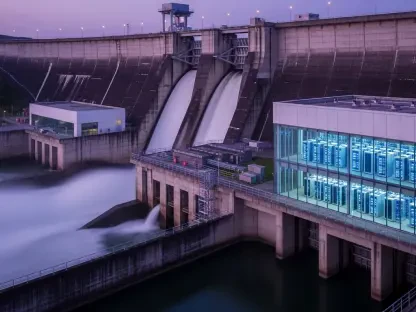

The massive concrete walls of modern hydroelectric dams frequently serve as the crowning achievement of civil engineering, yet these silent sentinels of the energy grid carry a hidden environmental price that often outweighs their contribution to the global renewable power supply. While the surface of a reservoir may appear serene and provide a sense of stability, the infrastructure beneath the waterline introduces profound and often irreversible changes to natural river systems. In the United States, hydropower constitutes approximately 5.7% of the total energy production according to the Energy Information Administration, positioning it as a key player in the carbon-free energy transition. However, this reputation as a “clean” energy source is increasingly under scrutiny as the true cost of river fragmentation becomes clearer to scientists and policymakers alike. The discourse is shifting from a focus on sheer utility to a more nuanced understanding of the ecological footprint that these structures leave behind. Weighing the benefits of power against the systematic degradation of riverine environments has become a critical challenge for the modern era of water management.
Mapping the Scale: Ecological Disruption and Infrastructure
To understand the full impact of these structures, it is necessary to first recognize the sheer scale of their presence across the American landscape where nearly 90,000 dams currently exist. A common misconception persists that the majority of these structures are large-scale power generators providing electricity to thousands of homes, but the reality is significantly more complex and varied. In fact, fewer than 2,700 of these dams are actually utilized for hydropower generation, leaving tens of thousands of smaller structures that serve purposes ranging from local irrigation to aesthetic pond creation. While these smaller dams might seem less imposing than their massive hydroelectric counterparts, they collectively exert a massive influence on the environment by acting as artificial blockades in biological and geological systems that rely on fluid movement. These barriers disrupt the natural transport of sediment and nutrients, which are essential for maintaining downstream habitats and coastal deltas, ultimately leading to a starved ecosystem that can no longer support its native biodiversity.
The fundamental environmental problem posed by any dam is its role as a physical barrier that fundamentally alters how a natural river system operates at its most basic level. When a river is dammed, it creates a reservoir—a man-made lake where water is held in a state of relative stasis, causing it to absorb significantly more solar radiation than a flowing river would. This lack of movement leads to a sharp rise in water temperature that is not contained within the reservoir itself; when water is released downstream, it carries this excess heat with it into the lower reaches. Studies by the Department of Agriculture have highlighted that even small dams can increase downstream temperatures by an average of 9.45 degrees Fahrenheit, which can be lethal for sensitive aquatic species such as salmon. Beyond temperature, the timing and volume of water flow are also altered by human demand rather than natural cycles, which disrupts the biological “clocks” of various bugs, fish, and terrestrial wildlife that have evolved life cycles based on specific seasonal water cues for thousands of years.
The Biological Toll: Migratory Species and Engineering Failures
Migratory fish, such as salmon and steelhead, represent the most visible casualties of dam construction because their unique life cycle requires a clear path from saltwater oceans to freshwater spawning grounds. In regions like the Pacific Northwest and the Central Valley of California, dams built throughout the mid-20th century have effectively severed the connection between the sea and high-altitude mountain streams. This infrastructure restricted fish to spawning on valley floors, which are environments that are often inhospitable and ill-suited for reproduction due to higher temperatures and lack of gravel. Consequently, this massive loss of habitat has led to a precipitous decline in fish populations, threatening both the commercial fishing industry and the cultural heritage of indigenous communities. The fragmentation of these river corridors means that even if the water quality is high, the physical impossibility of reaching ancestral spawning sites makes natural reproduction a near impossibility for these iconic species in many major river basins today.
Engineers have attempted to implement various technological solutions to help fish bypass these concrete barriers, yet these systems have often proven to be both inefficient and prohibitively expensive. Fish ladders, which are essentially artificial waterfalls designed to allow aquatic life to climb over dams, show an average success rate of only 60%, leaving a significant portion of the population stranded. On larger structures where ladders are not viable, agencies must resort to “trap-and-haul” methods, involving the physical capture of fish and their transportation via truck to the other side of the dam. While these programs provide a temporary lifeline, they are extremely costly to maintain, with annual expenses ranging from $1 million to $12 million per dam depending on the location and scale. This highlights the extreme financial burden society must bear when attempting to mitigate the environmental damage caused by aging infrastructure that was originally designed without any consideration for the complex biological needs of the river’s inhabitants.
Aging Infrastructure: The Growing Case for Dam Removal
As the American dam network continues to age, with approximately 70% of structures having been built before 1973, society is increasingly facing the difficult question of whether to repair or remove them. Many of these older dams have deteriorated to the point of being significant safety hazards to downstream communities and no longer provide a net economic benefit that justifies their continued maintenance. The Klamath River, which spans Oregon and Northern California, serves as a landmark case for the modern movement toward river restoration through strategic decommissioning. For over a century, a series of dams on this river caused catastrophic declines in fish populations, culminating in a massive parasite outbreak that resulted in the death of 33,000 migrating fish. This ecological crisis fueled a coalition of Native American tribes and environmental advocates who argued that the dams were doing more harm than good, eventually leading to a historic decision to prioritize the health of the river over the limited electricity generated by the aging structures.
The decision to remove the Klamath River dams was driven as much by economic logic as it was by ecological concerns or social justice for the tribes involved. The utility company that owned the dams realized that the cost of modernizing the structures to meet current environmental and safety standards would far exceed the $500 million required for their complete removal. By late 2024, this project became one of the largest river restoration efforts in history, aiming to reopen hundreds of miles of habitat that had been blocked for generations. However, experts warn that the recovery of the ecosystem is a long-term process that requires patience and persistent management, as it will likely take 16 to 25 years for fish populations to return to their historical baseline levels. This case study demonstrates that while dam removal is a powerful tool for restoration, it is a complex undertaking that requires the alignment of economic, social, and environmental interests to be successful in the long run for all parties involved.
Balancing Needs: Human Survival and Sustainable Mitigation
Despite the clear environmental drawbacks associated with dams, the total elimination of this infrastructure is neither feasible nor desirable in the context of modern human civilization. In many regions, particularly the arid American West, dams are essential for human survival as they provide critical flood control that protects communities from seasonal deluges. Furthermore, they serve as indispensable reservoirs for drinking water and large-scale irrigation, supporting the agricultural productivity of regions like California’s Central Valley, which would otherwise face a total collapse without managed water storage. The challenge lies in managing these resources in a way that provides for human needs without completely sacrificing the ecological integrity of the rivers that provide the water. Total eradication of dams would trigger a different set of socio-economic crises, including water shortages and increased vulnerability to climate-driven weather extremes that could devastate both local and national economies in a very short period.
The consensus among modern water management experts is that the future lies in “mitigation” and strategic planning rather than the total removal of every artificial barrier in the system. While some obsolete dams should certainly be removed to restore vital ecosystems, others must be maintained and modernized with advanced technologies to reduce their environmental footprint as much as possible. The goal is to bring the negative impacts of dams down to a “manageable level” by finding a balance between the socio-economic benefits of water storage and energy production and the biological necessity of healthy rivers. This involves implementing more efficient fish passage systems, managing water releases to mimic natural seasonal flows, and investing in sediment bypass technologies that allow the river to function more like a natural system. By prioritizing the health of the watershed alongside human utility, society can navigate the tension between industrial requirements and the preservation of the natural world for future generations.
Strategic Realignment: Past Lessons for Future Water Security
The history of dam construction in the United States served as a testament to industrial ambition, yet the long-term consequences required a fundamental shift in how water resources were managed by federal and state agencies. Decision-makers recognized that the legacy of river fragmentation had reached a tipping point, prompting the adoption of more rigorous standards for dam relicensing and environmental compliance across the country. In the years leading up to 2026, the focus transitioned toward a “well-maintained and well-operated” infrastructure model that favored the decommissioning of high-risk, low-value dams while reinforcing essential ones. This approach allowed for the restoration of thousands of miles of river habitat without compromising the stability of the national power grid or the security of the water supply for major agricultural hubs. The successful removal of structures on the Klamath and other river systems provided the necessary data to prove that ecosystems could indeed rebound when given the chance to flow freely once again.
Moving forward, the primary takeaway for engineers and ecologists was the necessity of viewing rivers as holistic systems rather than mere conduits for industrial or agricultural use. Federal investments were redirected toward developing decentralized water storage solutions and enhancing groundwater recharge capabilities, which reduced the reliance on massive surface reservoirs that were prone to evaporation and ecological damage. By 2026, the integration of advanced sensors and AI-driven flow management allowed for real-time adjustments to dam operations, minimizing the thermal and biological disruptions that had plagued previous decades. These technological advancements, coupled with a renewed commitment to tribal water rights and environmental stewardship, created a blueprint for a more sustainable relationship with the nation’s waterways. The transition showed that by acknowledging the high socio-economic and environmental costs of the past, society could build a more resilient and ecologically conscious infrastructure for the challenges of a changing climate.