
In a move that sent shockwaves through the global renewable energy sector, the federal government has unilaterally frozen the nation’s burgeoning offshore wind industry, fundamentally altering the landscape of American energy policy overnight. This abrupt policy pivot has ignited a fierce national debate, pitting official national security warnings against industry claims of economic and strategic necessity. To understand the full scope of this decision, it is essential to examine the clashing narratives emerging from the administration, the energy sector, and geopolitical analysts, each offering a starkly different interpretation of the facts and the future.
A Sudden Freeze Unpacking the Administrations Shock Decision on Coastal Energy
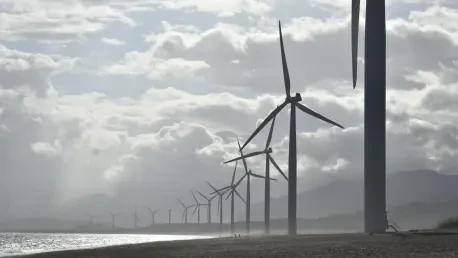
The Department of the Interior’s directive to suspend all major offshore wind development represents an unprecedented federal intervention into the clean energy transition. The order effectively puts a stop to progress on five key East Coast projects, including Virginia’s massive 2.6-GW Coastal Virginia Offshore Wind farm and New York’s promising Empire Wind and Sunrise Wind developments. This sudden halt has jeopardized billions of dollars in private and public investment, stranding a complex supply chain of manufacturing facilities, port upgrades, and specialized maritime operations that were scaling up to support the industry.
The stakes of this decision extend far beyond a single sector, impacting state-level climate goals and thousands of jobs. The five projects now in limbo were cornerstones of the East Coast’s strategy to decarbonize its power grid, reduce reliance on volatile global energy markets, and establish American leadership in a rapidly growing technology sector. The administration’s action has thus created a void, leaving developers, investors, and state governments scrambling to understand the new rules of engagement and the long-term viability of green infrastructure in the United States.
The Core Conflict Deconstructing the Rationale and Repercussions
The Specter of Radar Interference a Legitimate Threat or a Convenient Pretext
At the heart of the administration’s public rationale is the concern that offshore wind farms pose a direct threat to national security. The central claim, articulated by Interior Secretary Doug Burgum, is that the immense size of modern turbines—with their massive rotating blades and highly reflective towers—could blind critical military and civilian radar systems. This interference could potentially mask incoming threats or create false targets along the strategically vital and densely populated Atlantic coast, a risk deemed too significant to ignore without further study and mitigation.
In line with this official reasoning, the stated purpose of the pause is to allow the Department of the Interior and the Department of Defense to collaborate on developing effective mitigation strategies. However, critics of the decision question the timing and severity of this concern, pointing out that numerous other nations, particularly in Europe, have successfully integrated large-scale offshore wind farms near sensitive airspace for years. This raises a critical question: do these radar issues represent a newly discovered and insurmountable technological hurdle for the U.S., or are they a known challenge with existing solutions being presented as a pretext for a policy shift?
Common Sense Back to Energy Policy The Political Philosophy Behind the Pause
Beyond the technical arguments, Secretary Burgum’s commentary on social media reveals a deeper ideological motivation. By unfavorably comparing the energy output of all five halted wind farms to a single natural gas pipeline and dismissing renewables as “expensive” and “unreliable,” the administration reframes the decision not as a temporary safety measure but as a fundamental course correction. This rhetoric aligns with a broader “America First” energy strategy that prioritizes fossil fuels as the bedrock of the nation’s power grid.
This perspective recasts the halt as a move to restore “common sense” to an energy policy perceived as having been skewed by subsidies for renewable sources. The political calculus appears to favor the immediate and concentrated output of traditional energy infrastructure over the distributed and variable nature of wind power. This stance suggests the administration’s actions are driven as much by a long-term vision for a fossil fuel-dominant future as they are by any specific, immediate security threat, merging policy with a distinct political philosophy.
From Security Risk to Strategic Asset The Industrys Forceful Rebuttal
In a direct and powerful counter-narrative, industry stakeholders are reframing offshore wind not as a liability but as a critical component of national security. Dominion Energy, developer of the Coastal Virginia project, has forcefully argued that its wind farm is “essential for American national security.” This argument is not abstract; it is rooted in the project’s direct connection to vital infrastructure, presenting a starkly different definition of security.
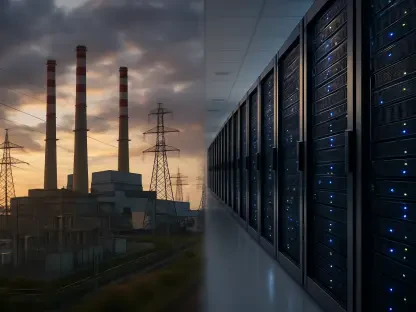
This opposing view details how the clean, locally sourced power from the Virginia project is slated to support a nexus of strategic assets: key military installations, the country’s sole manufacturer of nuclear-powered aircraft carriers, and the world’s largest concentration of data centers that form the backbone of the AI industry. From this perspective, a failure to build out reliable energy sources to power these critical facilities creates its own profound national security vulnerability, leaving essential defense and economic infrastructure dependent on an aging and potentially fragile grid.
The Ripple Effect Gauging the Economic Shockwaves and Geopolitical Standing
The immediate economic fallout from the development freeze is already being felt across the states and supply chains that had banked on the industry’s growth. The decision casts a long shadow over investment, threatening to dismantle the domestic manufacturing capabilities and port infrastructure that were just beginning to take shape. This not only impacts current projects but also creates a chilling effect that could deter future international investment in American renewable energy.
On the global stage, this policy reversal positions the United States in stark contrast to its economic competitors. While nations in Europe and Asia are aggressively expanding their offshore wind capacity to secure their energy independence and capture a share of the green technology market, the U.S. appears to be stepping back. This move risks ceding American leadership in a key 21st-century industry and could undermine its geopolitical standing as a reliable partner in the global transition toward cleaner energy systems.
Navigating the Headwinds Strategic Responses for a Sector in Crisis
The administration’s decision is clearly a complex move, driven by a mixture of stated security concerns, an underlying preference for fossil fuels, and shrewd political positioning. For the offshore wind industry and its supporters, navigating this new reality requires a multi-pronged response. Key stakeholders must develop and deploy actionable strategies, starting with public awareness campaigns that reframe the debate around the tangible benefits of energy independence and grid resilience that offshore wind provides.
Simultaneously, the industry must proactively engage with federal agencies on the technical front, showcasing advanced technological solutions that can mitigate radar interference, many of which are already in use globally. By working with state governments, developers can present a unified front, emphasizing the crucial role their projects play in securing the nation’s most critical infrastructure. Re-establishing a dialogue based on solutions, rather than conflict, offers the most practical pathway forward.
Redefining the Horizon for American Energy
Ultimately, the halt on offshore wind development was more than just a policy dispute; it became a fundamental battle over the definition of national security in an era of technological change and energy transition. The conflict set a critical precedent that will undoubtedly influence the future of all large-scale renewable infrastructure projects across the United States for years to come. This moment crystallized a central question for the nation’s future. Will America’s path to energy security be paved by resurrecting the energy sources of the past, or by learning to harness the turbulent but powerful winds of the future?