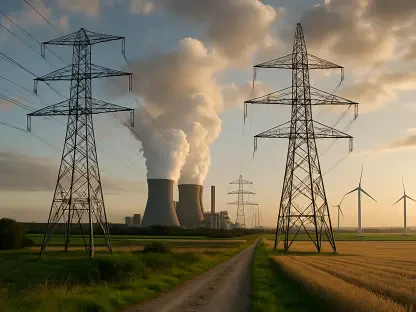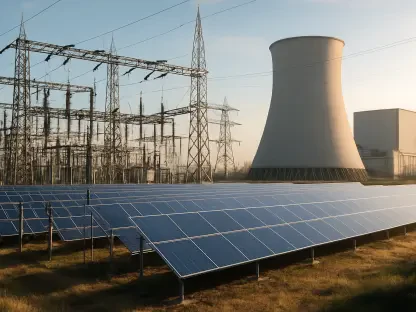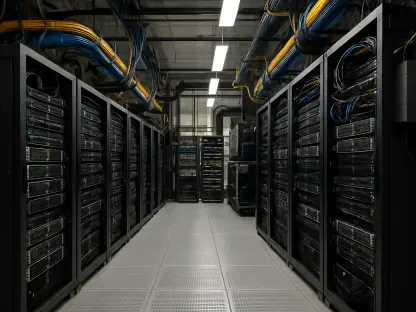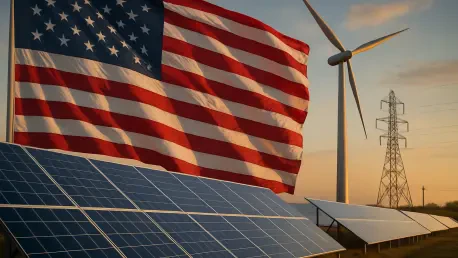

A schism has opened at the heart of America’s energy landscape, pitting the full force of federal policy against an insatiable market hunger for power that only renewables can quickly satisfy. The United States’ renewable energy sector is navigating a precarious landscape defined by these two powerful, opposing forces. On one side, a new presidential administration has enacted significant policy obstacles designed to curtail clean energy development. On the other, unprecedented growth in electricity demand, primarily driven by the proliferation of data centers and broader electrification, creates a compelling market-based case for the rapid deployment of renewables. This dynamic has ignited a high-stakes contest that will shape the nation’s energy future for years to come.
An Unprecedented Tug of War: Can Surging Demand Overcome a Hostile Policy Landscape?
The current environment represents a truly unique moment, a perfect storm where the irresistible force of market demand meets the immovable object of political opposition. Never before has the need for new electricity generation been so acute, with analysts forecasting staggering load growth over the next five years. Simultaneously, the federal apparatus has been systematically reconfigured to slow, if not halt, the very technologies best positioned to meet that need. This collision of priorities has placed developers, investors, and utilities in an extraordinarily difficult position, caught between clear economic signals and profound regulatory uncertainty.
The central question emerging from this conflict is whether the sheer economic and logistical advantages of wind and solar can overcome the formidable political and regulatory hurdles being erected. The answer will not only determine the pace of the nation’s energy transition but will also have significant implications for economic competitiveness, grid reliability, and energy security. The industry finds itself at a critical juncture where its survival and growth depend less on technological innovation and more on strategic resilience and the ability to navigate a deeply polarized landscape.
The Core Conflict: Setting the Stage for 2026
The primary source of this conflict is the “One Big Beautiful Bill Act” (OBBBA), a sweeping piece of legislation signed into law on July 4, 2025. This act methodically dismantles key incentives from the landmark Inflation Reduction Act (IRA), creating substantial uncertainty and forcing a strategic realignment within the renewables industry. Its most impactful provision established an aggressive new deadline of July 4, 2026, for wind and solar projects to “commence construction” to qualify for the full suite of tax credits. This drastically shortened development window has thrown countless projects into a frantic race against time, further complicated by the Treasury Department’s elimination of the 5% “safe harbor” test, a crucial mechanism that previously provided a clear path for projects to qualify.
Compounding the legislative pressures is a targeted campaign of administrative obstruction. The Department of the Interior is actively using its executive authority to impede renewable energy projects, particularly those on federal lands and waters. Offshore wind projects have faced stop-work orders and revoked permits, leading to costly legal battles and delays. Onshore, the administration is dragging out the approval process for large-scale solar developments, such as the 6.2-GW Esmeralda 7 project in Nevada, by opting for piecemeal environmental reviews instead of a comprehensive assessment. This strategy of deliberate slowdowns adds another layer of risk and complexity for developers attempting to meet the OBBBA’s tight deadlines.
A Two-Front War: Analyzing the Opposing Forces on Renewable Energy
Despite the hostile policy environment, the fundamental market dynamics for electricity in the U.S. provide a powerful counter-narrative. The most significant advantage for renewables is their speed of deployment. A new utility-scale solar or wind farm can be brought online in as little as a year, a stark contrast to traditional power sources. New natural gas plants are estimated to take five to eight years due to supply chain bottlenecks, while the nation’s newest nuclear reactors took approximately 15 years to complete. This speed is a critical asset in a market desperate for new capacity.
This logistical advantage is clearly reflected in market data. In 2024, solar alone accounted for 58% of all new generating capacity in the U.S., a figure that rose to 72% for the first ten months of 2025. Combined, wind and solar represented 87% of new capacity added during that period. The pairing of renewables with energy storage is emerging as a particularly potent solution, capable of meeting the 24/7 power needs of the booming data center industry far more quickly than gas or nuclear alternatives. While the OBBBA curtailed many renewable incentives, tax credits for energy storage were largely left intact, further strengthening its business case and providing a critical pathway for clean energy integration.
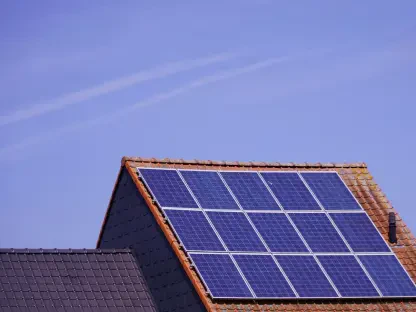
However, the policy onslaught continues to create formidable barriers. The OBBBA’s stringent new rules regarding Foreign Entities of Concern (FEOC) have injected a major element of risk into supply chain management. With the Treasury Department yet to issue final guidance on compliance, developers are forced to be overly conservative in their procurement strategies. This lack of clarity, coupled with the aggressive deadlines, has had a chilling effect, forcing some to sideline otherwise viable projects. The act’s sunsetting of the residential solar tax credit at the end of 2025 also delivered a significant blow to the distributed generation market, effectively closing off a key avenue for clean energy growth.
Voices from the Front Lines: Expert Perspectives on the Crisis and Opportunity
Industry leaders have been blunt in their assessment of the new policy landscape. Dan Smith, vice president of markets at DSD Renewables, described the OBBBA as a “draconian” and “bad outcome for the industry, worse than most people expected.” His comments reflect a broad consensus that the sector must now brace for a period of contraction, particularly in response to the accelerated phase-out of the investment tax credit. This sentiment highlights the immediate financial pressure companies are under as they re-evaluate project pipelines that were planned based on the IRA’s longer timelines.
The outlook for specific sectors, such as offshore wind, is particularly grim. The administration’s targeted use of executive authority to halt or delay projects has sent a shockwave through the international investment community. Kevin Beicke of Morningstar DBRS characterized the administration’s actions as a signal that the “U.S. is not open for business” for offshore wind, creating a “bleak outlook” for the sector through at least 2028. Developers like Dominion Energy view the persistent legal and administrative challenges as being driven by a “systematic and unfounded animus against wind energy” rather than legitimate regulatory concerns.
Nevertheless, a durable sense of optimism persists, grounded in the undeniable market demand. Robb Jetty, CEO of REC Solar, noted that despite the significant challenges, especially on the residential side, for many in the commercial sector, it remains “business as usual.” He believes the future “looks just as bright as it has previously,” arguing that the forecast of rising electricity costs and the urgent need for new power solutions create a resilient business case that transcends short-term policy shifts. This perspective underscores the belief that market fundamentals will ultimately compel investment in renewables, regardless of the political climate.
Navigating the Storm: How the Industry Is Adapting to Survive and Thrive
In response to this complex environment, the renewable energy industry is adopting a range of new strategies focused on discipline, efficiency, and leveraging state-level support to counteract federal headwinds. Developers are being forced to become more selective, triaging project pipelines with a new level of rigor. DSD Renewables, for example, is categorizing its portfolio into “Mature,” “Less Mature,” and “At-Risk” projects. This disciplined approach focuses finite resources on the most actionable projects with the highest probability of meeting the OBBBA’s deadlines, effectively preparing the company for a “post-ITC world.”
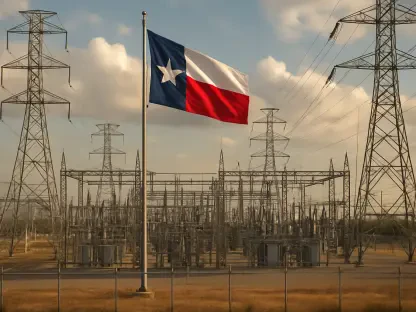
With federal support waning, the industry is increasingly looking to state governments to champion clean energy deployment. Experts emphasize that states must find every way possible to expedite the development, construction, and interconnection of advanced energy projects. Illinois’s Clean and Reliable Grid Affordability Act is cited as a model, directing utilities to install 3 GW of energy storage and reforming transmission processes. Similarly, leadership in grid infrastructure is emerging in Texas, where ERCOT recently approved significant transmission upgrades, and in California, where new legislation is accelerating public-private financing for grid modernization.
Ultimately, navigating the combined pressures of FEOC rules, tariffs, and tight credit windows is compelling developers to focus intensely on operational efficiency and supply chain security. Companies are spending more time and resources vetting their suppliers for compliance and seeking consistency in project design and construction. This heightened focus on optimizing asset performance is a necessary adaptation to maximize returns in a less forgiving financial environment, ensuring that every project that moves forward is as robust and profitable as possible.
The renewable energy industry in 2026 found itself in a state of profound flux, defined by a palpable tension between market opportunity and policy-driven peril. The “pull forward” of projects seen in 2025, as developers rushed to get ahead of the OBBBA’s deadlines, proved difficult to sustain in the face of growing headwinds and administrative slowdowns. Yet, the non-negotiable reality of rising electricity demand provided a powerful and persistent tailwind. The speed and cost-effectiveness of renewables, particularly when paired with storage, offered a pragmatic solution that utilities and large energy consumers could not ignore. The industry’s resilience, honed by years of policy volatility, was put to the test, and its ability to adapt, innovate, and leverage state-level support ultimately determined its path forward through a challenging and uncertain chapter.