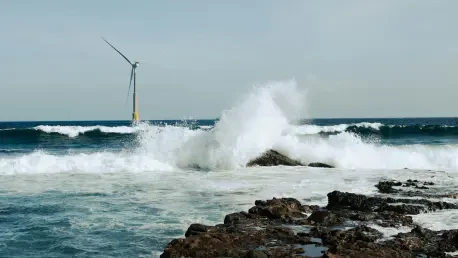

The rugged coastline of Wales is currently witnessing a historic pivot in energy strategy that seeks to reconcile the urgent demands of climate change with the preservation of its legendary natural heritage. For decades, the rolling hills and deep valleys of the Welsh interior have been at the center of a tug-of-war between renewable energy developers and local communities who fear the industrialization of their ancestral landscapes. Today, however, the momentum is visibly shifting away from the contentious terrestrial projects of the past and toward the vast, untapped power of the Celtic Sea. This transition represents more than just a change in geography; it is a sophisticated recalibration of how a nation balances its economic survival with the aesthetic and ecological integrity of its land. As the Welsh government and private industry players look toward the horizon, the focus has intensified on large-scale marine infrastructure and the promise of a hydrogen-based economy, signaling a new chapter in the regional industrial identity.
Navigating the Challenges of Onshore Development
The Collapse of Major Inland Wind Schemes: A Strategic Retreat
The withdrawal of the Nant Ceiment Energy Park proposal in the Teifi Valley marks a significant departure from the previous trend of aggressive inland expansion for wind power. Originally envisioned as a substantial development featuring thirteen high-capacity turbines across the Carmarthenshire countryside, the project faced intense scrutiny during its detailed planning phase. Bute Energy, the developer behind the scheme, ultimately determined that the project was no longer sustainable after evaluating various environmental constraints, land suitability, and long-term commercial viability. This decision was not merely a reaction to technical difficulties but a reflection of the increasing complexity involved in placing massive industrial structures within sensitive rural ecosystems. The collapse of the Nant Ceiment project is widely viewed as a watershed moment, suggesting that the era of uncontested onshore wind growth may be nearing its end in certain parts of Wales.
Beyond the immediate loss of a potential energy source, the cancellation underscores the growing efficacy of community-led conservation efforts and the high bar set by environmental impact assessments. Organizations like the Campaign for the Protection of Rural Wales have championed this outcome as a victory for strategic planning, arguing that renewable energy goals must not supersede the protection of biodiversity and local tourism. This specific case study illustrates a broader shift in developer sentiment, where the costs of mitigating environmental damage and navigating public opposition are beginning to outweigh the benefits of inland generation. It serves as a stark reminder that for a green transition to be truly sustainable, it must secure the consent of the people living alongside the infrastructure. The withdrawal signals to the industry that future onshore projects will require a much more surgical and less intrusive approach to be successful in the current regulatory and social climate.
Addressing the Cumulative Impact on Rural Areas: The Saturation Point
While individual project cancellations provide temporary relief to specific valleys, the broader landscape of Wales remains under pressure from dozens of active onshore wind proposals. Campaigners are currently monitoring over seventy different schemes at various stages of the planning process, ranging from smaller community clusters to massive arrays with turbines reaching heights of nearly 600 feet. The primary concern among residents and ecological experts is the “cumulative impact” of these developments, where the collective presence of multiple wind farms transforms the visual and biological character of entire regions. Critics argue that the piecemeal industrialization of the uplands threatens to degrade the very wild spaces that define Welsh culture and drive its rural economy through tourism. This fear of a “death by a thousand cuts” has unified diverse groups in a call for a more holistic, national-level strategy that recognizes when a particular geographic area has reached its developmental saturation point.
In response to these mounting tensions, there is an increasing push for a national renewables strategy that fundamentally prioritizes offshore capacity over inland expansion. Proponents of this shift argue that the sea offers a far greater generation potential with significantly fewer direct impacts on human settlements and terrestrial habitats. By concentrating efforts on the marine environment, Wales could potentially meet its ambitious carbon-reduction targets without triggering the social friction and ecological fragmentation associated with mountain-top wind farms. This movement toward a “marine-first” policy is gaining traction among policymakers who recognize that the long-term viability of the green transition depends on maintaining public goodwill. The goal is to move the heavy lifting of energy production away from the doorstep of rural communities and into the vast expanses of the Celtic Sea, where the scale of infrastructure can match the scale of the climate challenge.
Building a Marine and Industrial Green Powerhouse
Port Revitalization and the Celtic Freeport: Coastal Transformation
The strategic focus of the Welsh energy sector is now gravitating toward the Celtic Freeport, an ambitious industrial project centered on the historic maritime hubs of Milford Haven and Port Talbot. This initiative is designed to harness the immense potential of floating offshore wind technology, which allows turbines to be situated in deeper waters where wind speeds are higher and more consistent. Recent government investments totaling hundreds of thousands of pounds have been directed toward critical infrastructure assessments and site remediation at locations such as Talbot Wharf and Criterion Quay. These funds are being used to prepare the ground for a massive supply chain capable of building, launching, and maintaining the next generation of offshore energy arrays. This transformation of brownfield industrial sites into high-tech green energy hubs represents a literal rebuilding of the Welsh economy from the coast inward, focusing on areas that already possess a deep industrial heritage.
The economic implications of this shift are profound, as the development of the Celtic Freeport is expected to create thousands of high-skilled jobs in engineering, logistics, and marine services. By positioning South and West Wales as a global leader in floating offshore wind, the region is aiming to attract billions in private capital that would otherwise go to competing European ports. This approach effectively decouples renewable energy production from the land-use conflicts that plague onshore wind, as the manufacturing and maintenance activities are confined to existing industrial zones. The revitalization of these ports not only provides a solution to the energy crisis but also offers a path toward social regeneration in coastal communities that have struggled since the decline of traditional heavy industry. It is a strategy built on the premise that the green transition should be an engine for industrial modernization and regional prosperity.
The Rise of the Hydrogen Economy: Connecting the Paradigm Shift
Parallel to the expansion of offshore wind is the emergence of hydrogen as a cornerstone of the future Welsh energy grid. In Pembrokeshire, the development of the West Wales Hydrogen project has reached a critical milestone with the approval of a specialized pipeline designed to transport green hydrogen from production sites to existing energy terminals. This project, led by MorGen Energy, utilizes electrolysis to convert renewable electricity into hydrogen gas, which can then be stored or used to decarbonize heavy industry and transport. The construction of this 1.5-kilometer pipeline represents a vital piece of the puzzle, providing the necessary link between new production facilities and the established infrastructure of the South Hook Liquid Natural Gas Terminal. This integration of new green technology with legacy fossil-fuel assets demonstrates a pragmatic approach to the energy transition, where existing industrial footprints are repurposed for a low-carbon future.
The development of a “hydrogen economy” provides a necessary buffer for the intermittent nature of wind power, allowing excess energy generated during peak conditions to be stored for later use. By co-locating hydrogen production with offshore wind landing points and existing gas infrastructure, Wales is creating a highly efficient energy ecosystem that maximizes the utility of every kilowatt generated. This strategy of “industrial symbiosis” reduces the need for extensive new overland power lines, which are often as controversial as the wind turbines themselves. Instead, the use of sub-sea cables and underground pipelines allows for a more discrete and socially acceptable energy distribution network. As the technology matures, the hydrogen sector is expected to provide a clean fuel source for maritime shipping and heavy manufacturing, further cementing the role of the Welsh coast as a critical node in the global effort to achieve net-zero emissions.
Political and Strategic Realignment for the Future
Political Dynamics and Economic Stability: The Policy Framework
The successful execution of this massive energy pivot is deeply intertwined with the prevailing political climate and the stability of long-term policy frameworks. As local and national elections approach, the debate over the “green transition” has become increasingly polarized, with climate coalitions warning that any retreat from net-zero commitments could jeopardize the massive investments already flowing into the region. Proponents of the current strategy argue that Pembrokeshire and South Wales must embrace these changes to avoid being left behind in a rapidly decarbonizing global economy. However, there remains a segment of the electorate that is skeptical of the costs associated with such a large-scale transformation, or who remain concerned about the impact of any new infrastructure, whether on land or at sea. This political friction highlights the delicate balance that leaders must maintain to ensure that the transition remains both economically viable and democratically supported.
For private investors, the primary requirement is a predictable regulatory environment that justifies the multi-decade lifespans of offshore wind farms and hydrogen plants. The intervention of advocacy groups in the political sphere underscores the fact that green energy is not just a technical challenge but a social one. If the consensus on net-zero goals were to fracture, the capital flight could be devastating for the nascent industries in the Celtic Freeport. Therefore, the upcoming political cycles in Wales are viewed as a litmus test for the public’s appetite for continued industrial change. Ensuring that the benefits of the green economy—such as job creation and lower energy costs—are felt locally will be crucial in maintaining the political will necessary to see these projects through to completion. The transition is as much about winning hearts and minds as it is about engineering and finance.
Synthesis of a New Energy Paradigm: A Balanced Path Forward
The evolving energy landscape in Wales clearly indicates a strategic realignment toward a more coordinated and marine-focused paradigm. By moving away from the fragmented and often unpopular onshore wind projects, the nation is carving out a path that respects its ecological heritage while meeting the demands of modern energy security. The shift toward floating offshore wind and hydrogen production in the Celtic Sea offers a scalable solution that can generate vast amounts of clean power with a minimized footprint on the lived environment. This approach recognizes that the “green” in the green transition must apply to the preservation of the landscape as much as it does to the reduction of carbon emissions. The success of this model will likely serve as a blueprint for other coastal nations facing similar tensions between development and conservation.
Ultimately, the future of Welsh energy will be defined by its ability to integrate complex technologies with the existing industrial and social fabric of the country. The transition was characterized by a move toward large-scale, coastal-centered infrastructure that maximizes efficiency and minimizes conflict. To ensure long-term success, policymakers should focus on streamlining the planning process for offshore developments while maintaining rigorous environmental standards. Additionally, there must be a continued investment in local skills and education to ensure that the workforce is ready to take on the thousands of specialized roles created by the Freeport and hydrogen sectors. By treating the energy transition as a holistic project of national renewal, Wales can secure a sustainable and prosperous future that honors its past while embracing the technological possibilities of the present. The actionable next step for the region is to solidify the supply chain links between the ports and the offshore arrays, ensuring that the economic value of the wind remains firmly anchored in Welsh soil.