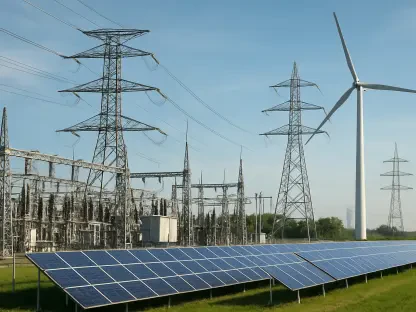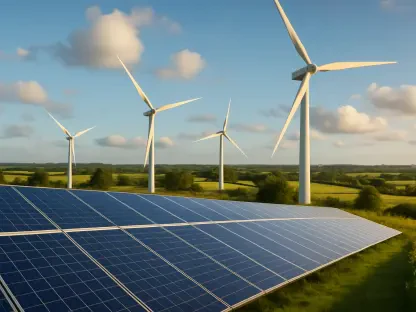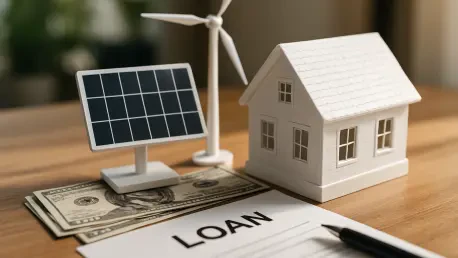

A landmark decision by the Department of Energy has sent ripples through the clean energy sector, officially revoking a $1.8 billion loan commitment previously allocated to Arizona Public Service, the state’s largest investor-owned utility. This move halts a significant investment aimed at modernizing Arizona’s power grid and accelerating its transition to renewable energy sources, signaling a profound and systemic shift in the nation’s energy funding policies. The cancellation is not an isolated adjustment but a central element of a comprehensive re-evaluation of federal energy project financing initiated under the current administration. This far-reaching review has placed numerous large-scale infrastructure projects in a state of uncertainty, forcing utilities and state governments to reassess their strategic roadmaps for achieving long-term climate and energy objectives in a rapidly changing federal landscape. The decision underscores a deliberate pivot in how the federal government prioritizes and supports different forms of energy production, with immediate and substantial consequences for projects that were once considered cornerstones of America’s clean energy future.
A Systemic Reversal of Energy Funding
The Impact on Arizona’s Clean Energy Goals
The now-canceled $1.8 billion loan was earmarked to be a cornerstone of Arizona Public Service’s ambitious clean energy strategy, designed to finance a suite of critical infrastructure upgrades. The funding was intended for the construction and modernization of transmission lines, the development of new renewable power generation facilities, and the deployment of advanced, grid-integrated energy storage systems. These projects were meticulously planned to support the utility’s aggressive decarbonization targets, which include a complete phase-out of all coal-fired power plants by 2031 and the delivery of 100% carbon-free electricity to its customers by the year 2050. The immediate casualty of this funding reversal was to be the Agave Battery Energy Storage System, a state-of-the-art 150-megawatt, 600-megawatt-hour facility. This project was specifically engineered to play a pivotal role in smoothing the integration of intermittent renewable sources like solar power into the grid and providing essential capacity to manage periods of peak electricity demand, thereby enhancing overall grid reliability and resilience in a region heavily reliant on solar energy.
The withdrawal of federal funding for projects like the Agave Battery Energy Storage System presents a significant technological and logistical challenge for utilities striving to modernize their infrastructure. Grid-scale battery storage is widely regarded as a critical enabling technology for a high-penetration renewable energy future, acting as a buffer that absorbs excess solar or wind generation and dispatches it when the sun is not shining or the wind is not blowing. Without this capability, the grid becomes more vulnerable to fluctuations in power supply, potentially leading to instability and a reduced ability to retire conventional fossil fuel plants. The cancellation forces Arizona Public Service to seek alternative, likely more expensive, financing options or to delay the deployment of essential storage assets. This delay could, in turn, slow the pace of renewable integration, complicate the management of peak demand, and potentially jeopardize the timeline for meeting its state-mandated clean energy goals, illustrating the direct link between federal policy decisions and the practical execution of state-level energy transitions.
A Broader Re-evaluation of Commitments
The termination of the Arizona loan is a prominent example within a much larger, nationwide reassessment of federal financial commitments made under the previous administration. According to official statements from the Department of Energy, this specific loan is part of a staggering $83 billion portfolio of commitments that have been systematically “restructured, revised or eliminated.” This massive overhaul follows what the department has characterized as an “exhaustive first-year review” of obligations inherited from its predecessors. A key justification provided by the DOE for this extensive review is the assertion that a significant number of these loan commitments were expedited in the period following the presidential election, suggesting a lack of thorough vetting and alignment with the current administration’s long-term energy strategy. This context frames the Arizona cancellation not as a punitive measure against a single project but as a predictable outcome of a broader, top-down policy realignment affecting the entire national energy landscape and redefining the criteria for federal support.
This pattern of reversals extends well beyond the borders of Arizona, indicating a consistent and deliberate policy shift with nationwide implications. Another notable example is the cancellation of a $716 million loan that had been designated for crucial transmission infrastructure upgrades for Jersey Central Power & Light, a move that similarly impacts grid modernization efforts on the East Coast. The Department of Energy has been transparent about its new directive, explicitly stating its intention to eliminate approximately $9.5 billion in what it terms “government-subsidized, intermittent wind and solar projects.” This rhetoric and the accompanying actions signal a clear and decisive break from the previous administration’s focus on renewables. The systematic de-obligation of funds for wind, solar, and related grid-support projects demonstrates a fundamental change in how the federal government views its role in shaping the nation’s energy mix, with a clear preference emerging for more traditional and centralized power sources over distributed, intermittent renewables.
Shifting Priorities Toward Conventional Power
The New Focus on Fossil Fuels and Nuclear Power
In stark contrast to the wave of cancellations targeting renewable energy projects, the Department of Energy’s active loan portfolio provides a clear illustration of its new strategic priorities. The department is now channeling significant federal financial support toward conventional energy sources, with a stated goal of promoting what it describes as “more affordable and reliable energy.” This new direction is substantiated by several high-profile loan approvals that underscore a renewed commitment to fossil fuels and nuclear power. One of the most significant is a $1.5 billion loan greenlit to restart a coal gasification plant, a technology that converts coal into synthesis gas. This move represents a substantial reinvestment in a coal-based energy infrastructure. In parallel, the DOE has also approved a $1 billion loan to finance the restart of a previously shuttered nuclear power plant, signaling strong support for extending the life and operational capacity of the nation’s existing nuclear fleet, which provides a consistent, carbon-free source of baseload power.
This strategic pivot toward natural gas and nuclear uprates represents a fundamental redirection of the nation’s energy policy, prioritizing grid stability and baseload power generation over the expansion of intermittent renewable sources. The DOE’s rationale centers on the argument that natural gas provides a flexible and reliable energy source that can quickly ramp up and down to meet demand, while nuclear power offers a consistent, around-the-clock supply of carbon-free electricity. Investments in “nuclear uprates” specifically refer to upgrades at existing nuclear facilities to increase their power output, a cost-effective way to boost clean energy generation without constructing new plants. This focus suggests a belief within the current administration that a reliable energy grid cannot be sustained by wind and solar alone and requires a firm foundation of dispatchable power sources. The policy is therefore geared toward reinforcing the existing energy infrastructure while selectively expanding conventional assets deemed critical for national energy security and economic stability.
The Outlook for Future Energy Projects
The Department of Energy has made it clear that the current wave of funding reversals is not yet complete, creating an atmosphere of continued uncertainty for numerous projects across the country. A spokesperson for the department has confirmed that additional cancellations, officially termed “de-obligations,” are already in process and will be publicly disclosed as soon as they are finalized. This forward-looking statement suggests that the re-evaluation of the previous administration’s energy loan portfolio is an ongoing initiative, and more projects, particularly those in the renewable energy sector, could face a similar fate to that of the Arizona Public Service loan. This sustained review process is likely to have a chilling effect on the clean energy industry, as project developers and investors may become more hesitant to pursue large-scale initiatives that depend on the stability of federal financial backing. The prospect of further de-obligations introduces a significant element of risk into long-term planning for utilities and renewable energy companies alike.
This strategic realignment of federal energy funding has established a new paradigm for project financing that will shape the American energy landscape for years to come. The clear preference for natural gas and nuclear power over wind and solar is forcing states, utilities, and private developers to recalibrate their energy transition strategies and seek alternative sources of capital. Projects that align with the DOE’s new focus on reliability and baseload power are now more likely to receive favorable consideration for federal loans, while those centered on intermittent renewables may need to rely more heavily on state-level incentives, private investment, and power purchase agreements to achieve financial viability. This policy shift effectively redraws the map of energy investment in the United States, creating a more challenging environment for renewable energy expansion while simultaneously opening new doors for the conventional energy sector to secure federal support for modernization and life-extension projects.
A New Chapter in Energy Policy
The decisions made by the Department of Energy marked a definitive turning point in the nation’s approach to energy infrastructure investment. By redirecting billions of dollars away from renewable projects and toward natural gas and nuclear facilities, the administration established a new set of priorities that favored grid stability and conventional power sources. This policy shift had immediate and tangible consequences, as evidenced by the cancellation of the Arizona loan and the subsequent re-evaluation of dozens of other commitments nationwide. The new landscape required states and private companies to adapt quickly, altering their strategic plans and seeking alternative funding mechanisms to continue their transitions away from fossil fuels. The era of unequivocal federal backing for wind and solar projects had given way to a more selective and cautious investment strategy, fundamentally reshaping the trajectory of America’s energy future.