
Setting the Stage: A Blow to Renewable Energy Ambitions
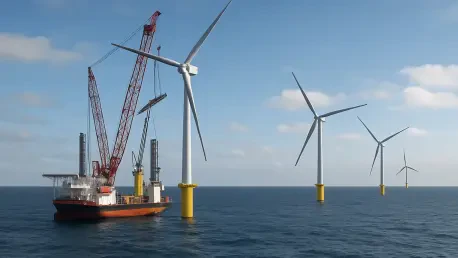
Imagine a future where clean, sustainable energy powers millions of homes along the New Jersey coastline, driven by towering offshore wind turbines harnessing the power of the Atlantic. That vision took a significant hit with the recent cancellation of the 2.4-gigawatt (GW) Leading Light Wind project by Invenergy, a major North American clean energy developer. This decision, announced on November 13, sends ripples through the renewable energy sector, highlighting vulnerabilities in an industry critical to achieving carbon neutrality goals. As a market analysis, this discussion aims to unpack the forces behind this setback, explore current trends in the offshore wind market, and project what lies ahead for stakeholders in this vital space.
The importance of this analysis cannot be overstated. Offshore wind represents a cornerstone of many states’ renewable energy strategies, with New Jersey targeting 11 GW of capacity by 2040. The termination of a project that could have powered countless homes underscores deeper structural issues threatening the sector’s growth. By delving into economic pressures, supply chain constraints, and regulatory challenges, this examination seeks to provide clarity on why such ambitious projects are faltering and how the market might adapt to these turbulent conditions.
Diving Deep: Market Trends and the Forces Behind the Cancellation
Economic Pressures Weighing Down Offshore Wind Development
The offshore wind market is grappling with financial headwinds that have proven too strong for even well-established players like Invenergy. The cancellation of the 2.4-GW project stems largely from escalating costs that have outpaced initial projections. Rising inflation, coupled with labor shortages and volatile global markets, has driven up expenses for key components like turbines and installation vessels by more than 30% over recent years. For developers, these cost surges create a daunting barrier, especially when financial incentives and subsidies fail to keep pace.
Moreover, the high upfront investment required for offshore wind projects amplifies the risk. Unlike other renewable sectors, such as solar, which can scale incrementally, offshore wind demands massive capital outlays with long lead times before returns are realized. This economic reality has left many projects, including Leading Light Wind, stranded in a funding gap. As market data suggests, without enhanced federal or state support mechanisms, developers may continue to pull back from ambitious commitments, slowing the momentum of clean energy adoption.
Supply Chain Bottlenecks Stifling Progress
Beyond financial constraints, the offshore wind market faces a logistical quagmire rooted in persistent supply chain disruptions. Invenergy explicitly cited an inability to secure a turbine supplier as a critical reason for abandoning the New Jersey initiative. This challenge is emblematic of broader industry struggles, where limited manufacturing capacity and shipping delays—intensified by geopolitical tensions and post-pandemic recovery issues—have created significant bottlenecks.
In contrast to sectors like solar, which have diversified sourcing to mitigate such risks, offshore wind remains tethered to specialized equipment with few alternative suppliers. Current market trends show a growing push toward domestic manufacturing to address these gaps, but building such infrastructure requires years of investment and coordination. Until these solutions materialize, the sector risks further delays and cancellations, undermining confidence among investors and policymakers alike.
Regulatory Uncertainty Clouding Market Outlook
Adding another layer of complexity is the shifting regulatory landscape that continues to unsettle the offshore wind market. In New Jersey, despite approvals for other projects totaling 3.7 GW earlier this year, inconsistent permitting processes and fluctuating federal tax incentives create an unpredictable environment. Invenergy noted that these conditions made it nearly impossible to plan long-term, a sentiment echoed across the industry as developers struggle to navigate a patchwork of policies.
Market analysis reveals that regulatory uncertainty often deters investment, as companies hesitate to commit resources without clear, stable frameworks. This issue is particularly acute for offshore wind, where projects span multiple jurisdictions and require extensive coordination. Looking ahead, projections indicate that without streamlined policies and robust federal backing, the sector’s growth trajectory could flatten, jeopardizing state-level renewable energy targets.
Looking Ahead: Projections and Emerging Opportunities
As the offshore wind market stands at a pivotal moment, emerging trends offer a glimpse of potential recovery. Technological innovations, such as floating wind platforms, promise to lower costs and expand viable project locations beyond shallow coastal waters. Industry forecasts suggest that these advancements could gain traction within the next few years, potentially revitalizing stalled initiatives by reducing dependency on constrained supply chains.
Economic and policy shifts also loom on the horizon. There’s growing speculation that expanded federal incentives could emerge to bolster developer confidence, especially if aligned with state-level commitments like New Jersey’s renewable goals. Market projections from 2025 to 2027 anticipate a gradual stabilization as localized manufacturing ramps up, though immediate challenges persist. Smaller, modular projects might serve as a bridge, allowing the industry to build momentum while systemic issues are resolved.
Perhaps most crucially, collaboration between public and private sectors is gaining steam as a strategy to mitigate risks. Partnerships that share financial burdens and streamline regulatory processes could redefine the market landscape. While the cancellation of major projects casts a shadow, these forward-looking trends suggest that the offshore wind sector still holds transformative potential if stakeholders can adapt swiftly to evolving dynamics.
Reflecting on the Market Impact: Strategic Takeaways
Looking back, the cancellation of the 2.4-GW Leading Light Wind project by Invenergy marked a critical turning point for the offshore wind market in New Jersey and beyond. It exposed deep-seated economic, logistical, and regulatory challenges that had been brewing beneath the surface, forcing a reckoning among industry players. The decision underscored how even well-resourced developers struggled against a backdrop of rising costs and supply chain disruptions.
Yet, this setback also paved the way for actionable strategies moving forward. Stakeholders were prompted to prioritize investments in domestic supply chains to reduce reliance on global markets prone to volatility. Policymakers faced increased pressure to craft consistent, supportive frameworks that could restore investor confidence. For businesses, exploring innovative financing models like public-private partnerships emerged as a viable path to share risks and sustain momentum. Ultimately, this event served as a catalyst, urging the industry to rethink its approach and build a more resilient foundation for future growth in renewable energy.