
In a bold move that has sent ripples across the American energy landscape, Vistra has officially announced a definitive agreement to acquire Cogentrix Energy, a transaction valued at approximately $4 billion that underscores a major consolidation within the power generation sector. The deal, confirmed on January 6, 2026, involves the transfer of a substantial 5.5 gigawatt portfolio of natural gas-fired power plants, significantly expanding Vistra’s capacity and operational reach in critical U.S. electricity markets. This acquisition is not merely an expansion but a calculated strategic maneuver, positioning Vistra to capitalize on growing energy demands and shifting market dynamics. The move signals a clear intent to reinforce its market leadership through the integration of a diverse and geographically strategic set of generation assets, setting the stage for a new chapter in the nation’s energy supply chain.
A Strategic Portfolio Across Key Markets
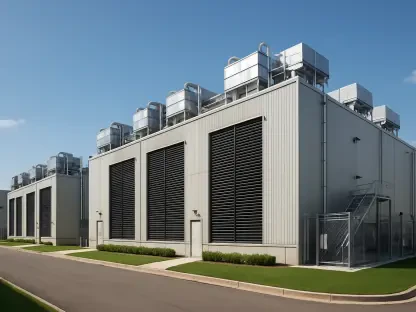
The acquisition provides Vistra with a highly strategic and geographically diverse set of assets, comprising ten generation facilities spread across three of the nation’s most important independent system operator (ISO) regions. Within the PJM Interconnection market, which serves a vast swath of the eastern United States, Vistra will take control of three advanced combined cycle gas turbine (CCGT) facilities and two versatile combustion turbine (CT) plants. The deal also establishes a formidable new presence for Vistra in the ISO New England market through the addition of four CCGT facilities. Furthermore, it deepens the company’s existing footprint in the dynamic ERCOT market in Texas with one highly efficient cogeneration plant. This carefully curated portfolio not only enhances Vistra’s operational scale but also provides crucial diversification, reducing regional dependencies and creating new opportunities to serve a wider customer base across varied regulatory and market environments. The move strengthens its competitive position in established territories while unlocking significant growth potential in a new, high-value region.
This transaction represents a deliberate and “opportunistic” step in Vistra’s broader growth strategy, as articulated by President and CEO Jim Burke. It marks the company’s second major expansion of its generation footprint in the past year, clearly indicating a proactive approach to consolidating its market position. The primary driver behind this aggressive expansion is to fortify Vistra’s “ability to serve growing customer demand in our key markets,” a goal that requires both increased capacity and enhanced operational flexibility. This acquisition follows closely on the heels of a previous deal for 2.6 GW of natural gas capacity from Lotus Infrastructure Partners, which was finalized in October 2025. Together, these moves paint a picture of a company actively leveraging its financial strength to acquire critical infrastructure at a time of increasing energy consumption and market volatility. Industry analysts have largely viewed the strategy favorably, seeing it as a well-timed investment in reliable, dispatchable power generation that will be essential for grid stability.
Deconstructing the Financials and Market Reaction
The financial architecture of the Vistra-Cogentrix deal is a sophisticated arrangement involving a combination of cash, stock, and the assumption of existing liabilities. The total consideration is composed of a $2.3 billion cash payment, the issuance of $900 million in Vistra stock to Cogentrix’s owner, and the absorption of approximately $1.5 billion of Cogentrix’s outstanding debt. After accounting for an anticipated $700 million in tax benefits that Vistra projects to realize from the transaction, the net purchase price settles at around $4 billion. To ensure the necessary liquidity for the substantial cash component, Vistra has secured committed financing. A filing with the U.S. Securities and Exchange Commission revealed that Goldman Sachs is prepared to provide up to approximately $2 billion in senior secured bridge loans, covering the cash payment as well as related fees and expenses. This robust financial backing underscores the market’s confidence in the deal’s viability and Vistra’s ability to execute such a large-scale acquisition effectively and efficiently.
The transaction also casts a spotlight on the rapidly appreciating value of natural gas generation assets in the current market climate. Cogentrix is currently owned by Quantum Capital Group, which had purchased the company from Carlyle in August 2024 for $3 billion. The sale to Vistra just over a year later for a significantly higher valuation represents a substantial return for Quantum. Julien Demoulin-Smith, a prominent energy equities analyst at Jefferies, attributed this “sharp improvement” in valuation directly to the expansion in the market value of both power and capacity over the interim period. Analysts have reacted positively, with Demoulin-Smith describing the deal as “attractively priced” and a prime example of Vistra’s effective “use of balance sheet to create value accretively.” He particularly praised the strategic diversification into New England, viewing the move as making “abundant sense” and identifying the region as “the most attractive power market in the U.S.” due to what he believes are “unsustainably low” capacity prices poised for future growth.
Navigating the Regulatory Gauntlet
Before the acquisition can be finalized, it must successfully navigate a series of regulatory checkpoints at both the federal and state levels. The transaction is contingent upon receiving clearance from the Federal Energy Regulatory Commission (FERC), the primary overseer of the nation’s wholesale electricity markets. In parallel, the deal must undergo an antitrust review by the Department of Justice (DOJ) under the Hart-Scott-Rodino Act to ensure it does not unduly concentrate market power or harm competition. In addition to these federal requirements, certain state-level regulatory bodies in the jurisdictions where the acquired plants are located must also grant their approval. Vistra has publicly stated its expectation that the entire approval process will conclude and the transaction will officially close sometime in mid-to-late 2026. This timeline reflects the standard complexities involved in large-scale energy sector mergers, which require meticulous review from multiple agencies to satisfy public interest and market integrity standards.
However, the path to regulatory approval was not seen as a simple formality. The M&A environment in the power sector had grown more stringent, introducing a notable element of risk and uncertainty. Market analyst Julien Demoulin-Smith noted in his commentary that “Regulatory review uncertainty has increased,” a sentiment echoed by others in the industry. This caution was largely informed by a recent precedent in which the Department of Justice had opposed the proposed acquisition of Calpine by Constellation, signaling a potentially tougher stance on consolidation within the energy industry. This development suggested that regulators were taking a more critical look at deals that could impact market competition and consumer prices. The heightened scrutiny meant that the successful and timely completion of the Vistra-Cogentrix deal depended heavily on the company’s ability to convincingly argue that the acquisition would ultimately benefit the market and consumers without creating an anti-competitive landscape.