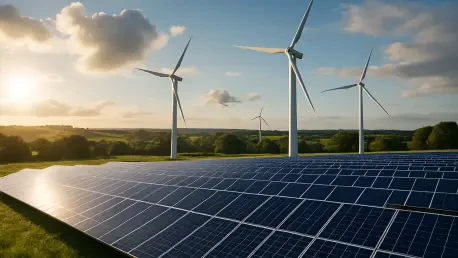

For decades, Albania’s energy narrative was almost singularly defined by its vast but volatile hydropower resources, a story of immense potential perpetually constrained by climatic uncertainty. The dream of a diversified, stable, and green energy future often seemed more like a distant policy aspiration than an imminent reality, a subject of discussion in boardrooms and government halls but lacking tangible momentum on the ground. However, the year 2025 marked an unmistakable turning point, a period when the theoretical blueprints for a renewable-powered Albania began to transform into concrete, steel, and silicon. It was not a single declaration or groundbreaking ceremony that defined this shift, but rather a powerful convergence of financial commitments, procurement milestones, and strategic state-led initiatives that collectively signaled to the world that the country’s green energy transition was finally, and decisively, underway. This cascade of progress across multiple fronts created a critical mass, fundamentally altering the nation’s trajectory and positioning it as an active participant in the regional energy transition.
The Dawn of a Diversified Energy Portfolio
The transition from a mono-source energy system to a multifaceted, resilient grid is a complex undertaking, requiring not only political will but also the strategic execution of diverse projects. In 2025, Albania demonstrated its commitment to this diversification by simultaneously advancing projects in utility-scale solar, strategic hydropower, and innovative floating solar technologies. This multi-pronged approach underscored a sophisticated strategy aimed at mitigating the risks associated with its historical reliance on hydropower. The progress was not merely theoretical; it was underpinned by significant financial backing from major international institutions and a clear commitment from the state to see these flagship projects through to completion. This coordinated push provided a clear signal to both regional observers and international investors that Albania was serious about modernizing its energy infrastructure and was methodically building the foundational pillars for a more secure and sustainable energy future.
The Belsh Solar Plant as a Market Catalyst
The 50 MWp Belsh solar plant emerged in 2025 as the definitive symbol of Albania’s renewable energy ambitions becoming bankable reality. Its journey through the year was a masterclass in converting long-term goals into actionable steps, culminating in a project that was fully prepared for implementation. The turning point arrived in April with the approval of a €30 million sovereign-guaranteed loan from the European Bank for Reconstruction and Development (EBRD), a move that provided the project with the financial bedrock it needed to advance. This momentum was further amplified in July when a supplementary €9.58 million grant was finalized, sourced from the European Union and the Western Balkans Investment Framework (WBIF). This blend of loan and grant financing not only de-risked the investment but also served as a powerful endorsement from Europe’s premier financial bodies. The final, unequivocal signal to the market came in November, when it was announced that the procurement process for the plant’s construction was imminent, confirming that all financial and preparatory hurdles had been successfully cleared.
Beyond its own significant contribution to the national grid, the Belsh project’s real impact was its role as a market catalyst, demonstrating a clear and replicable path from concept to execution for large-scale solar initiatives in the country. The successful structuring of its financing package, combining sovereign guarantees with international loans and grants, established a template for future renewable energy ventures. This success story resonated deeply with the international investment community, showcasing that Albania possessed the institutional capacity to navigate complex financial negotiations and deliver a project that met the stringent standards of bodies like the EBRD and the EU. Consequently, the progress on the Belsh plant did more than just promise future megawatts of clean energy; it actively lowered the perceived risk for subsequent private-sector investors who were watching closely. The plant became a testament to the country’s readiness for business, proving that Albania was no longer just a land of potential but a reliable partner for significant green energy investments.
The Strategic Push for Grid Stability
While new solar projects captured headlines, 2025 also saw Albania address a foundational challenge to its energy security: the stabilization of its hydro-dependent grid. The Skavica Hydropower Plant, a project of immense strategic importance that had been discussed for years, finally transitioned from a recurring political talking point into an active, state-driven national priority. Unlike other ventures seeking international private investment, the decision to pursue Skavica as a 100% state-funded investment underscored the government’s recognition of its critical role in the nation’s energy sovereignty. Throughout the year, formal procedures were launched and a clear construction timeline was established, moving the project firmly into the implementation phase. This decisive action was aimed directly at mitigating the country’s vulnerability to dry seasons, which have historically forced costly energy imports and created significant grid instability, thereby creating a more reliable baseload power system.
The renewed commitment to the Skavica project represented a crucial element of a broader, more mature energy strategy. It signaled an understanding that the integration of intermittent renewables like solar and wind is only viable if complemented by robust, dispatchable power sources that can ensure grid stability. By taking full financial ownership, the state demonstrated its long-term vision for a balanced energy mix, where new technologies are supported by strengthening the backbone of the existing system. The development of Skavica is thus not a step back toward hydro-dependency but a strategic move to create the stable energy foundation upon which a more diverse and modern renewable portfolio can be built. This state-led initiative provided the necessary assurance that as Albania embraces solar and other variable sources, it is also investing in the essential infrastructure required to manage them effectively, ensuring a reliable and secure energy supply for its future growth and development.
A New Era of International Confidence and Innovation
The successful mobilization of capital and the advancement of key projects in 2025 were not isolated events but rather indicators of a broader trend: the burgeoning confidence of international financial institutions in Albania as a prime destination for renewable energy investment. This external validation, manifested through consistent and substantial financial packages, proved instrumental in de-risking the country’s energy sector for a wider pool of investors. Simultaneously, Albania showcased its ambition to be not just a participant but an innovator in the regional energy landscape. By venturing into emerging technologies like floating solar, the nation signaled its intent to leverage its unique geographical assets and embrace cutting-edge solutions. This combination of growing financial credibility and a forward-looking technological vision marked the beginning of a new chapter for Albania, solidifying its position as a dynamic and attractive market for green energy development.
Validation from Financial Institutions
Across every major energy project that gained momentum in 2025, the consistent presence of the European Bank for Reconstruction and Development, the European Union, and the Western Balkans Investment Framework was the common denominator. This recurring involvement transcended simple financing; it acted as a powerful seal of approval, signaling to the global market that Albania’s renewable energy sector was not only promising but also structured, transparent, and aligned with international standards of governance and viability. For projects like the Belsh solar plant and the Vau i Dejës floating solar array, the backing of these institutions was pivotal. It provided the necessary capital to move forward but, more importantly, it imbued the projects with a level of credibility that is essential for attracting secondary and private-sector investment. This strong external validation effectively mitigated perceived political and economic risks, creating a more secure and predictable environment for potential investors who had previously been hesitant to enter the market.
This wave of institutional support is widely expected to be the catalyst for a subsequent influx of private capital, creating a snowball effect that will accelerate Albania’s energy transition. The rigorous due diligence processes conducted by the EBRD and its partners provide a level of assurance that private investors and commercial banks rely upon, reducing their own risk assessment costs and timelines. As these flagship projects successfully move into construction and operation, they will serve as tangible proof of concept, demonstrating healthy returns and a stable regulatory framework. This, in turn, will likely open the floodgates for more diversified investment in a range of renewable technologies, from onshore wind to biomass and beyond. The strategic partnerships forged in 2025 have thus laid the groundwork for a self-sustaining investment ecosystem, positioning Albania to finance its ambitious green agenda for years to come with an increasingly diverse mix of public and private funding sources.
Pioneering Innovative Energy Solutions
Albania’s energy strategy in 2025 was not limited to scaling up conventional renewable technologies; it also boldly embraced innovation through the advancement of the 12.9 MW Vau i Dejës floating solar project. This initiative, situated on a reservoir, represents a forward-thinking approach to land use, allowing for clean energy generation without occupying valuable agricultural or ecological terrain. The project’s progress was solidified with the signing of a €13.9 million contract, further supported by financing from the EBRD and WBIF, highlighting the confidence of international partners in Albania’s capacity to execute technologically advanced projects. By pioneering one of the largest floating solar installations in the Western Balkans, Albania positioned itself as a regional leader in adopting novel energy solutions. This move showcased a willingness to look beyond traditional solar farms and leverage the country’s existing hydropower infrastructure in new and synergistic ways, setting a precedent for future hybrid energy projects across the region.
The development of the Vau i Dejës project signaled a sophisticated and adaptive approach to energy diversification. It demonstrated that the country’s strategy was not merely about adding megawatts to the grid, but about doing so in an intelligent, efficient, and sustainable manner. Floating solar technology offers distinct advantages, including higher efficiency due to the cooling effect of the water and reduced evaporation from reservoirs, which is a critical benefit for a nation reliant on hydropower. By actively pursuing this technology, Albania showed its commitment to maximizing the output of its existing assets while minimizing environmental impact. This initiative served as a powerful statement about the country’s future direction, indicating an ambition to be at the forefront of the green transition by embracing innovation and turning its unique geographical characteristics into a strategic advantage in the race toward a sustainable energy future.
From Latent Potential to an Active Transition
The collective advancement of the Belsh solar plant, the Skavica hydropower facility, and the Vau i Dejës floating solar project in 2025 established a clear and undeniable pattern of action that transformed Albania’s standing in the regional energy sector. This portfolio of projects did not just represent progress on individual fronts; it demonstrated a holistic and strategic vision that addressed the nation’s most pressing energy challenges. The successful mobilization of utility-scale solar proved the country’s ability to attract and structure complex international financing, the state’s unwavering commitment to the Skavica plant confirmed its focus on long-term grid stability, and the pioneering of floating solar showcased an appetite for innovation and modernization. While significant hurdles such as grid modernization and managing hydrological volatility persisted, the critical mass of projects that moved into the implementation pipeline created an unstoppable momentum. This momentum began to catalyze the very institutional and infrastructural reforms that had been stalled for years, effectively elevating Albania from a country of latent potential to a dynamic and active player shaping its own green energy destiny.