
The relentless expansion of suburban landscapes often presents a deceptive picture of progress, masking the permanent loss of open space and natural habitats beneath layers of concrete and asphalt. In this complex dynamic, the most environmentally conscious decision is not always to leave land untouched, but to choose the lesser of two developmental evils. For Sacramento County, the recent approval of the Coyote Creek solar project became a stark illustration of this modern dilemma. The decision was not born from an ideological preference for one energy source over another, but from a pragmatic response to a complex web of legal, economic, and land-use realities. Faced with binding state mandates and the certain development of private land, the choice crystallized into a calculated balance: embrace a solar farm with significant, legally-enforceable environmental mitigations, or stand by as the same open space is irreversibly transformed into permanent urban sprawl. This case highlights a critical question for growing communities: how to navigate the path of progress when the alternative to green energy isn’t a greener landscape, but a concrete one.
The Weight of Mandates and Economic Realities
A primary driver behind the decision was the stringent legal and regulatory framework imposed by the state of California, which has established some of the most aggressive renewable energy mandates in the nation. These are not mere suggestions but binding legal requirements that utilities and, by extension, entire counties must meet. Sacramento County did not design these policies, but it is legally obligated to facilitate compliance. Failure to meet these state-mandated energy source requirements triggers severe consequences, including financial penalties that are invariably passed down to consumers. In this context, the Board of Supervisors’ role was narrowly defined. They were not tasked with debating the merits of state energy policy but with assessing whether a privately proposed project, after years of rigorous environmental review, met the legal standards required to proceed. The approval was thus a strategic move to ensure the region stays compliant with state law, functioning as an act of pragmatic governance within a complex and unyielding set of external constraints rather than a simple endorsement of the project itself.
Beyond the legal imperatives, the economic well-being of residents stood as a crucial factor in the board’s deliberation. Families in the Sacramento region are already contending with electricity rates that are approximately double the national average, placing a significant and growing strain on household budgets. Non-compliance with state energy mandates would almost certainly exacerbate this financial burden, leading to even higher utility bills. Approving a utility-scale project like Coyote Creek was therefore seen as a vital measure to help contain rising energy costs. By contributing a substantial amount of renewable energy directly to the grid, the project helps the local utility meet its state obligations more efficiently, which in turn helps stabilize rates for customers. This consideration transforms the decision from a purely environmental one into a critical issue of economic stewardship. The board’s responsibility extends to protecting residents from further financial hardship, making the vote a calculated effort to safeguard the public’s economic interests against the tangible costs of inaction.
Balancing Environmental Concerns with Practical Mitigation
The project faced multifaceted opposition rooted in genuine and valid community concerns, which were acknowledged directly by decision-makers. A central point of contention was the environmental impact, particularly the planned removal of approximately 3,000 mature oak trees. For many residents, this represented an unacceptable loss of a vital part of the region’s natural heritage. Additional concerns focused on the potential harm to sensitive vernal pools, which are unique and protected ecosystems, as well as the loss of a significant tract of land long used by the community for off-road vehicle recreation. These were not issues to be dismissed lightly; they reflected a deep and understandable desire to protect the local landscape and preserve access to recreational areas. Skepticism about the overall effectiveness of solar power and the financial implications of large-scale energy projects further fueled the debate, creating a complex tapestry of opposition that the board was compelled to address with transparency and concrete solutions.
In response to this public apprehension, the final project approval was contingent upon a comprehensive and legally binding mitigation plan designed to counter the primary environmental impacts. To address the narrative that the project entailed the complete clearing of the natural landscape, specific details were brought to the forefront. While 3,000 oak trees will be removed, a vastly larger number—over 13,000—will be preserved on the property, and large swaths of the land will remain entirely undeveloped. Crucially, key environmental protections were integrated directly into the project’s design from the outset. All identified vernal pools, critical habitats for local species, are being completely avoided by the development footprint. Furthermore, the plan mandates that substantial acreage, both within the project’s boundaries and in the surrounding area, be designated for permanent preservation and conservation. This information was intended to correct public confusion and demonstrate that the project was not a zero-sum game, but a development that included significant, built-in conservation efforts to balance its impact.
Debunking Alternatives and Facing Hard Truths
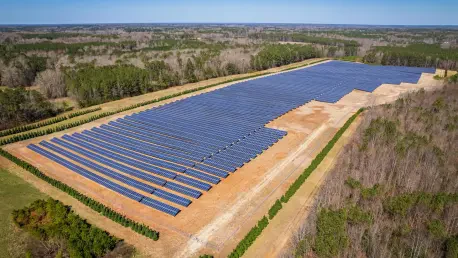
A frequently proposed alternative involved placing solar panels on existing infrastructure, such as commercial rooftops and large parking lots. While this idea holds surface appeal for its use of already-developed land, it is not a viable replacement for a utility-scale project of this magnitude. The Coyote Creek project spans approximately 2,700 acres, an area comparable to more than half the entire city of Citrus Heights. To replace this level of energy generation capacity with distributed solar would require a logistically impractical and economically prohibitive effort. It would involve coordinating thousands of separate installations across a vast urban area, undertaking a major and disruptive reconstruction of the existing energy grid to manage power flow from countless small sources, and would likely take decades to complete. Citing expert consensus, officials noted that such an approach would cause the project’s cost to “collapse instantly,” with the massive expenses ultimately being passed on to consumers through even higher electricity rates. Rooftop solar remains a valuable supplement to the energy portfolio, but it cannot replace the efficiency and scale of large-scale generation tied directly to the grid.
Ultimately, the decision was distilled down to a stark and unavoidable analysis of the land’s future. The site is private property, and the owner had been clear that its current use was no longer economically viable, making a sale for development imminent. Critically, the landowner preferred the solar project, with its extensive and mandated preservation components, to the most likely alternative: sprawling residential development. Denying the solar farm would not have frozen the land in its current, semi-natural state. Instead, it would have accelerated its path toward an outcome that would have permanently eliminated far more open space and natural habitat. A housing tract would have graded the land, removed nearly all vegetation, and introduced roads, infrastructure, and permanent structures with no requirement for the large-scale conservation easements included in the solar plan. The choice, therefore, was not between a solar farm and a pristine nature preserve, but between a managed energy project with significant environmental set-asides and the irreversible finality of urban sprawl.
A Deliberate Path Forward
The approval of the Coyote Creek solar project was ultimately characterized as a difficult but responsible decision made within the confines of real-world governance, where trade-offs are inevitable. The vote represented a calculated balancing act, one that carefully weighed the non-negotiable demands of state mandates, the urgent need to protect ratepayers from escalating costs, and the fundamental rights of a private property owner. At the same time, it involved leveraging the county’s authority to demand accountability and comprehensive mitigation for the project’s unavoidable environmental impacts. The decision was not a simple endorsement of solar energy but a pragmatic choice that secured a measure of environmental preservation and economic stability in the face of certain development. This complex process demonstrated that in contemporary land-use debates, the pursuit of an ideal, conflict-free outcome is often less attainable than a well-negotiated compromise that addresses the most pressing realities.