
In a stunning and comprehensive legal defeat for the Trump administration, its attempt to halt the nation’s major offshore wind projects has been systematically dismantled by the federal courts. With a final ruling on February 3, 2026, the administration’s record in its battle against five key wind farms fell to 0-5, as every targeted developer successfully secured a preliminary injunction, allowing construction to resume. This series of judicial rebukes marks a powerful check on executive overreach and raises fundamental questions about the use of opaque national security claims to derail critical infrastructure projects. The rulings not only saved billions of dollars in investments but also set a crucial precedent for the future of renewable energy development in the United States, showcasing the judiciary’s role in safeguarding due process against unsubstantiated government actions.
The Government’s Unexplained Shutdown
The National Security Justification
The conflict ignited on December 22, 2025, when the Department of the Interior (DOI) issued an unprecedented and sweeping stop-work order that froze all construction on five of the nation’s most significant offshore wind developments. The administration publicly justified this drastic move by citing unspecified “national security risks,” which it claimed were identified in “recently completed classified reports.” The stated purpose of this nationwide pause was to provide the DOI, the Department of Defense, and other relevant federal agencies with the necessary time to collaborate with project developers and state partners. This collaboration was intended to evaluate and, if necessary, mitigate these alleged risks before the multi-billion-dollar projects could proceed. However, the announcement was met with immediate skepticism and alarm from an industry that had spent years navigating complex regulatory and environmental reviews, only to be stopped at the final hurdle by a vague and unsubstantiated threat.
This sudden intervention represented a dramatic escalation in the administration’s contentious relationship with the renewable energy sector. By invoking national security, the government deployed a powerful tool often reserved for matters of espionage, terrorism, or foreign military threats, applying it to domestic energy infrastructure that had already undergone extensive vetting by multiple federal agencies, including the Department of Defense. The lack of specific details in the public announcement created a chilling effect, leaving developers, investors, and state governments in a state of uncertainty. The order affected a portfolio of projects poised to deliver gigawatts of clean energy to the American grid, including Sunrise Wind, Coastal Virginia Offshore Wind, Vineyard Wind 1, Revolution Wind, and Empire Wind. The administration’s broad and undefined justification effectively created a crisis of confidence, threatening not just these five projects but the viability of the entire U.S. offshore wind industry.
A Wall of Secrecy and The Legal Backlash
The administration’s rationale was immediately met with forceful and coordinated legal challenges from the affected developers, whose court filings revealed a consistent and powerful theme: the government’s absolute refusal to substantiate its claims or engage in any meaningful dialogue. Developers from all five projects argued that their repeated attempts to understand the basis for the shutdown were completely stonewalled by federal officials. They contended that the administration refused to divulge any details about the supposed national security concerns, declined to provide unclassified summaries of the classified reports, and, most critically, would not facilitate access to the sensitive information for company representatives who held the necessary top-level security clearances to review such materials. This wall of silence became the central pillar of the developers’ legal strategy, as they argued that the government’s actions were arbitrary, capricious, and a violation of administrative due process.
This complete lack of transparency became the cornerstone of the developers’ successful legal arguments, as they painted a picture of a government acting on secret evidence that it was unwilling to share even with cleared individuals. Ørsted, the developer behind the Sunrise Wind project, quantified the severe and immediate financial impact of the freeze, stating in court filings that the work stoppage was costing the $7 billion project over $1.25 million each day in losses. In a court statement dated January 12, Bryan Stockton, Ørsted’s head of federal and regulatory affairs, explicitly detailed the government’s lack of cooperation. He affirmed that as of that date, the federal defendants had made no effort whatsoever to provide Sunrise Wind’s eligible legal counsel or its technical experts with access to the classified intelligence that purportedly formed the basis of the Bureau of Ocean Energy Management’s (BOEM) decision. This inaction left the company in an impossible position: ordered to halt work to mitigate a risk it was not allowed to understand.
A Wave of Judicial Rebukes
The Decisive Rulings
The federal judiciary proved highly receptive to these arguments, systematically siding with the developers in every case. The final ruling in this series of legal challenges came from Judge Royce C. Lamberth of the U.S. District Court for the District of Columbia. Judge Lamberth, an appointee of President Ronald Reagan with a long history on the bench, had previously ruled in favor of another project, Revolution Wind, in a similar case on January 12. His decision to grant a preliminary injunction for the 924-megawatt Sunrise Wind project on February 3 was the fifth and final blow to the administration’s campaign, allowing Ørsted to immediately restart impacted construction activities while the underlying lawsuit against the government proceeds. This string of decisions from federal courts represented a clear trend of judicial skepticism toward the administration’s use of opaque national security claims to enact sweeping policy changes without due process or transparent engagement.
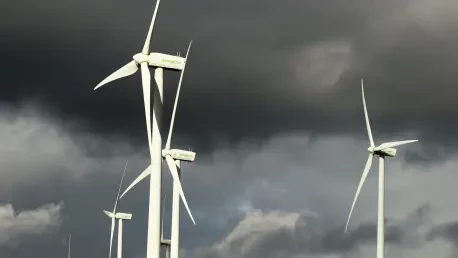
The five projects that successfully overcame the administration’s stop-work order represent a substantial portion of the nation’s burgeoning offshore wind capacity and are critical to meeting state-level clean energy mandates. The list includes Ørsted’s Sunrise Wind, set to serve New York; Dominion Energy Virginia’s massive 2.6-gigawatt Coastal Virginia Offshore Wind project; the pioneering 800-megawatt Vineyard Wind 1 offshore Massachusetts; the 700-megawatt Revolution Wind located offshore Rhode Island; and the 2-gigawatt Empire Wind, another major project serving New York. The collective capacity of these wind farms is essential for the East Coast’s transition away from fossil fuels, and the court rulings were celebrated as a victory not just for the developers but for the broader goals of energy independence and climate action. The judiciary’s intervention effectively prevented a catastrophic delay that would have jeopardized thousands of jobs and billions in economic investment.
A Unified Front Against Government Stonewalling
The legal arguments presented by the other developers closely mirrored those of Ørsted, creating a unified front that the government could not break. Dominion Energy Virginia, the entity behind the Coastal Virginia project, highlighted in its court filings that the government’s refusal to discuss security risks with operators of critical infrastructure was a significant and deeply concerning departure from established protocols. Typically, federal agencies work collaboratively with private sector partners to identify and address security vulnerabilities. In this instance, however, the government’s approach was adversarial and non-communicative. Similarly, the developers of Vineyard Wind, who secured their injunction in late January, stated they had “repeatedly” reached out to the relevant agencies to understand the “supposedly new information” concerning national security, only to be met with silence. This consistent pattern of stonewalling across all five cases strengthened the developers’ claims that the government’s actions were not based on a genuine, manageable threat but were instead arbitrary.
Following the latest court victory, advocacy groups and industry leaders praised the judicial interventions as a necessary check on executive power. A blog post from the Natural Resources Defense Council (NRDC) lauded Judge Lamberth’s ruling but also sounded a note of caution, emphasizing that the preliminary injunctions are a temporary measure, not a final resolution. The NRDC noted that while the courts were fulfilling their duty by “preventing an unlawful, economically reckless halt,” the fundamental legal and political conflict remained unresolved. Ørsted announced its intention to resume construction as soon as safely possible to deliver power to New York but also expressed a desire to work with the administration to find an “expeditious and durable resolution.” In stark contrast, the Department of the Interior remained silent, declining to comment on the court’s decision. The series of rulings ultimately stood as a powerful testament to how a united industry, armed with clear evidence of procedural violations, successfully defended its operations against an opaque and unprecedented government shutdown.