
Christopher Hailstone brings a wealth of experience in navigating the complex intersections of energy management and grid security. As a seasoned utilities expert, he has spent years analyzing how policy shifts and infrastructure challenges dictate the pulse of the American power sector. In this conversation, we explore the recent turbulence in the solar market, the strategic delays currently shaping the industry, and what the evolving energy mix means for the future of the national grid.
The solar industry saw a significant dip in installations to 26.5 GW last year, marking a 22% drop. How did the transition from the Inflation Reduction Act to the One Big Beautiful Bill Act disrupt project timelines, and what specific steps are developers taking to navigate these policy reversals?
The shift between these two major pieces of legislation felt like a sudden cold snap for developers who had been operating under a specific set of expectations. When the One Big Beautiful Bill Act curtailed the timelines originally set by the Inflation Reduction Act, it forced a massive recalibration for projects totaling 26.5 GW. Developers have had to move away from aggressive construction schedules and instead adopt a defensive posture to protect their financial viability. We are seeing teams spend more time in boardrooms than on-site, meticulously re-evaluating their tax positions and project viability to ensure they don’t fall victim to these sudden policy reversals.
Solar now accounts for 12.2% of total generating capacity, yet it remains far behind natural gas and coal. What infrastructure hurdles must be cleared to bridge this gap, and how does the steady growth in wind capacity affect the overall strategy for grid diversification?
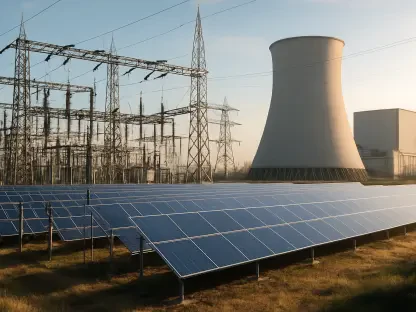
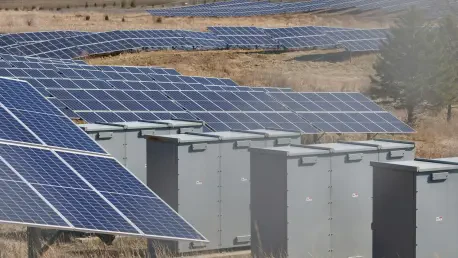
Reaching 12.2% of our national capacity is a landmark achievement, but the 42.2% share held by natural gas shows just how much ground we have left to cover. The primary hurdle isn’t the technology itself; it’s the physical grid’s ability to integrate variable power while replacing the 14.3% of capacity still held by coal. It is encouraging to see wind capacity grow to 5.7 GW this year, up from 4.5 GW previously, as this provides a more balanced renewable profile. This diversification is essential because it allows the grid to remain stable even when the sun isn’t shining, creating a more reliable foundation for the eventual retirement of older fossil fuel plants.
Deployment volumes plummeted by nearly 40% in the final quarter of the year as utility-scale projects were pushed into the future. How are safe harbor strategies influencing these delays, and what metrics are you watching to ensure the pipeline for 2026 remains robust?
The 40% drop we witnessed in the fourth quarter was a direct result of developers shifting their focus toward “safe harbor” strategies to protect their long-term interests. By prioritizing the procurement of components over the immediate completion of projects, they are effectively banking their resources for a more stable regulatory environment. This created a visible lull in activity at the end of the year, but it actually strengthened the outlook for 2026 and 2027 by creating a massive backlog of ready-to-build projects. I am keeping a close eye on the volume of utility-scale projects moving from the planning phase to active construction to ensure this pipeline doesn’t suffer from further cancellations.
Frequent trade actions and shifting tax policies have created a climate of uncertainty for many. Can you share how these trade barriers impact procurement costs, and what long-term operational adjustments are necessary to stabilize the solar supply chain?
Every time a new trade action is announced, it sends a wave of anxiety through the industry, as the cost of imported components can become a moving target overnight. These barriers make it incredibly difficult to finalize project budgets, often forcing developers to renegotiate contracts or find entirely new suppliers mid-stream. To stabilize the supply chain, companies are moving toward much more flexible operational models that don’t rely on a single geographical source or a specific tax loophole. It is a grueling transition that requires deep pockets and a high tolerance for risk, but it is the only way to survive the current climate of “unprecedented change” described by industry leaders.
While natural gas added fewer units, its total capacity actually increased during a year when no new nuclear power came online. How does this continued reliance on gas-fired generation complicate carbon-reduction goals, and what role do you see for solar in replacing retiring coal facilities?
The fact that natural gas capacity increased by 1.5 GW despite only adding 84 units—down from 122 the year before—illustrates how the industry is squeezing more power out of existing fossil fuel infrastructure. This persistent reliance makes hitting carbon-reduction targets much more difficult, especially in a year where zero new nuclear capacity was added to provide carbon-free baseload power. Solar is the natural successor to the 14.3% of capacity currently provided by coal, but it has to be deployed with enough scale to match the reliability of those older plants. Without the 1.1 GW boost we saw when Plant Vogtle Unit 4 came online in 2024, the pressure on solar to perform has never been higher.
What is your forecast for solar energy?
My forecast for solar energy is one of high-pressure growth that will eventually overcome the current legislative and trade bottlenecks. Even with the recent 22% dip, solar still led all other generation sources in new installations, proving that the underlying market demand is stronger than the policy hurdles. We are going to see a massive surge in 2026 and 2027 as the delayed utility-scale projects finally come online, further eroding the dominance of fossil fuels. As long as the industry continues to adapt its supply chains and procurement strategies, solar will remain the primary engine of the American energy transition.