
In the heart of the American rust belt, a paradox of scarcity amidst plenty has taken hold, as families living atop vast mineral reserves find themselves unable to afford the very power their land provides to the rest of the nation. This crisis is not merely a matter of fluctuating market prices but a systemic failure that has transformed electricity from a standard utility into a luxury that rivals the cost of shelter. For the residents of West Virginia and neighboring Ohio, the bills arriving in their mailboxes represent more than just a financial obligation; they are an existential threat to their ability to remain in their ancestral homes. As the region continues to export massive quantities of coal and gas to fuel the global economy, the local population is being squeezed by a unique combination of aging industrial infrastructure and modern economic pressures. This energy poverty crisis is rapidly becoming the defining socio-economic challenge for Appalachia, exposing a deep-seated disconnect between the region’s natural wealth and the financial security of its people.
The irony of this situation is particularly sharp in towns that were built on the back of the coal industry, where the skyline is dominated by the cooling towers of massive power stations. Despite this proximity to the source of generation, households are seeing their utility rates spike by hundreds of dollars in a single year, often with little to no warning from providers. This surge is creating a new class of “energy refugees” who are being forced to relocate not because they lack work, but because the basic overhead of modern life has become insurmountable. The situation is exacerbated by a regional economic profile that has remained stagnant for decades, leaving the average resident with no buffer to withstand these sudden shocks. In this environment, the promise of cheap, domestic energy has been replaced by a reality of high-interest loans taken out just to keep the heat on during the winter months.
The Human Cost of Utility-Driven Displacement
The most visible victims of this crisis are the residents of mobile home parks and campgrounds, where the margins for survival have always been thin and are now completely evaporating. In locations like West Columbia, West Virginia, the sudden volatility of electricity rates has forced property managers to increase all-inclusive rents, triggering an immediate exodus of long-term tenants who simply cannot find the extra fifty or one hundred dollars required each month. These are not individuals living beyond their means; they are the disabled, the elderly on fixed incomes, and the working poor who have done everything right but are still falling behind. For many, the choice has become a zero-sum game between buying essential medication and keeping the lights from being disconnected, leading to a visible decline in the quality of life across these communities as residents cut back on every possible necessity to satisfy the utility companies.
Beyond the immediate loss of housing, the psychological toll of watching a meter spin is creating a pervasive sense of anxiety that permeates daily life in Appalachia. Families have begun to adopt extreme austerity measures, such as monitoring their electrical panels with the intensity of a stockbroker or limiting their activities to daylight hours to avoid using light bulbs. There is a profound sense of injustice felt by those who live in the shadows of power plants like the Mountaineer or John Amos facilities, yet must rely on portable propane tanks for cooking because they cannot afford the cost of the electricity generated just miles away. This human cost is often buried in statistical reports about inflation, but on the ground, it manifests as a quiet desperation that is hollowing out neighborhoods and breaking the social contracts that have held these small towns together for generations.
Economic Stagnation Meets Modern Inflationary Pressures
While the entire United States has dealt with the effects of inflation recently, Appalachia faces a much steeper climb due to a half-century of wealth erosion that has left it uniquely vulnerable. Data suggests that West Virginia stands alone as the only state where the median household income, when adjusted for inflation, has actually decreased since the early 1970s. This means that while the cost of electricity has increased by double digits in early 2026, the real wages available to pay those bills are stuck in a previous era. When a utility bill reaches nearly a thousand dollars for a single month, as some residents have reported, it does not just take a bite out of a budget; it consumes the entire income of a household relying on Social Security or disability benefits. This “fixed income trap” is a primary driver of the current crisis, as there is no mechanism for these residents to increase their revenue to match the soaring costs of essential services.
Furthermore, the disconnect between federal economic indicators and the local reality is widening, as standard cost-of-living adjustments fail to account for the localized spikes in energy prices. While natural gas and electricity prices are rising nationally, the impact is magnified in a region with older, less energy-efficient housing stock that requires more power to heat and cool. The result is a cycle of debt where residents are forced into predatory lending cycles or high-interest credit card usage just to cover their basic monthly overhead. This economic landscape suggests that the energy poverty crisis is not a temporary blip caused by global market fluctuations, but a permanent feature of a region that has been left behind by the broader American economic growth story. Without a fundamental restructuring of how utility rates are calculated for low-income populations, the gap between earnings and expenses will continue to widen until the traditional Appalachian way of life becomes financially impossible.
The Financial Weight of Decaying Infrastructure
A significant portion of the recent rate increases in West Virginia is being driven by the enormous costs associated with maintaining and upgrading aging coal-fired power plants. As these facilities reach the end of their intended lifespans, utility companies are pouring hundreds of millions of dollars into them to keep them operational and compliant with modern environmental standards. Under current regulatory frameworks, these capital expenditures are passed directly to the consumer through rate hikes, meaning that the region’s poorest residents are effectively subsidizing the life extension of a twentieth-century energy grid. This creates a situation where the more a utility spends on keeping a legacy plant alive, the more the local population suffers, creating a perverse incentive structure that prioritizes old technology over the financial health of the community.
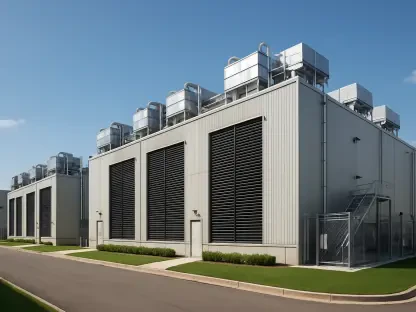
Compounding this issue is the entry of massive, energy-intensive industries into the region, such as high-scale data centers designed to support artificial intelligence and cloud computing. While these projects are often touted as economic saviors that will bring investment and jobs, they are also “power-gobbling” entities that place a massive strain on the existing grid. There is a growing consensus among local advocates that these industrial giants are being given preferential treatment or subsidized rates, while residential consumers are left to pick up the slack through higher “delivery” and “infrastructure” fees. This shift towards a digital-first economy in an area with a decaying physical infrastructure is creating a tension between the state’s desire for high-tech prestige and the residents’ basic need for affordable light and heat. The fear is that as data centers proliferate, the residential ratepayer will be treated as a secondary priority, further driving up costs to accommodate the needs of silicon-valley-style investments.
Political Promises and the Growing Reality Gap
The political landscape of Appalachia has been dominated for years by the narrative of “saving coal” and “unleashing American energy” to drive down costs for the working class. Voters were frequently promised that a return to traditional energy dominance would lead to a fifty percent reduction in utility bills, a platform that resonated deeply in coal country. However, as of early 2026, those promises have largely failed to materialize for the average consumer, with many seeing their bills double or even triple instead. This has led to a palpable sense of betrayal among those who supported “energy-first” policies, as they realize that the benefits of deregulation and federal subsidies for coal plants are not trickling down to their monthly statements. The political rhetoric of energy independence feels hollow when a resident is sitting in a cold house because they cannot afford the very coal being mined in their backyard.
Moreover, the complexity of global energy markets means that domestic production does not always translate into local affordability, a nuance that is often lost in political campaigning. Even as the administration provides millions of dollars in funding for coal-plant upgrades, global geopolitical tensions and supply chain issues continue to exert upward pressure on prices. For the people of Appalachia, the “unleashing” of resources has often meant that those resources are sold to the highest bidder on the international market, while the local infrastructure remains burdened by high operational costs. This disconnect is fostering a new wave of political skepticism, as residents begin to question whether the focus on traditional industries is actually serving their interests or merely protecting the profit margins of utility conglomerates. The gap between what is said on the campaign trail and what is charged at the meter is becoming a primary source of political and social friction in the region.
The Burden of Continued Coal Dependency
West Virginia remains a significant national outlier in its energy profile, continuing to rely on coal for nearly ninety percent of its electricity generation while the rest of the country shifts toward a mix of natural gas, nuclear, and renewables. This lack of diversification has created a “technological lag” that is proving to be incredibly expensive for the local population. While other states have benefited from the falling costs of renewable energy and the efficiency of modern natural gas turbines, Appalachia remains tethered to a fuel source that is increasingly costly to extract, transport, and burn. This stubborn adherence to a single, aging fuel source means that when the price of coal production rises or environmental regulations become more stringent, the local ratepayer has no alternative options and must bear the full brunt of the cost.
This dependency also limits the region’s ability to attract diverse industries that might provide the higher wages needed to offset rising costs. Many modern corporations have their own sustainability goals and are hesitant to move into regions where the grid is dominated by carbon-heavy legacy fuels. Consequently, the region is stuck in a cycle where it misses out on new economic opportunities while paying a premium for old ones. The persistence of large coal-fired plants ensures a steady supply of energy, but the inherent inefficiencies of the older grid mean that the cost of that energy is no longer competitive. By resisting the transition to a more modern, diversified energy portfolio, the region’s leadership is effectively locking its citizens into a high-cost environment that stifles growth and punishes those who are already struggling to survive.
The Hollowing Out of Small Business Commerce
The energy poverty crisis is rapidly extending its reach into the commercial sector, where small businesses are finding it impossible to maintain operations under the weight of surging utility overhead. In towns across the region, the rising cost of heating and cooling large storefronts has led to a wave of “seasonal closures” and consolidations, as entrepreneurs realize they can no longer afford to keep their doors open during the peak winter or summer months. When a local art gallery or a bargain shop is forced to shut down because the electric bill has surpassed the revenue generated by sales, the entire community loses a piece of its social fabric. These businesses often serve as the primary gathering places and economic anchors for small Appalachian towns, and their disappearance is a sign of a deeper, systemic “hollowing out” of the regional economy.
This erosion of small-town commerce creates a negative feedback loop that further isolates the remaining residents. As businesses close, the local tax base shrinks, which in turn reduces the funds available for public services and infrastructure maintenance. This decline makes the area even less attractive for new investment, leaving behind a population that is increasingly disconnected from the modern economy. The loss of these commercial hubs also means that residents must travel further for basic goods and services, adding transportation costs to an already strained budget. Ultimately, the utility crisis is not just a residential problem; it is an economic contagion that is destroying the viability of small-town life in Appalachia. The sight of darkened storefronts in once-vibrant downtowns is a stark reminder that the cost of energy is now dictating the future of the region’s culture and commerce.
Strategic Solutions for an Equitable Energy Future
The resolution of the Appalachian energy crisis requires a multi-faceted approach that moves beyond traditional political rhetoric and addresses the structural inequities of the current utility system. To prevent further displacement, state and federal regulators must implement more aggressive low-income rate protections that cap utility costs at a manageable percentage of household income. This would provide an immediate safety net for the elderly and disabled, ensuring that the most vulnerable are not forced to choose between power and medicine. Furthermore, there must be a concerted effort to modernize the regional grid through the integration of cheaper, decentralized energy sources like community solar and small-scale natural gas. Diversifying the energy portfolio would not only reduce the reliance on expensive legacy coal plants but also create a more resilient system that is less susceptible to global market shocks.
In addition to regulatory changes, there is a dire need for massive investment in residential energy efficiency programs tailored specifically for the aging housing stock of the region. Providing grants for insulation, modern HVAC systems, and weatherization would lower the baseline demand for power, offering a long-term solution to high bills that is more sustainable than temporary subsidies. On the industrial side, the state must ensure that the arrival of data centers and other high-tech players does not come at the expense of the residential ratepayer; these entities should be required to invest in their own dedicated renewable energy sources or contribute significantly to a fund for community utility relief. The future of Appalachia depends on its ability to transition from being a resource extraction colony to a modern, self-sustaining energy hub that prioritizes the stability of its citizens over the preservation of outdated industrial models. Only through a combination of technological modernization and compassionate social policy can the region hope to break the cycle of energy poverty and reclaim its status as a prosperous heartland.