
In the wake of the landmark appellate court decision upholding California’s Net Energy Metering 3.0, the landscape for residential renewables has shifted dramatically. This ruling reaffirms the broad regulatory power of utility commissions, even as environmental advocates warn of its impact on decarbonization goals. Joining us today is Christopher Hailstone, an expert in energy policy and grid reliability, to unpack the implications of this decision. We will explore how the “strong presumption” of regulatory validity affects legal challenges, the operational survival of solar installers facing an 85% sales slump, and the complex task of balancing sustainable growth with ratepayer equity.
The court applied a deferential standard of review that favors commission decisions. How does this “strong presumption” of validity impact the ability of environmental groups to challenge utility tariffs, and what specific evidence is typically required to prove a commission has exceeded its legislative authority?
The “strong presumption” creates a formidable legal mountain for petitioners because it essentially signals that the court will not second-guess the technical expertise of a commission. When groups like the Center for Biological Diversity or the Environmental Working Group challenge a tariff, they cannot simply argue that a different policy would be better; they must prove the commission acted arbitrarily or completely outside its statutory bounds. To successfully challenge a decision, plaintiffs typically need to provide granular data showing a direct violation of legislative mandates, such as specific failures to fulfill requirements under Section 2827.1 of the CPUC code. In this case, the court noted that the petitioners failed to sufficiently describe the specific benefits that the commission supposedly failed to quantify, rendering their arguments too vague to overcome that legal deference. It creates a reality where environmental groups must bring exhaustive, numbers-heavy evidence to the table just to get a foot in the door.
Residential solar sales saw a decline of up to 85% following the implementation of lower compensation rates for customer-generated power. What immediate operational steps must installers take to survive this downturn, and how can they pivot their business models to remain competitive in this environment?
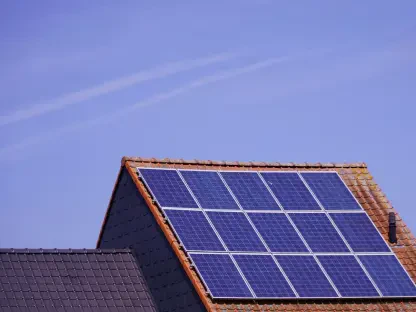
Survival in a market where sales have plummeted by 77% to 85% requires an aggressive and immediate pivot from a volume-based “solar-only” model to a value-based “energy management” model. Installers must first audit their customer acquisition costs, which often spiral out of control during downturns, and refocus their marketing on the increased self-consumption value of integrated systems. Operationally, this means training crews who were once just “panel hangers” to become experts in sophisticated battery storage and smart inverter configurations. By shifting the sales pitch from “selling power back to the grid” to “achieving energy independence and resilience,” companies can capture the higher margins associated with storage. Those who fail to integrate these technical storage solutions into every single quote will likely find it impossible to sustain their business under the new export rate realities.
Legislative mandates require both “sustainable growth” for renewables and the protection of customers who do not own solar systems. How can regulators balance these conflicting objectives without stifling the market, and what specific alternatives would better serve residential customers in disadvantaged communities?
Regulators are caught in a difficult balancing act, as they are legally obligated to ensure the grid remains affordable for non-solar users while also fostering the “sustainable growth” of distributed generation. The court recognized that these objectives are often inconsistent, but the challenge lies in moving beyond simple export credits to find more inclusive mechanisms. For disadvantaged communities, the focus should shift toward community solar programs or “virtual net metering” that allows renters and low-income households to benefit from shared local arrays without the high upfront cost of a private system. These alternatives must include specific financial incentives or “add-ers” that prioritize deployment in these areas, ensuring that the transition to clean energy doesn’t leave behind those who cannot afford a rooftop installation. Without these targeted programs, the current tariff structure risks creating a “green divide” where only the wealthiest homeowners can afford to mitigate rising utility costs.
Current tariffs have been criticized for failing to quantify the broader societal and environmental benefits of on-site renewable generation. In your view, how should these “social benefits” be measured in regulatory proceedings, and what specific metrics are currently missing from the calculation of export rates?
To truly capture the value of customer-generated power, regulators need to move toward a “value of solar” metric that accounts for avoided costs beyond just the price of wholesale electricity. This would include measurable metrics such as the reduction in peak demand on local distribution infrastructure, which can delay or eliminate the need for expensive utility-driven substation upgrades. Furthermore, the “societal benefits” mentioned by the petitioners—such as the reduction in greenhouse gas emissions and localized air pollution—must be assigned a concrete dollar value based on the social cost of carbon. Currently, export rates often omit the “resiliency value” that distributed storage provides to the grid during extreme weather events, which can be quantified by looking at the cost of potential outages. By failing to include these broader metrics, we are essentially underpricing the positive externalities that local solar provides to the entire community.
While solar-only sales have dropped, the new rules have spurred a shift toward battery storage integration. How does the current rate structure change the return-on-investment timeline for homeowners, and what technical steps should they take to maximize the value of their self-consumed energy?
The new rate structure significantly lengthens the ROI for traditional solar-only systems, but it actually creates a much more compelling financial case for paired storage because of the high price of grid electricity during peak hours. Homeowners should technically configure their systems to operate in “self-consumption mode,” where the battery captures all excess solar energy during the day instead of exporting it at the now-lower utility rates. This stored energy should then be discharged during the evening peak—typically between 4:00 PM and 9:00 PM—when utility rates are at their highest, effectively “shaving” the most expensive part of the bill. Additionally, implementing smart home energy management systems that automatically time heavy loads, like EV charging or dishwashers, to coincide with peak solar production can further shorten the payback period. While the upfront investment is higher, the sensory experience of “going dark” during a grid outage while your neighbors are in the dark adds a level of psychological value that isn’t captured in a standard financial spreadsheet.
What is your forecast for the California residential solar and storage market?
I forecast that the California market will undergo a “painful consolidation” followed by a period of more stable, storage-led growth. We are currently seeing the trough of the 77% to 85% decline in sales, and while the “easy” days of solar-only sales are gone for good, the market is being forced to mature into a more sophisticated energy services industry. As utility rates continue to rise and the grid faces increasing strain, the demand for “behind-the-meter” storage will become a necessity rather than a luxury for the average homeowner. By 2027, I expect the vast majority of new residential installations in California to include a battery component by default, as the financial math for anything else simply no longer works. The companies that survive this transition will be those that have mastered the technical complexities of grid-interactive storage and can clearly communicate the long-term hedge against rising energy costs to their customers.