
A technology hailed as a cornerstone of agricultural climate solutions is now at the center of a federal firestorm, with critics alleging that hundreds of millions in taxpayer dollars are subsidizing a system that deepens rural pollution rather than solving it. This conflict revolves around anaerobic digesters—systems that convert livestock manure into biogas—and their eligibility for green energy funding. A landmark legal challenge is now forcing a national conversation about what truly constitutes renewable energy and whether a popular climate tool is inadvertently propping up the very industrial farming models many seek to reform.
The debate hinges on the U.S. Department of Agriculture’s (USDA) Rural Energy for America Program (REAP), an initiative designed to help farms and rural businesses invest in renewable energy. However, the program’s substantial funding of on-farm digesters has ignited a fierce battle, pitting a powerful biogas industry against a broad coalition of environmental advocates and farm-to-consumer groups. At the core of the dispute is whether these systems are a legitimate climate solution or a costly diversion that exacerbates the environmental problems associated with large-scale agriculture. The outcome of this fight could redefine federal energy subsidies and alter the economic landscape of rural America for years to come.
The Battleground: A Federal Program at the Center of a Green Energy War
The Rural Energy for America Program (REAP) was established with a clear mission: to fund renewable energy projects and promote energy efficiency in rural communities. It aims to lower energy costs for farmers and small businesses while delivering tangible environmental benefits. Yet, this mission is now the subject of intense scrutiny following a formal petition by 34 organizations demanding that the USDA disqualify on-farm anaerobic digesters from receiving REAP funds. This action has transformed the program into a primary battleground in the national debate over agricultural sustainability.
This conflict features a diverse coalition of environmental and farm advocacy groups, including Friends of the Earth, the Waterkeeper Alliance, and Farm Aid, arrayed against the formidable biogas industry. The petitioners argue that digesters do not align with REAP’s goals, while industry proponents insist they are a vital climate tool. The dispute escalated significantly when the environmental law organization Earthjustice filed a lawsuit against the USDA. The suit does not seek to ban digesters but aims to force transparency, demanding the release of records that explain the agency’s rationale and methodology for its consistent and substantial financial backing of the technology.
The Indictment: Why Critics Argue Digesters Are a False Solution
A central pillar of the opposition’s argument is the claim of a gross misuse of taxpayer funds. Critics point to a significant financial disparity within the REAP program, where the average funding allocated to a digester project far exceeds that for solar or wind installations. They contend that this channels a disproportionate amount of public money into a single technology that serves a narrow segment of the agricultural industry, namely the largest concentrated animal feeding operations (CAFOs).
Furthermore, the coalition argues that these government subsidies create a perverse incentive for factory farms to expand. Because digesters are most economically viable at a very large scale, the availability of grants and loan guarantees may encourage operators to increase herd sizes simply to produce enough manure to fuel the systems. This, in turn, concentrates more animals and waste in one location, amplifying the risks of air and water pollution and undermining the economic viability of smaller, more sustainable farms.
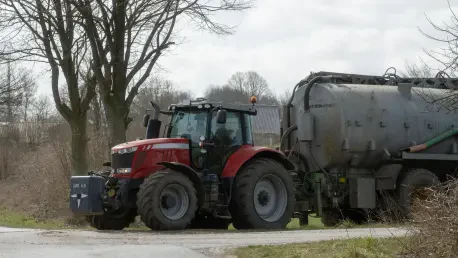
Beyond the economic incentives, critics highlight the hidden chemistry of the digestion process. While digesters capture methane, the remaining byproduct, known as digestate, presents its own environmental challenges. The process makes nutrients like nitrogen and phosphorus more water-soluble and creates more concentrated ammonia. When this nutrient-dense liquid is applied to fields as fertilizer, its increased solubility heightens the risk of runoff into nearby waterways, which can cause harmful algal blooms and contaminate drinking water. Citing a pattern of pollution, the petition alleges that a dozen REAP-funded facilities have been linked to water pollution incidents. Adding to these concerns are questions of long-term viability, with EPA data showing that approximately 17% of on-farm digesters have ceased operations, suggesting a reliance on continuous subsidies for survival.
The Defense: The Biogas Industry’s Case for Climate Mitigation
In stark contrast, the biogas industry and its supporters present digesters as an indispensable tool for climate action. Their central argument is that these systems are the most effective method for capturing methane—a greenhouse gas far more potent than carbon dioxide—directly from agricultural waste streams. By containing manure in a closed system and converting its emissions into renewable natural gas (RNG), they argue that digesters offer a clear and immediate net positive for climate goals, transforming a major pollution source into a clean energy asset.
Industry advocates assert that this function aligns perfectly with REAP’s stated mission. Geoff Dietz of the RNG Coalition has stated that these systems provide “durable economic and environmental returns for rural America,” creating new revenue streams for farmers through energy sales while reducing their carbon footprint. Proponents claim that by generating on-site energy and producing a nutrient-rich fertilizer, digesters help create a more circular and resilient agricultural economy.
This perspective is echoed by other industry leaders who contend that excluding digesters from REAP would be a mistake based on a misunderstanding of the technology. “The reality is that biogas systems and digesters align directly with REAP’s statutory goal… There’s no question they should be included,” remarked Patrick Serfass of the American Biogas Council. From their viewpoint, the technology directly fulfills the program’s mandate to support projects that offer environmental benefits and boost the economic fortunes of rural communities.
Beyond the Beltway: How the Digester Debate Is Shaping State-Level Policy
The high-stakes debate over federal subsidies is not occurring in a vacuum; it mirrors contentious policy battles unfolding at the state level across the country. In California, the role and incentivization of digesters have been a central point of conflict during recent updates to the state’s influential Low Carbon Fuel Standard. Similarly, New Mexico is currently grappling with the same questions as it finalizes rules for its own clean fuels program, demonstrating that the controversy is a key issue in shaping regional climate and agricultural policy.
As the USDA reviews the formal petition, the path forward remains uncertain. The agency’s decision will have profound implications that extend far beyond the REAP program. It will influence the very definition of renewable energy in agricultural contexts, help determine the future of federal subsidies, and shape the economic structure of farming in America.
The ultimate resolution of this conflict carries significant weight for the direction of U.S. agricultural and environmental policy. A decision in favor of the petitioners could signal a major shift away from supporting technologies tied to large-scale livestock operations, potentially redirecting billions of dollars toward other renewable sources like solar and wind. Conversely, a rejection of the petition would reaffirm the federal government’s commitment to biogas as a key climate strategy, further entrenching digester technology within the nation’s energy framework and leaving the complex environmental questions to be debated for years to come.