
Christopher Hailstone is a seasoned strategist with a deep understanding of the high-stakes infrastructure that powers our modern digital world. His background in reliability and technical orchestration provides a unique lens through which to view the massive technological leap currently taking place in the Republic of Moldova. In this discussion, we explore how the national operator is redefining the streaming landscape by consolidating its entire workflow under a single, unified technology umbrella.
The conversation focuses on the strategic migration of more than 200 channels to a sophisticated compression headend and the expansion of the regional content delivery footprint. We examine the transition from a fragmented, multi-vendor environment to a streamlined architecture and the ways real-time analytics can transform operational visibility. This shift is not just about upgrading hardware; it is about building a robust foundation for long-term growth and service excellence.
Moldtelecom recently transitioned its entire streaming workflow to a unified technology stack. How does migrating over 200 channels to TITAN Edge and TITAN Live improve encoding consistency, and what specific operational hurdles are eliminated when moving away from a multi-vendor environment?
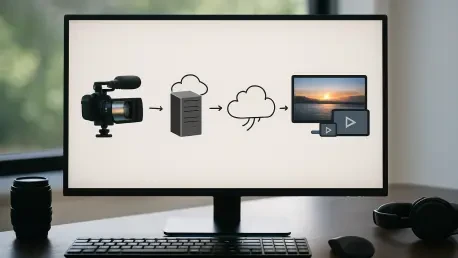
Transitioning a massive lineup of more than 200 channels is a monumental task that requires absolute precision to avoid a drop in quality across the board. By utilizing TITAN Edge for contribution and TITAN Live for distribution, the operator ensures that the video signal remains pristine from the moment it enters the system until it reaches the viewer’s screen. The primary hurdle eliminated here is the “finger-pointing” that often occurs in multi-vendor environments when a technical glitch arises between different pieces of equipment. Instead of managing a patchwork of conflicting software updates and hardware requirements, the engineering team now works within a single, harmonious ecosystem that provides consistent, superior video quality.
The deployment includes an expanded NEA-CDN footprint with additional points of presence. What is the technical process for scaling a content delivery network to handle increased traffic, and how does this expansion directly impact the latency and reliability experienced by viewers in the Republic of Moldova?
Scaling a CDN involves strategically placing resources closer to the end-user to shorten the physical distance data must travel, which is why adding two additional points of presence was such a critical move for the operator. This expansion effectively broadens the NEA-CDN footprint, allowing the network to absorb sudden traffic spikes—like during a major live sporting event—without any degradation in performance. For the viewer, this translates to a palpable sense of speed where the frustrating spinning buffer icon disappears and the stream starts almost instantly. It turns the delivery process into a robust, invisible engine that supports a high-quality viewing experience at scale, ensuring reliability even during peak usage hours.
PILOT Analytics is now integrated into the workflow to provide real-time performance insights. How do these analytics translate into actionable adjustments for the engineering team, and could you share a scenario where visibility into the actual viewer experience helped prevent a potential service outage?
PILOT Analytics serves as the central nervous system of the operation, providing a dashboard where every minor fluctuation in platform performance is visible in real-time. This level of visibility allows engineers to spot a degradation in bitrates or a spike in error logs long before it becomes a customer-facing disaster. Imagine a scenario where a specific regional server begins to experience packet loss; the analytics would alert the team immediately, allowing them to reroute traffic or adjust the stream before any viewer experiences a frozen screen. This shift from reactive maintenance to proactive management is a total game-changer for maintaining service performance around the clock.
Transitioning to a single-vendor model for encoding, storage, and delivery is often a strategic choice for growth. What are the long-term cost benefits of this unified approach, and how does centralized management simplify the day-to-day tasks for operators managing complex contribution and distribution chains?
The long-term economic benefits of a unified stack are rooted in operational efficiency and the significant reduction of complex technical overhead. By consolidating encoding, storage, and delivery, the operator reduces the need for specialized training across multiple different systems, which saves both time and internal resources. Centralized management acts as a force multiplier, allowing a team to control complex distribution chains with a single interface, which speeds up issue resolution dramatically. It creates a flexible business model where the company can scale its services and add new channels with confidence, knowing the underlying infrastructure is built for efficiency.
What is your forecast for the evolution of streaming infrastructure in Eastern Europe over the next five years?
I anticipate a massive shift toward software-defined, end-to-end platforms that prioritize automation and ultra-low latency to meet the growing hunger for live, high-definition content. We will likely see more operators in Eastern Europe following this blueprint of consolidation, moving away from legacy hardware in favor of agile systems that can be updated or expanded in an instant. As viewership habits continue to evolve, the integration of sophisticated orchestration and real-time operating data will become the new standard for any provider wanting to stay competitive. This evolution will turn what was once a complex technical challenge into a seamless, highly reliable utility that is as fundamental as any other essential service in our homes.