
As a punishing wave of arctic air descended with Winter Storm Fern, plunging vast swaths of the country into a deep freeze, the unseen network that underpins modern life was pushed to its breaking point, forcing federal authorities to take extraordinary measures to avert a widespread catastrophe. The storm’s aftermath, which left over 800,000 customers shivering in the dark, revealed a critical paradox: while the nation’s bulk power system narrowly avoided collapse, the intricate web of local infrastructure proved dangerously fragile, raising urgent questions about the system’s overall resilience in an era of increasingly volatile weather. This recent crisis serves as a stark examination of whether the grid can truly withstand the fury of extreme cold.
A Nation on the Brink of Blackout
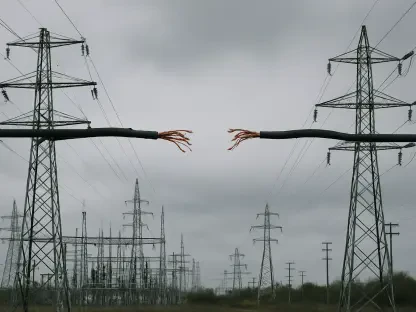
The onslaught of Winter Storm Fern delivered a brutal combination of snow, ice, and frigid temperatures that tested the limits of the electrical grid from Texas to New England. Despite proactive emergency actions from federal authorities, the storm’s impact was severe, leaving hundreds of thousands of homes and businesses without power. This widespread disruption underscored a persistent vulnerability, highlighting the immense difficulty of maintaining power delivery when severe weather strikes, even when the system is on high alert.
The scenario was not one of unpreparedness but rather a frantic race against time. Grid operators, anticipating the immense strain, had already sought and received federal intervention to stabilize the system. The fact that extensive outages still occurred demonstrates the complex, multi-layered nature of the grid’s challenges. The battle was fought not only in high-tech control rooms managing power generation but also on frozen streets where local utility crews contended with the physical destruction of the storm.
The Unprecedented Strain of Subzero Temperatures
The fundamental threat posed by extreme cold is a simple yet relentless equation of supply and demand. As temperatures plummet and remain low for extended periods, electricity consumption skyrockets. Homes and businesses rely heavily on electric heating systems, water heaters, and other appliances, driving demand to record-breaking levels that can overwhelm the available power generation. When demand outpaces supply, the grid’s frequency and voltage can become unstable, risking a cascading failure that could plunge entire regions into darkness for days.
For grid operators, the memory of past winter disasters looms large, transforming grid management during cold snaps into a high-stakes priority. The catastrophic blackouts that have struck in previous years, leaving millions without heat in deadly conditions, have become a powerful catalyst for change. Consequently, preventing a recurrence is now a core mission, compelling operators to employ every available tool to ensure the lights—and more importantly, the heat—stay on when the population is most vulnerable.
A Coordinated Defense Against the Cold
In response to the imminent threat, the U.S. Department of Energy deployed a critical lifeline by issuing 202(c) waivers, a powerful emergency authority that allows grid operators to order power plants to generate electricity at their maximum capacity. These orders were requested by three major grid operators—PJM Interconnection in the Mid-Atlantic, ISO New England, and the Electric Reliability Council of Texas (ERCOT)—each facing the prospect of historic demand due to the severe and prolonged cold snap.
The emergency authorizations were tailored to the unique circumstances of each region. In Texas, ERCOT was granted the authority to direct large industrial customers, including data centers, to switch to backup generators as a final defense against rolling blackouts. PJM Interconnection, serving a vast territory in the Mid-Atlantic, was empowered to run all its generating units at full tilt and activate demand response programs. Meanwhile, ISO New England received a broad mandate to maximize all available power sources to navigate what it termed a “long-duration extreme cold weather event.”
Bending the Rules to Keep the Lights On
While all three grid operators publicly asserted they had adequate power supplies to meet the challenge, their requests for federal waivers were described as a necessary “proactive, precautionary measure.” This seemingly contradictory stance reveals the razor-thin margins within which they operate during extreme weather events. The waivers provided a crucial safety net, ensuring that if unexpected generator failures occurred or demand exceeded even the highest forecasts, they had the legal authority to use every last megawatt of available power.
This strategy, however, involved a significant tradeoff: ensuring grid reliability required temporarily bypassing certain air quality regulations and other operational permit limits. The decision reflects a difficult but essential prioritization of public safety. In the face of a potential public health crisis caused by widespread, prolonged blackouts in subzero temperatures, federal and regional authorities concluded that the immediate need to keep citizens warm and safe outweighed the short-term environmental impact of running generators beyond their standard permitted levels.
The Battle Between Bulk Power and Local Infrastructure
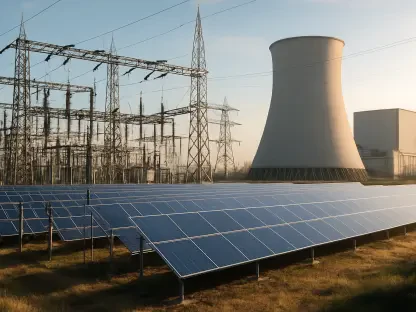
The story of Winter Storm Fern is ultimately a tale of two different grids and their divergent outcomes. At the highest level, the coordinated defense by grid operators and the DOE was largely successful; the bulk power system—the network of power plants and high-voltage transmission lines—remained stable, and catastrophic, large-scale blackouts were averted. However, this high-level success masked widespread failures at the local distribution level, where the physical connection to homes and businesses proved to be the system’s weakest link.
This contrast was vividly illustrated across the country. In Tennessee, Nashville Electric Service experienced one of the most severe outage events in its history, with crews battling to repair nearly 100 broken utility poles and countless damaged circuits, leaving entire communities in the dark for extended periods. Conversely, in Houston, CenterPoint Energy’s system demonstrated remarkable resilience, weathering the storm with only minimal disruptions. This disparity highlights that a stable supply of power is meaningless if the local infrastructure required to deliver it is knocked offline by ice and wind.
The events of the storm provided a crucial lesson. The focus on shoring up power generation and high-voltage transmission, while essential, was not enough to prevent widespread hardship. It became clear that strengthening the grid for future winters would require a dual approach: one that not only ensures there is enough power to meet record demand but also invests heavily in hardening the local poles, wires, and substations that form the final, critical mile of our electrical system. This challenge remains at the forefront as the nation prepares for the next inevitable test of its resilience.