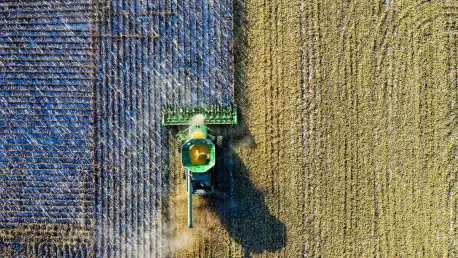

Vast fields that yield the world’s food supply also generate a staggering amount of agricultural byproducts, which have long been viewed as a burdensome waste management challenge rather than an asset. This perspective is undergoing a radical transformation thanks to a groundbreaking chemical process designed to convert these protein-rich plant residues into high-value resources. Researchers have developed and refined a method of chemical hydrolysis that systematically deconstructs resilient biomass, liberating valuable compounds that can be reintegrated into the economy. This innovation represents a pivotal step toward establishing a truly circular agricultural system, one where the remnants of a harvest become the building blocks for new products, fostering greater economic profitability, environmental sustainability, and resource efficiency on a global scale. This leap forward promises to redefine farming operations, turning them into integrated biorefineries that produce not only food but also a diverse portfolio of sustainable materials.
From Waste Stream to Value Stream
Every year, the global agricultural sector produces billions of tons of non-edible plant matter, such as stalks, leaves, and husks, which are left behind after the primary crop is harvested. Historically, the disposal of this immense volume of residue has posed significant logistical and environmental challenges. Common practices include open-field burning, which releases harmful particulate matter and greenhouse gases into the atmosphere, or transport to landfills, where slow decomposition contributes to methane emissions. These methods not only represent a significant environmental liability but also a squandered economic opportunity. The nutrients, proteins, and complex organic molecules contained within this biomass are effectively lost, requiring farmers and other industries to purchase or synthesize new inputs at a considerable cost. This linear model of produce, use, and discard is becoming increasingly unsustainable in a world with a growing population and finite natural resources, creating an urgent need for more intelligent and circular solutions.
The fundamental shift required to address this challenge begins with re-contextualizing agricultural byproducts from a disposal problem into a valuable and renewable feedstock. This change in perspective is crucial for unlocking a new tier of the bioeconomy. These residues are not inert waste; they are dense repositories of proteins, bioactive compounds, and structural fibers that hold immense potential. By recognizing this inherent value, agricultural operations can evolve from being solely food producers into multifaceted suppliers of raw materials for a wide range of industries. This approach creates new, diversified revenue streams for farmers, strengthens rural economies, and reduces the environmental footprint of modern agriculture. It fosters a circular system where the outputs from one process become the essential inputs for another, minimizing waste and maximizing the efficient use of every resource grown from the soil, thereby building a more resilient and self-sustaining food and production network for the future.
The Science of Unlocking Hidden Potential
The core technology driving this agricultural revolution is chemical hydrolysis, a precisely controlled process that uses chemical agents to break down the complex and rigid structure of plant biomass. Plant cell walls are fortified with a matrix of cellulose, hemicellulose, and lignin, which protects the valuable components inside and makes them difficult to access. Chemical hydrolysis effectively acts as a molecular key, dissolving this protective matrix under specific conditions of temperature and pressure. This deconstruction liberates the trapped proteins, amino acids, and other beneficial compounds, making them available for extraction and purification. The process is engineered to be highly efficient and adaptable, allowing for its implementation in various settings, from large, centralized biorefineries to smaller, decentralized facilities located on or near farms, reducing transportation costs and creating local value. This scientific advancement provides the practical means to convert a low-value bulk material into a range of high-value, purified products.
Extensive research and experimentation have revealed that the success of chemical hydrolysis is not based on a universal formula but rather on a highly tailored and specific approach. The chemical composition and structural integrity of agricultural residues can vary dramatically depending on the crop type, growing conditions, and harvesting methods. For instance, the biomass from corn stover has a different profile than that of wheat straw or soy husks. Consequently, achieving optimal yields of target compounds requires customizing the hydrolysis process for each specific feedstock. Researchers have systematically tested and refined variables such as the type and concentration of chemical agents, reaction time, temperature, and pressure to develop specific protocols for different materials. This move away from a one-size-fits-all mentality toward feedstock-specific optimization is critical for ensuring the economic viability and efficiency of waste valorization, allowing producers to maximize the recovery of valuable outputs based on the locally available agricultural byproducts.
A New Generation of Bio-Based Products
One of the most immediate and significant applications of the compounds recovered through chemical hydrolysis is the enhancement of the global food production system. The extracted proteins and essential amino acids can be processed into highly nutritious additives for animal feed. This creates a circular nutrient loop within agriculture, reducing the need to cultivate separate crops like soy and corn specifically for animal consumption, which in turn frees up arable land and water resources. The nutrient-dense liquid and solid co-products generated during the hydrolysis process also serve as powerful organic fertilizers. When returned to the fields, they enrich the soil with vital nutrients and organic matter, improving soil health, increasing water retention, and boosting the yields of future crops without relying heavily on synthetic chemical fertilizers. These applications directly contribute to a more efficient, sustainable, and resilient food supply chain from the ground up, turning farm waste into a tool for agricultural productivity.
The potential of these recovered biomaterials extends far beyond the farm gate, positioning agricultural residues as a foundational resource for a new era of sustainable manufacturing. The extracted compounds can serve as versatile building blocks for a wide range of high-value industrial products. For example, they can be used to produce bioplastics, creating biodegradable alternatives to petroleum-based polymers and helping to mitigate the global plastic pollution crisis. In another application, these organic materials can be converted into biofuels, such as bioethanol, offering a renewable energy source that reduces dependence on fossil fuels and lowers the carbon footprint of the transportation sector. Furthermore, the process can isolate specific bioactive compounds that have applications in the pharmaceutical and nutraceutical industries. This diversification opens up entirely new, high-margin markets for the agricultural sector, transforming farms into suppliers for green chemistry, renewable energy, and advanced materials industries.
Building a Collaborative Bioeconomy
The economic incentives created by this technology provide a compelling reason to abandon environmentally damaging disposal methods. By transforming what was once a costly waste problem into a profitable product line, farmers and agricultural businesses can generate significant new revenue streams. This financial benefit is a powerful driver for the adoption of more sustainable practices. Instead of incurring costs for disposal or contributing to air and soil pollution through burning or landfilling, producers can now view their residues as a valuable commodity. This shift fundamentally alters the economic equation of farming, turning an environmental liability into a key asset. The widespread implementation of this technology can directly reduce greenhouse gas emissions, improve local air quality, and lessen the overall environmental impact of agriculture, creating a positive feedback loop where economic prosperity and ecological health are mutually reinforcing.
The successful transition from laboratory innovation to widespread global implementation depended on a concerted and collaborative effort across multiple sectors. Scientists and engineers who developed and optimized the hydrolysis technology laid the groundwork, but its practical application required the active participation of farmers who adopted these new on-farm or regional processing systems. Supportive government policies and economic incentives were instrumental in overcoming the initial investment hurdles and de-risking the adoption of these novel technologies. Furthermore, a strong interdisciplinary partnership between agricultural science, green chemistry, and process engineering proved essential for creating holistic and efficient systems. Through this integrated approach, the valorization of agricultural residues became a cornerstone of a thriving bioeconomy, demonstrating how innovative thinking could transform a global waste challenge into a powerful engine for sustainable development, economic growth, and environmental stewardship.