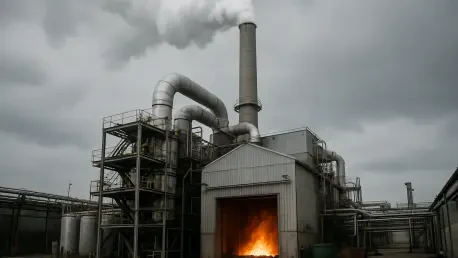

Today we’re speaking with Christopher Hailstone, a leading utilities expert with extensive experience in energy management and grid security. We’re digging into the contentious plan for an incinerator at Portland Port, where a new application to burn a wider variety of waste has ignited a firestorm of opposition from Dorset Council and local residents. Our conversation will explore the real-world public health risks of burning materials like agrochemical and demolition waste, dissect the claim that these changes are merely a “minor technical variation,” and examine how the history of overturned decisions has eroded public trust in the regulatory process.
Dorset Council has raised the alarm about “unacceptable risks to public health.” When we hear about burning materials like agrochemical waste or soil from contaminated sites, what are the hidden dangers for a community that go beyond just general air pollution?
That’s the core of the issue. Burning standard refuse-derived fuel is a known process, but when you introduce 68 new waste streams, including agrochemical byproducts and excavated soil from contaminated sites, you completely change the chemical equation. The council’s concern is that this will fundamentally “alter the profile of the waste,” which directly impacts the incineration process. This isn’t just about smoke; it’s about the invisible combustion gases and the composition of the bottom ash left behind. The original environmental permit, approved back in February, was based on a different set of assumptions, and now the community is rightfully questioning if that permit can possibly account for these far more complex and potentially hazardous materials.
Powerfuel dismisses this as a “minor technical variation,” but adding 68 new waste categories sounds significant. From an operational standpoint, how does introducing things like demolition waste or contaminated soil change what’s actually happening inside that facility?
Calling it “minor” is a significant understatement from an engineering perspective. An energy recovery facility is a highly calibrated machine, tuned to a specific fuel source. Standard non-hazardous waste has a somewhat predictable energy content and chemical makeup. But when you start feeding it bulky demolition waste or soil, you introduce massive variability. These materials burn differently, at different temperatures, and release a completely different array of compounds. It complicates the entire system, from controlling emissions to managing the residual ash, which could now contain a whole new set of contaminants. This isn’t a small adjustment; it’s a fundamental shift in the facility’s entire operational profile.
Let’s talk about the on-the-ground impact. The council predicts more HGV traffic and nuisance from odors, while Powerfuel claims it will operate within existing limits. Can you explain why storing these new, more complex waste types on-site could create practical problems that the original permit might not have foreseen?
This is where the lived reality for residents comes into play. Powerfuel is technically correct that HGV movements may stay within the overall number granted by the Secretary of State, but that misses the point. The nature of the waste being transported and stored is what’s causing alarm. Waste from sewage cleaning or agrochemical processes can generate far more potent and pervasive odors than typical household refuse. Storing bulky demolition waste or potentially contaminated soil on-site introduces new challenges for containment, dust control, and preventing runoff. These aren’t just abstract concerns; they translate to real-world nuisances like smells, vermin, and a constant worry about what’s being stockpiled just down the road.
Council leader Nick Ireland described the whole decision-making process as “arbitrary” and out of sync with community needs. When a local council’s rejection is overturned by the national government, what does that do to public trust in the systems meant to protect them?
It absolutely erodes it. When Dorset Council first rejected the incinerator in 2023, it was acting on behalf of its residents. For that decision to be overturned by the government on appeal sends a powerful message that local democratic input can be overruled. Then, for the developer to submit this application for dozens of new waste types right after securing the initial permit feels tactical, almost like a bait-and-switch. This sequence—local rejection, national-level overturn, and a subsequent “minor” but significant change—makes the entire process feel arbitrary, just as the council leader said. It fosters a deep sense of cynicism and powerlessness among residents who feel the regulatory bodies are not on their side.
What is your forecast for this environmental permit variation?
Considering the history here, the path forward is challenging for the community. The fact that the initial rejection was already overturned by the government, and a subsequent legal challenge was dismissed, sets a difficult precedent. Powerfuel has already pointed out that the Environment Agency, not the local council, is the designated technical authority on these matters. This suggests the decision will likely hinge on whether the application meets technical standards on paper, rather than on the hundreds of objections or the “significant concerns” raised by the council. While the intense public scrutiny will force a rigorous review, the political momentum and past rulings suggest the most probable outcome is an approval, perhaps with added conditions, leaving the community to contend with a facility they have fought against from the very beginning.