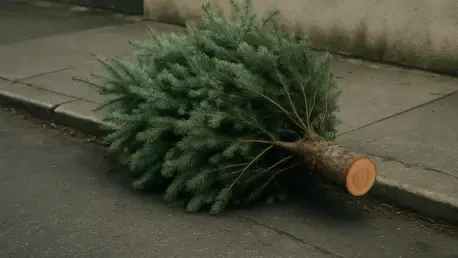

Once the last of the holiday cheer fades and the pine needles begin to fall, millions of households face the surprisingly complex question of what to do with their once-majestic Christmas tree. This annual task has evolved from a simple chore into a significant environmental consideration, particularly for residents across Berkshire, Dorset, Hampshire, the Isle of Wight, and Oxfordshire, where disposal options vary dramatically from one town to the next.
The environmental stakes are higher than many realize. When a Christmas tree is sent to a landfill, it decomposes without oxygen, releasing methane—a potent greenhouse gas. In contrast, recycling a tree through chipping or composting allows it to break down naturally, returning valuable organic matter to the soil. This single choice, multiplied by millions of homes, has a substantial impact on local carbon footprints and waste management systems.
Navigating the disposal landscape can be confusing. A resident in one district may have a convenient curbside collection, while someone just a few miles away might need to book a slot at a recycling center or find a local charity. This guide collects the most common and effective solutions, from creative home projects to navigating the patchwork of council services, to help ensure every tree’s final chapter is an eco-friendly one.
From Festive Decor to Eco-Friendly Resource: Exploring Your Options
From Festive Centerpiece to Wildlife Haven: Creative Recycling at Home and Beyond
An increasingly popular and heartwarming disposal method is donating the tree to an animal sanctuary. Goats, donkeys, and alpacas view fir trees as a welcome and nutritious treat, enjoying the needles and bark. This sustainable option provides a direct benefit to local wildlife and farm animals, turning a waste product into a valuable food source. However, sanctuaries have strict criteritrees must be completely free of all decorations, including tinsel and hooks, and must not have been treated with chemicals like artificial snow or fire retardants.
For those with garden space, the tree can become a cornerstone of a thriving ecosystem. Creating a “dead hedge” by packing the branches between two rows of posts provides shelter and a food source for birds, insects, and small mammals throughout the winter. Alternatively, the tree can simply be left in a quiet corner of the garden to decompose naturally over a year or two. As it breaks down, it will slowly release nutrients back into the soil, enriching the ground for future planting.
In stark contrast to these beneficial methods is the hazardous practice of burning a Christmas tree in a home fireplace or wood-burning stove. While it may seem like a quick and easy solution, it is exceptionally dangerous. The high concentration of flammable sap, or creosote, in pine and fir trees can ignite violently, creating a flash fire that can easily spread from the hearth or, more commonly, ignite the chimney lining itself.
Giving Back: How Your Old Tree Can Support Local Causes
Across the region, numerous charities and community groups have developed an innovative fundraising model centered on post-holiday cleanup. These organizations offer to collect trees directly from residents’ homes in exchange for a small, suggested donation. This service provides a convenient disposal solution for households while channeling essential funds into local causes, from hospices and air ambulance services to scout troops and sports clubs.
This dual-benefit system fosters a strong sense of community. Residents are often more than willing to contribute when they know their donation not only solves a practical problem but also supports the vital work of organizations in their own neighborhood. The model has proven so successful that it has become a staple of January fundraising for many non-profits, turning a seasonal chore into a powerful act of local support.
Successfully using one of these services requires a little planning. Collection slots are often limited and must be booked in advance through the organization’s website. Residents are also typically required to prepare the tree by removing its base and all decorations, then leaving it in an accessible location on a specified day. Following these guidelines ensures a smooth process for the volunteer collection teams.
Navigating the Postcode Lottery: A Guide to Council-Run Collections
The services provided by local councils represent the most significant area of variation for tree disposal. What is offered is often a “postcode lottery,” where the options available can change dramatically from one local authority to the next. Some councils provide free curbside collections for all households, while others restrict this service to subscribers of their garden waste program. Many more do not offer any curbside pickup at all, instead directing residents to designated drop-off points or a household waste recycling center.
These services almost always come with specific requirements. If curbside collection is available, residents may need to pre-register online, and trees often must be cut into smaller sections to fit into the collection vehicle or a garden waste bin. For drop-off points, it is essential to check their specific locations and operating hours in January, as these are often temporary arrangements.
Given the wide disparity in services, the assumption of a universal solution is a common mistake. The single most important step for any resident is to consult their specific local council’s website. This is the only definitive source of information regarding available services, collection dates, size restrictions, and registration requirements, ensuring compliance and avoiding a missed collection.
A Critical Caution: The Hidden Dangers of Common Disposal Mistakes
While exploring eco-friendly options is important, it is equally critical to understand what not to do. Fire safety officials universally warn against the significant fire hazard posed by burning a Christmas tree indoors. A dry fir tree can become fully engulfed in flames in less than a minute, releasing an immense amount of heat that can quickly overwhelm a fireplace and ignite nearby furnishings.
The chemical composition of a Christmas tree makes it fundamentally different from seasoned firewood. Pine needles and sap contain high levels of flammable resin, which burns far more intensely and erratically than dried hardwood. This intense burn also produces a large volume of oily, combustible creosote, which deposits on the inside of a chimney flue and is a leading cause of dangerous chimney fires.
Expert advice from fire services is unequivocal: never burn your Christmas tree in an indoor fireplace or wood stove. The risk of a house fire is simply too high. This seemingly simple disposal method is a high-risk gamble that can have devastating consequences, making it a practice to be avoided at all costs.
Your January To-Do List: A Practical Checklist for Tree Disposal
The primary takeaway from this landscape of options is that responsible tree disposal is highly localized, and proactive research is essential for a smooth and eco-friendly process. Waiting until the last minute can result in missed collections or resorting to less sustainable methods.
A clear, actionable plan can simplify the task. First, always check your local council’s website for official guidance, dates, and rules. Second, search for local charities or community groups offering collection fundraisers in your area. Third, if you have a suitable garden, consider at-home recycling or, if available, donating to a nearby animal sanctuary. Finally, no matter which option you choose, the first step is always to prepare your tree by removing every single decoration, light, and stand.
Adhering to best practices for your chosen route is key. If using a recycling center, confirm its January opening times and whether you need to book a slot. For curbside pickups, ensure your tree meets any size requirements and is placed out on the correct day. For charity collections, book early and have your donation ready.
Ensuring Your Tree’s Final Chapter is an Eco-Friendly One
The exploration of these disposal routes revealed that a real Christmas tree can continue to provide value long after the decorations are put away. From nourishing soil and feeding animals to funding vital community services, its lifecycle does not have to end in a landfill. Thoughtful disposal transforms it from a piece of holiday waste into a valuable resource.
The growing popularity of these sustainable disposal methods reflects a larger shift toward a circular economy and heightened environmental awareness at the community level. Each household that chooses to recycle or repurpose their tree contributes to a collective effort to reduce waste, lower carbon emissions, and support local ecosystems.
Ultimately, the choice rested with each resident. The diverse options available across the southern counties of England provided an opportunity for everyone to select a responsible disposal method. By doing so, they not only handled a practical post-holiday task but also made a positive contribution to their local environment and community, ensuring the tree’s journey concluded in a beneficial and sustainable way.