
With his deep expertise in energy management and utility infrastructure, Christopher Hailstone is uniquely positioned to analyze New Jersey’s ambitious new food waste law. Signed in January 2026, the legislation aims to slash food waste by 50% by 2035, not just through policy goals but by fundamentally reshaping the regulatory landscape. We sat down with Christopher to explore the practical implications of this law, discussing the new tiered system for composters, the mandate for local waste districts to create actionable plans, the subtle but significant change in the definition of food waste, and the controversial compromise that allows some landfill gas-to-energy projects to count as recycling.
How will the new tiered regulatory system, based on the U.S. Composting Council’s model, practically change the startup process for a small community garden versus a large commercial facility? Can you detail the key differences in their permitting requirements and expected timelines?
What’s really significant here is the removal of long-standing, one-size-fits-all regulatory barriers. For a small community garden or a school composting project, this new tiered structure is a breath of fresh air. Previously, they might have faced the same daunting permitting hurdles as a massive industrial operator, which was enough to stop a great idea in its tracks. Now, under this model, they will likely benefit from permitting exemptions or a much simpler registration process. This means they can get up and running almost immediately, focusing on education and community benefit rather than navigating complex bureaucracy. A large commercial facility, on the other hand, will face increasing restrictions as their tonnage grows. Their permitting process will be far more rigorous, involving detailed site plans, environmental impact studies, and longer review timelines to ensure they are managing a large volume of organic material responsibly.
With solid waste districts now mandated to develop plans for a 50% food waste reduction by 2035, what are the first three steps a district should take? Please share some examples of effective strategies they can adopt, from food donation to composting.
The first critical step for any district is to establish a solid baseline. They need to use 2022 data to get a clear, accurate picture of how much food waste they’re actually generating. You can’t manage what you don’t measure. Second, they need to engage with stakeholders—local businesses, institutions, non-profits, and organics recyclers—to understand the existing infrastructure and identify the biggest opportunities. The third step is to draft a diversified plan. The law explicitly allows for a range of strategies, so a robust plan won’t rely on just one solution. An effective approach would layer different strategies, such as creating partnerships to expand food donation networks from grocery stores, promoting on-site composting at institutions, and exploring the development of a regional anaerobic digestion facility to handle a larger volume of material. The state’s DEP is also expected to publish a list of strategies within 180 days, which will be an invaluable resource.
The state’s definition of food waste now officially includes post-consumer material. How does this seemingly small change impact the scale of the challenge and the types of recycling infrastructure needed? What new opportunities does this create for organics recyclers in New Jersey?
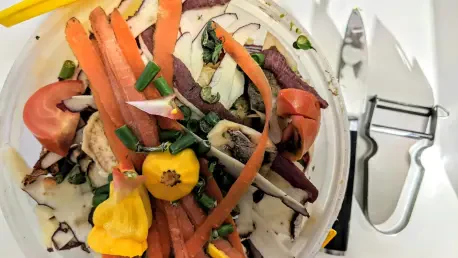
That change is anything but small; it’s a massive expansion of the playing field. Before, the focus was primarily on pre-consumer waste from generators like food processors and large cafeterias. By adding post-consumer material, we are now officially capturing everything scraped off plates in homes, restaurants, and schools. This dramatically increases the volume of material we need to manage, making the state’s 2017 estimate of 1.48 million tons feel conservative. This presents a huge challenge, as post-consumer waste is often more contaminated and harder to process. However, it also creates a tremendous market opportunity for organics recyclers. There is now a clear, state-sanctioned demand for infrastructure that can handle this complex waste stream, incentivizing investment in advanced composting technologies and anaerobic digestion facilities that can turn this material into valuable compost or renewable energy.
The law includes a provision that counts food waste sent to certain gas-to-energy landfills as “recycled.” Could you discuss the trade-offs of this compromise? How might this affect investment in other solutions like composting or anaerobic digestion facilities across the state?
This is a classic policy trade-off. From one perspective, it’s a pragmatic compromise designed to get the bill over the finish line. It acknowledges that a few landfills in the state already have the infrastructure to capture landfill gas and convert it to energy, and it allows districts to get credit for using those facilities. The upside is it provides an immediate, albeit imperfect, diversion option. The significant downside, however, is that it could dilute the incentive to invest in higher-order solutions like composting and anaerobic digestion. If a district can meet its “recycling” target by simply trucking waste to an existing landfill, it may be less motivated to support the development of a new composting facility, which keeps nutrients in the local ecosystem and builds a more circular economy. It’s a delicate balance between short-term pragmatism and long-term sustainability goals.
Previous state efforts often focused on outreach and data collection. How does this new legislation empower local governments and organics recyclers in a way earlier laws did not? Could you share an anecdote illustrating the kind of project that is now more feasible?
The 2017 Food Waste Reduction Act was a good starting point, but it was largely aspirational. It set a goal and recommended education and data collection, but it didn’t give local governments or recyclers the tools or the mandate to act. This new law changes that entirely by putting them in the driver’s seat. Imagine a local entrepreneur who has wanted to start a small-scale commercial composting business for years but was deterred by the prohibitive zoning and permitting process. Under the old system, their project was a non-starter. Now, with the tiered regulations, they can realistically start a business that services local restaurants and cafes. At the same time, the solid waste district, now required to create a reduction plan, has a vested interest in that entrepreneur’s success and can support them as part of their official strategy. This synergy between empowered local governments and a less-burdened private sector is what makes this law so much more powerful than its predecessors.
What is your forecast for food waste reduction in New Jersey over the next decade?
I am cautiously optimistic. The 50% reduction goal by 2035 is ambitious, but for the first time, the state has a legislative framework with real teeth. The combination of mandating local action through solid waste districts and clearing the regulatory path for composting infrastructure creates a powerful one-two punch. The initial years will likely see a surge in smaller, community-level projects and better-organized donation networks as the low-hanging fruit is picked. The real test will be whether the state can successfully foster the development of the larger-scale anaerobic digestion and composting facilities needed to handle the massive influx of post-consumer material. If the “pragmatic compromise” with landfills doesn’t stifle that investment, and if districts truly embrace their new role, New Jersey could become a national model.