
With the landscape of sports broadcasting becoming increasingly fragmented, major providers like Charter and Cox face a monumental challenge: delivering countless out-of-market games to millions of fans seamlessly. This isn’t just about securing content rights; it’s about navigating the immense technical complexity of backend video management, delivery, and rights enforcement at scale. We sat down with our utilities and delivery systems expert, Christopher Hailstone, to break down how a specialized partnership with a company like Comcast Technology Solutions (CTS) is becoming essential, streamlining operations and ultimately shaping the future of the fan experience.
The article notes CTS removes “technical complexity” for out-of-market sports. Could you walk us through the MediaOrigination process for an NBA game, from acquiring the feed to enforcing viewing rights for a Charter customer? What are the biggest hurdles this system overcomes for an MVPD?
Absolutely. Think of it as a highly sophisticated digital factory. It starts when the raw feed of the NBA game is acquired, often from multiple sources. MediaOrigination takes that signal into its ecosystem, where the real magic happens. It’s not just one stream; the system prepares, packages, and creates multiple versions of that linear channel simultaneously, optimized for everything from a giant 4K television to a smartphone. The most critical piece, however, is enforcing the viewing rights. As the stream is delivered, the system has to check in real-time if a specific Charter customer in a specific zip code is actually authorized to watch that out-of-market game. The biggest hurdle this overcomes is the sheer scale and intricacy of rights management. Before, an operator would have to build and maintain a sprawling, custom infrastructure to handle this, which is incredibly expensive and prone to error. CTS productizes this entire workflow, turning a massive operational headache into a managed, reliable service.
Tom Montemagno of Charter mentioned securing league rights before finding a backend system. Can you describe the operational challenges you believe they anticipated in managing those rights at scale? What specific complexities in delivery and rights enforcement led them to seek out a specialized partner?
When Tom Montemagno made that comment, he was highlighting the classic “now what?” scenario. Securing the rights is the exciting part, but the operational reality is a potential nightmare. They would have anticipated a logistical maze of blackout rules and regional restrictions that change constantly. Imagine trying to manage this across millions of subscribers for the NBA, MLB, and NHL all at once. The complexity is staggering. For instance, a subscriber might be authorized to watch a game, but their friend living just a few blocks away in a different service area is blacked out. Managing that distinction for every single user, for every single game, in real time, is not something you can solve with a simple spreadsheet. This is what would have driven them to a specialized partner. They needed a system that could not only handle the video delivery but, more importantly, ingest and flawlessly execute the complex business logic of the league agreements.
Bart Spriester of CTS mentions their solutions “improve efficiency and position businesses for long-term success.” What key performance indicators do you think they track to measure this efficiency for partners like Cox? Could you provide a specific example of how their SportsHub facility might streamline video operations?
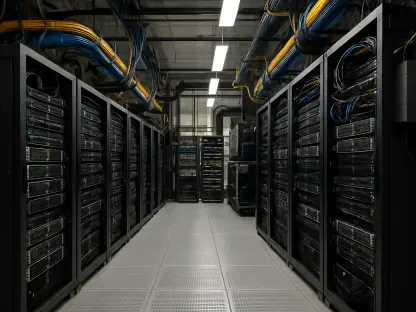
When you hear about improving efficiency, it translates to very concrete metrics. We’re talking about KPIs like signal acquisition uptime, the success rate of video transcoding, and, critically, the reduction in manual interventions required by the operator’s engineering team. Another key metric is the speed to market—how quickly can Cox spin up a new package of sports channels? As for the CTS SportsHub facility, it’s a perfect example of streamlining. Think of it as a central clearinghouse for all live sports feeds. Instead of Cox having to build out its own costly infrastructure with satellite dishes and fiber lines to pull in feeds from every league, they can now tap into this single, world-class hub. So, if a game’s start time is suddenly delayed, Cox’s team doesn’t have to scramble; that change is managed centrally by CTS, and the correct feed is automatically prepared and delivered to their network. This consolidation saves an incredible amount of time, resources, and potential for error.
Mark Gathen of Cox called sports “the cornerstone” of the customer experience. Beyond simple access, how does this CTS partnership tangibly improve the out-of-market viewing experience for a fan? Please detail how MediaOrigination’s backend management translates into a more seamless and reliable broadcast for them.
That’s a fantastic point because, for a fan, the technology should be invisible—it just needs to work perfectly, especially in the final moments of a close game. This partnership improves the experience by ensuring rock-solid reliability. The backend management handled by MediaOrigination means the video is acquired, packaged, and delivered through a purpose-built, high-capacity system. This translates to fewer glitches, less buffering, and a much lower chance of the screen going black during a critical play. The process of enforcing viewing rights also becomes seamless. A fan doesn’t see the complex database lookups happening in the background to verify their subscription; they just select their game, and it starts playing. This backend muscle ensures that the broadcast is not only stable but also that the video quality is optimized for their specific device, making the action crisp and clear. Ultimately, it allows providers like Cox to deliver on the promise of a premium sports experience without the fan ever having to think about the complex technology making it happen.
What is your forecast for the future of live sports distribution, especially as partnerships like these blur the lines between traditional cable and advanced streaming delivery?
I believe we’re seeing a fundamental shift away from siloed, duplicative infrastructures toward centralized, platform-based distribution. The model where every single operator builds its own end-to-end system is simply not sustainable or efficient. The future lies with specialized, scalable platforms like Comcast Media360 that can serve multiple clients from a single, robust core. This will enable far more personalization, where everything from advertising to on-screen graphics could be tailored to individual viewers in real time. For fans, this means more choice, greater reliability, and a richer viewing experience no matter who their provider is. For operators, it marks a transition from being infrastructure managers to becoming expert curators of content and the overall fan experience.