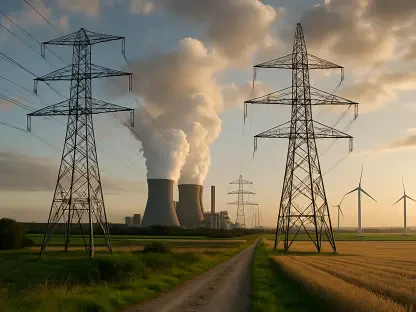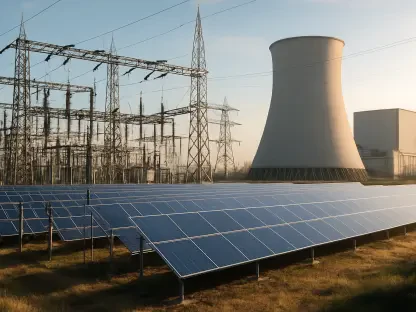

As American households grapple with an affordability crisis extending far beyond the grocery aisle, the staggering 32% increase in electricity costs over the last five years signals a deeper, more systemic problem brewing within the nation’s power infrastructure. This alarming trend is not a random market fluctuation but the direct result of a fundamental collision: skyrocketing power demand fueled by technological advancements is crashing against a contracting supply of reliable, on-demand electricity. The proliferation of artificial intelligence and the data centers required to power it are placing unprecedented strain on an already fragile grid. This emerging energy deficit poses a significant threat not only to consumer wallets but also to national economic stability and technological leadership. The core of the debate now centers on how to bridge this gap, forcing a difficult re-evaluation of the country’s energy strategy and the role that traditional power sources, long slated for retirement, might play in securing a stable and affordable energy future for all Americans.
The Growing Chasm Between Demand and Supply
The Unprecedented Surge in Power Consumption
The insatiable energy appetite of the digital age is rapidly outstripping the nation’s capacity to generate power, with artificial intelligence and its supporting data centers emerging as the primary drivers of this new demand. Projections indicate a staggering need for an additional 166 gigawatts of power over the next five years, an amount equivalent to the output of dozens of large-scale power plants. This surge is not a distant forecast but a present-day reality, placing immense stress on an electrical grid that was designed for a different era of consumption. The intricate network of transmission lines and power stations is being pushed to its limits, raising concerns about its ability to maintain stability and prevent blackouts, especially during periods of peak usage. This new layer of demand from the tech sector complicates an already challenging energy landscape, forcing utilities and policymakers to confront the urgent need for a massive expansion of generating capacity to keep pace with innovation and prevent the energy crisis from derailing economic progress and technological advancement.
The Consequences of Policy-Driven Supply Constraints
Compounding the challenge of surging demand is the diminishing supply of reliable, on-demand power sources, a direct consequence of past environmental regulations aimed at reducing carbon emissions. Over the last decade, a policy focus on decarbonization has accelerated the retirement of essential coal and natural gas power plants. These facilities provide what is known as “dispatchable power,” meaning their electricity generation can be ramped up or down on command to meet real-time changes in demand. This capability is critical for maintaining grid stability, especially when intermittent renewable sources like solar and wind are unavailable due to weather conditions. The systematic removal of these dispatchable assets, a process some refer to as “energy subtraction,” has eroded the grid’s foundational reliability. As a result, the nation’s power infrastructure has become more vulnerable to supply shortfalls and price volatility, leaving consumers and industries exposed to the consequences of a system that is increasingly unable to guarantee power when it is needed most.
A Proposed Path Forward
Re-evaluating the Role of Coal in Grid Stability
In response to the escalating energy crisis, the current administration is championing a strategic shift aimed at expanding the supply of on-demand power, with a central focus on preserving the nation’s existing coal-generating capacity. This proposal is not a rejection of other energy sources but a pragmatic move to bolster grid reliability in an era of unprecedented demand. By retaining the current fleet of coal-fired power plants, policymakers aim to secure a crucial buffer that can be called upon to stabilize the grid during peak loads or when other energy sources falter. Furthermore, this strategy is intended to insulate the energy market from the price volatility of natural gas. A robust coal capacity acts as a vital hedge, providing a consistent and predictable source of power that can prevent sudden price spikes from being passed on to consumers. This approach reframes coal not as a relic of the past, but as a necessary component of a diversified and resilient energy portfolio designed to meet the challenges of the 21st century.
The Economic Case for Energy Abundance
The argument for retaining dispatchable power sources like coal is grounded in recent economic history and a philosophy of “energy abundance.” A clear example of this principle in action occurred in 2025, when a sudden 70% spike in natural gas prices threatened to trigger a massive increase in electricity bills for millions of Americans. However, the energy market was able to partially offset this shock by increasing coal-fired generation by 13%. This strategic pivot eased the financial burden on consumers and demonstrated the tangible economic benefits of maintaining a diverse and dispatchable energy supply. Proponents of this approach argue that achieving lower electricity prices and a stable grid requires a policy that prioritizes the expansion of all reliable energy sources, rather than one that focuses on eliminating them. The ultimate goal of an energy abundance policy is to ensure that supply consistently outpaces demand, creating a competitive market that drives down costs and provides the dependable power needed to fuel economic growth and innovation for years to come.
Navigating the Future of American Energy Policy
The intense debate over the nation’s energy future ultimately culminated in a decisive policy shift. The evidence presented during this critical period highlighted the severe economic and logistical consequences of a widening gap between electricity demand and reliable supply. It became clear that the accelerated retirement of dispatchable power sources, particularly coal, had left the national grid more vulnerable to price shocks and supply instabilities than previously anticipated. The case study from 2025, where an increase in coal generation provided a crucial economic buffer against soaring natural gas prices, served as a powerful reminder of the value of a diversified energy portfolio. Consequently, the strategic decision was made to halt the decommissioning of the existing coal fleet, reframing these assets as essential components for ensuring grid stability and energy affordability. This policy pivot marked a significant moment, signaling a move towards a doctrine of energy abundance that prioritized reliability and economic security alongside long-term environmental goals. The course was set to ensure the nation had the power it needed to support its technological ambitions and protect its consumers.