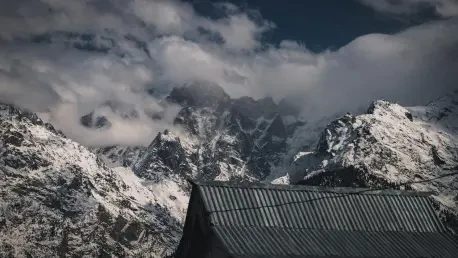

The immense Himalayan mountain range, often called the “Water Tower of Asia,” is sending an alarming new signal that threatens the water supply for billions of people, but the danger lies not in a simple, predictable decline of snow, but in its growing and dangerous unpredictability. As global temperatures continue their ascent, the region’s crucial winter storms have become increasingly erratic, creating a volatile cycle of severe “snow droughts” followed by sudden, overwhelming snowfall events. Experts now stress that this heightened variability is far more damaging and difficult to manage than a steady, linear change. This new climate reality is altering the very nature of the seasons, delaying the onset of snowfall, pushing it to ever-higher elevations, and ultimately shrinking the seasonal snowpack that has long served as a massive, natural frozen reservoir. The impacts are already visible; parts of the western Himalayas and the vast Tibetan Plateau recorded drastically below-average snow levels in late 2025 and early 2026, highlighting the immediacy of the threat.
A Cascade of Consequences
The repercussions of this disrupted hydrological cycle extend far beyond the high peaks, triggering a cascade of severe and interconnected hazards for downstream communities. The unpredictable timing and intensity of precipitation dramatically increase the frequency of dangerous phenomena like rain-on-snow flooding, where sudden rainfall rapidly melts the existing snowpack, unleashing devastating torrents. This volatility also elevates the risk of avalanches and landslides, endangering infrastructure and human lives. Beyond these immediate physical dangers, the erratic supply of meltwater poses a direct and growing threat to critical economic sectors that form the bedrock of regional stability. Hydropower facilities, which depend on a consistent flow of water to generate electricity, face operational uncertainty. Agriculture, the livelihood for millions, is imperiled as traditional irrigation schedules are rendered obsolete, jeopardizing crop yields and straining regional food security. These domino effects ripple outward, promising widespread water insecurity and economic instability for a significant portion of the global population.
Charting a Course Forward
In response to this escalating crisis, the scientific community underscored the urgent need for a multi-faceted approach centered on research, monitoring, and proactive preparation. A consensus emerged that a deeper investigation into the precise atmospheric and climatic drivers behind these erratic weather patterns was paramount to understanding and predicting future shifts. This called for a significant strengthening of on-the-ground and remote monitoring systems to provide more accurate, real-time data on snowpack depth, temperature, and precipitation. Based on this enhanced data, experts advocated for the development of more sophisticated forecasting models capable of anticipating both prolonged snow droughts and extreme snowfall events. Ultimately, the goal was to translate improved scientific understanding into actionable, science-based preparedness strategies that could help governments and communities mitigate the growing risks to water security, infrastructure, and agriculture, thereby adapting to a more volatile future.