
A staggering environmental liability is accumulating across the Middle East and North Africa, where a burgeoning waste crisis is now inflicting an estimated US$7.2 billion in damages each year, posing a significant threat to public health and long-term economic stability. A new World Bank report, “Waste Management in the Middle East and North Africa,” illuminates the vast and costly gap between the amount of refuse collected and the amount that is properly managed. This growing discrepancy has created a silent but severe economic drain on the region, impacting vital sectors and jeopardizing natural resources. The report details how this mismanagement not only pollutes the environment but also undermines potential avenues for sustainable growth, turning what could be a valuable resource into a multi-billion-dollar problem. As the volume of waste continues to climb, the urgency to address this systemic failure has never been more critical for the future prosperity and well-being of the region’s populations.
The Disconnect Between Collection and Management
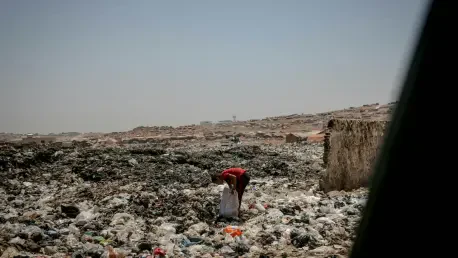
The core of the issue lies not in the failure to collect waste, but in the profound inability to manage it effectively once it has been gathered. The MENA region currently produces over 155 million tons of waste annually, a figure that is on a startling trajectory to double by the year 2050. Per capita, the region already outpaces the global average in waste generation. While collection systems are surprisingly robust, with nearly 80% of waste being picked up, the journey ends there for most of it. An alarming two-thirds of this collected material is subsequently mismanaged, with less than 10% entering recycling streams. The remainder contributes to widespread air, soil, and water pollution. This mismanagement has earned the region the undesirable distinction of being the highest per-capita contributor to plastic leakage into the seas. The Mediterranean, a cornerstone of the region’s identity and economy, has become one of the world’s most polluted bodies of water, creating a direct and immediate threat to the vital tourism industry that many of these nations depend upon for economic growth.
Charting a Path Toward a Circular Economy
The report strongly advocated for a fundamental shift in strategy, urging nations to modernize their waste systems and transition toward a circular economy. This forward-looking approach recognized that the crisis also represented a significant opportunity. Analysis revealed that up to 83% of the collected waste possessed the potential to be reused, recycled, or recovered for energy, transforming it from a liability into a driver for sustainable development. Such a transition was projected to create a cascade of positive outcomes, including the generation of new jobs, the protection of communities from environmental hazards, and the establishment of a more resilient economic foundation. The World Bank proposed a series of tailored strategies, acknowledging the diverse economic landscapes within the region. These ranged from scaling up sophisticated circular solutions in high-income countries to implementing low-cost, community-based initiatives in more fragile states. The potential economic benefits were clear; a modest 1% reduction in waste generation alone could have saved the region up to US$150 million annually.