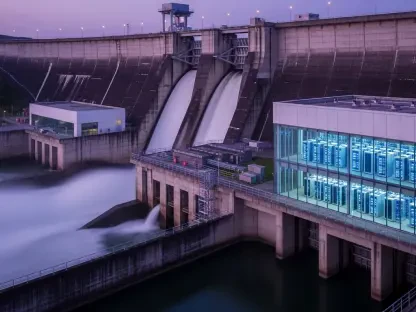

The sight of wildlife flourishing alongside heavy industry has long been a rare occurrence, but the Yeongpung Seokpo Smelter is rewriting that narrative by demonstrating a profound environmental transformation. In a striking validation of its new operational philosophy, otters—a species notoriously sensitive to water pollution—have been observed thriving in the Nakdonggang River directly adjacent to the facility. This remarkable return is not an accident but the direct result of a strategic and costly overhaul that has shifted the smelter’s approach from merely managing pollutants to creating a comprehensive, physically sealed system that blocks all potential routes of contamination. This paradigm shift, backed by advanced engineering and a deep commitment to ecological responsibility, is now yielding tangible proof of a revitalized local ecosystem, setting a new benchmark for how industrial operations can coexist with nature.
A Revitalized Ecosystem and Verifiable Data
The most compelling evidence of the river’s renewed health comes not from a lab report but from the riverbank itself, where an employee recently filmed three otters on the morning of January 9, 2026. The significance of this sighting cannot be overstated, as the International Union for Conservation of Nature (IUCN) classifies otters as a key “Indicator Species.” Their presence serves as a natural litmus test for environmental quality; because they are apex predators in their aquatic environment and highly susceptible to pollutants that accumulate in the food chain, their return is considered definitive proof that the local water system is clean and stable enough to support complex life. This ecological validation is further bolstered by the established presence of other protected and endangered species in the region, including hot-necked fish and mountain goats. Together, these species paint a vivid picture of a robust and resilient ecosystem that is actively recovering, underscoring the success of the smelter’s intensive environmental protection measures in a way that resonates beyond mere statistics.
These powerful ecological indicators are strongly supported by official scientific data, which confirms a dramatic and sustained improvement in water quality. Information sourced from the ‘Water Environment Information System,’ which is managed by the Ministry of Climate, Energy and Environment, provides a clear and objective assessment of the Nakdonggang River’s condition. Monitoring points located downstream from the smelter (designated Seokpo 2 to 4) have consistently registered between 1 and 2 on the water supply level scale in recent years, indicating a high standard suitable for various uses. More importantly, a detailed analysis of mid- to long-term data reveals no significant difference in water quality between the monitoring point upstream of the facility (‘Seokpo 1’) and those downstream. This comparison leads to the firm conclusion that the smelter’s current operations are not having a discernible negative impact on the river. Furthermore, specific tests for major heavy metals—including cadmium, arsenide, lead, and mercury—have consistently shown concentrations below the detection limit, with cadmium reportedly not being detected at all since 2022, providing quantitative proof of the new system’s efficacy.
A Foundational Shift in Environmental Strategy
The smelter’s remarkable turnaround is rooted in a fundamental philosophical change, described as a strategic shift from “management” to “blockdown.” This innovative approach moves beyond the traditional model of treating and monitoring discharged pollutants to one that focuses on structurally and physically preventing any contaminants from escaping the facility in the first place. Backed by a substantial total investment of 540 billion won since 2019, this strategy represents a complete redesign of the plant’s core infrastructure to create a closed-loop, zero-discharge environment. Instead of reacting to pollution after it has been created, the “blockdown” philosophy proactively removes the pathways for contamination. This comprehensive system is considered a more permanent and reliable solution than simply meeting numerical standards for effluent, as it addresses the root cause of potential pollution by building a physical fortress around the entire operation, ensuring that the surrounding environment remains protected by design.
At the core of this “blockdown” strategy lies a suite of advanced engineering systems designed to create an impermeable separation between industrial processes and the natural environment. A key component is a massive underground cutoff wall that stretches for approximately 2.5 kilometers around the smelter’s entire perimeter. This formidable physical barrier fundamentally intercepts the natural flow of groundwater beneath the plant, preventing it from ever coming into contact with potential contaminants in the soil. The intercepted groundwater is then collected by a sophisticated pumping system, directed to a purification facility, and subsequently recycled for 100% of its use as process water within the smelter. This system provides the dual benefit of preventing off-site pollution while also conserving vital water resources. Complementing this is a state-of-the-art Zero Liquid Discharge (ZLD) system for all process wastewater, which ensures that no industrial water is ever discharged externally. All water used in smelting operations is treated and reused within this closed loop, structurally eliminating one of the most common sources of river pollution from industrial facilities.
A New Benchmark for Industrial Sustainability
The comprehensive environmental system implemented at the Seokpo Smelter was evaluated by industry experts as a new benchmark for sustainable industrial practices. The emphasis on the structural integrity of the “blockdown” model, which physically prevents pollution at its source, was recognized as a more permanent and reliable solution than the conventional methods of ongoing monitoring and management of pollutant levels. Youngpoong’s commitment was clearly demonstrated through its substantial investments and a long-term vision aimed at transforming the facility into a sustainable smelter capable of operating in harmony with its environment for more than a century. This achievement fulfilled a critical responsibility to protect the local ecosystem and the vital Nakdonggang River system, proving that heavy industry and ecological health could not only coexist but thrive together. The company’s continued dedication to enhancing this stability established a powerful precedent for the global smelting industry.