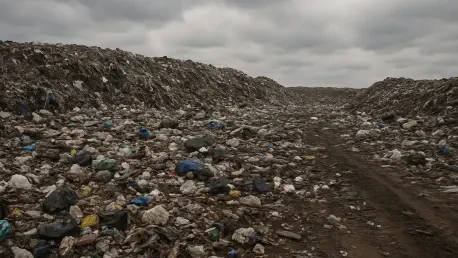

Across the United States, a quiet but consequential transformation is reshaping the landscape of waste management, creating a system where the futures of public and private disposal facilities are diverging at an accelerating pace. This analysis compiles observations from various municipal and corporate case studies to explore the deepening divide between financially strained public landfills and the aggressive expansion of large, private waste corporations. The evidence points toward a two-tiered system, raising critical questions about local economic stability, environmental equity, and the long-term sustainability of how the nation handles its trash. What emerges is a complex narrative of financial pressures, fierce community battles, and the strategic maneuvers that are defining the future of waste disposal.
The Widening Chasm in America’s Waste Landscape
The growing divergence between cash-strapped public waste facilities and resource-rich private corporations is becoming one of the most significant trends in modern infrastructure management. Publicly owned landfills, often operating on tight budgets and serving smaller populations, are increasingly burdened by the immense costs of operation and legally mandated closures. In contrast, corporate giants in the waste sector leverage vast capital reserves to not only maintain their facilities but to aggressively expand them, often absorbing smaller competitors and consolidating market control.
This shifting ownership of the nation’s disposal infrastructure directly impacts local economies, environmental justice, and long-term sustainability. When a local landfill closes, a community loses a degree of control over its waste streams and disposal costs, often becoming dependent on distant, privately owned sites. This can lead to increased hauling fees passed on to residents and businesses. Furthermore, the concentration of massive landfills in specific areas, a common result of corporate expansion, raises environmental justice concerns for the host communities, which bear a disproportionate burden of the region’s waste.
The unfolding situation is characterized by a series of interconnected challenges and strategic responses. Public entities face immense financial pressures that force them into difficult choices between unpopular expansions and fiscally responsible but costly closures. Simultaneously, private firms navigate these same community and regulatory landscapes with a distinct advantage, turning potential obstacles into opportunities for growth. The community battles and strategic maneuvers seen in counties from Georgia to Michigan provide a clear preview of the defining issues in the future of American waste management.
The Divergent Fates of Municipal and Corporate Landfills
The Fiscal Cliff of Publicly Owned Sites
A recurring theme for publicly owned landfills is the struggle against a fiscal cliff built from mounting operational costs, unfunded closure mandates, and crippling debt. This cycle forces local governments into untenable positions where financial survival is often at odds with public sentiment. The legally required costs to safely close and monitor a landfill for decades can run into the millions, a sum that many smaller counties have not adequately saved for, creating a significant financial liability for taxpayers.
This pattern of financial unsustainability is clearly visible in real-world scenarios. In Georgia, Candler County is grappling with a $4.5 million closure dilemma for its 20-acre facility, with only half the necessary funds set aside. Inflation has outpaced their savings, making a swift closure the only viable path to avoid future tax hikes. Similarly, Lycoming County, Pennsylvania, transferred management of its landfill, which was $27 million in debt, to a neighboring county’s authority. This move was a desperate attempt to stabilize finances ahead of a necessary but costly expansion.
These situations often present municipalities with a difficult choice: pursue a publicly opposed expansion that promises financial solvency or proceed with a fiscally responsible closure that burdens the current budget. Candler County residents, for instance, overwhelmingly rejected a proposal to turn their local site into a regional hub, despite the promise of $50 million in revenue. Their concerns over traffic and pollution won the day, but the outcome is a costly closure and reliance on a distant facility. This highlights the delicate balance officials must strike between long-term financial health and immediate community demands.
Corporate Titans Cement Their Dominance Through Aggressive Growth
While public sites face financial headwinds, major private players like Republic Services and WM are leveraging their substantial capital to cement their market dominance. These corporations have the resources to navigate complex and lengthy regulatory hurdles, fund extensive environmental impact studies, and sustain legal challenges that would bankrupt a small municipality. This financial power allows them to push expansion projects forward, even in the face of significant local opposition.
This trend is exemplified by Republic Services’ controversial expansion of its Wayne Disposal hazardous waste site in Michigan. Despite an expired permit and widespread public comment against the project, the company is securing approval to increase the landfill’s capacity by 24%. In a similar vein, WM is pursuing a 236-acre enlargement of its Pine Tree Acres landfill, also in Michigan. These projects demonstrate a clear strategy of growth aimed at capturing larger shares of regional waste streams.
The strategic advantage of private firms lies in their ability to absorb the costs and political friction associated with expansion. They can afford teams of lawyers, engineers, and lobbyists to advocate for their projects over months or even years. This allows them to outlast local resistance and secure the permits needed for long-term operational control. By successfully expanding their sites, they not only increase their revenue potential but also solidify their indispensable role in the regional waste infrastructure.
The Battleground of Community Consent
Public opposition serves as a universal barrier to landfill expansion, regardless of whether the operator is a public entity or a private corporation. Residents in communities slated to host new or expanded landfills consistently raise concerns about increased truck traffic, potential water and air pollution, noise, and the general environmental risks associated with large-scale waste disposal. These grassroots campaigns often represent the most significant hurdle for any expansion plan.
However, the outcomes of these community battles vary dramatically. In Candler County, Georgia, resident outcry successfully vetoed a regional plan that would have expanded the public landfill, forcing the county to pursue a costly closure. In contrast, similar levels of opposition in Michigan failed to halt corporate-backed projects, such as the Wayne Disposal expansion. There, despite hundreds of negative public comments and a history of controversy, the project is proceeding.
This divergence challenges the assumption that public will is the final word in local land-use decisions. While community consent is a powerful force, it often competes with the immense financial and legal power wielded by large corporations. The ability of private firms to persist through years of opposition and legal maneuvering often dictates the final result of these conflicts, suggesting that financial resources can be a more decisive factor than the unified voice of a community.
Emerging Strategies for Survival and Dominance
In this competitive landscape, both public and private entities are adopting innovative tactics to secure their futures. For struggling public facilities, regional consolidation is emerging as a key survival strategy. By pooling resources and sharing management responsibilities, municipalities can achieve economies of scale and better manage long-term liabilities. Lycoming County’s decision to transfer its landfill management to a neighboring county’s authority is a prime example of this cooperative approach.
Private corporations, on the other hand, are employing creative engineering and operational techniques to maximize the value of their existing assets. Republic Services, for instance, is extending the life of its Modern Landfill in Pennsylvania by reopening previously closed and settled cells. This method allows the company to add capacity without undergoing the full regulatory process required for a brand-new expansion, representing a savvy use of existing space to maintain market dominance.
Looking ahead, the future of waste management may be defined by these evolving strategies. Regional public authorities could become the only viable model for municipalities hoping to compete with corporate giants. These larger, multi-county entities may have the financial footing and operational scale necessary to manage modern landfills effectively. Meanwhile, private firms will likely continue to innovate, finding new ways to expand their footprint and solidify their control over the nation’s waste disposal infrastructure.
Navigating the New Reality of Waste Disposal
The evidence from across the country reveals systemic financial disadvantages facing public landfills, which stand in stark contrast to the strategic prowess fueling private sector expansion. Public entities are often caught in a reactive cycle, dealing with immediate budget shortfalls and unfunded mandates, while private corporations proactively invest in long-term growth and market consolidation. This creates an uneven playing field where financial might, rather than public need or environmental prudence, increasingly determines the future of waste management.
For municipal leaders, navigating this new reality requires forward-thinking action. Exploring regional partnerships to share costs and operational burdens can provide a lifeline for smaller landfills. Establishing host community fees, which compensate the municipality where a landfill is located, can create a dedicated revenue stream. Most critically, creating and diligently funding realistic long-term closure trusts is essential to avoid the fiscal cliffs seen in places like Candler County. Proactive financial planning is no longer optional; it is a prerequisite for survival.
Communities, in turn, have a vital role to play. To effectively engage in the planning process, residents must organize early, understand the regulatory framework, and present well-researched arguments that go beyond general opposition. Holding both public and private operators accountable requires sustained engagement, from attending public hearings to monitoring permit compliance. By becoming informed and active stakeholders, communities can better influence the decisions that directly impact their local environment and quality of life.
The Future of America’s Trash
The insights gathered from these case studies reinforced the conclusion that a two-tiered system of waste management had emerged. In this system, public entities were increasingly occupied with managing the decline and costly closure of aging facilities, while private corporations controlled the growth and future of disposal capacity. This divergence had profound long-term implications for everything from the cost of waste disposal for households and businesses to the effectiveness of environmental oversight.
The continued concentration of waste into fewer, larger, corporate-owned facilities suggested a future where market competition would diminish, potentially leading to higher tipping fees. It also raised questions about regulatory capture and the ability of state and local agencies to adequately monitor these massive and complex sites. Ultimately, the trajectory pointed toward a less decentralized and more corporatized waste infrastructure.
In reflecting on these trends, it became clear that a more balanced and sustainable future would require a strategic shift. A hybrid approach, combining the regional consolidation of public facilities with stronger public-private oversight mechanisms, offered a potential path forward. Such a model could preserve a degree of public control and accountability while leveraging the operational efficiencies of the private sector, creating a more equitable system for managing the nation’s trash.