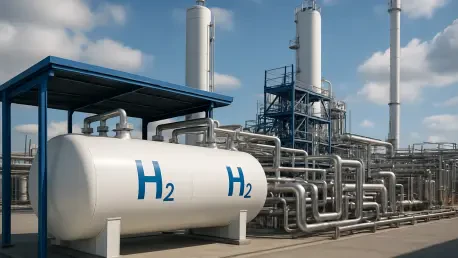

As a pioneer in the renewable energy sector, Christopher Hailstone has dedicated his career to transforming waste into sustainable solutions. With a deep background in energy management and grid reliability, he’s at the forefront of Raven SR’s groundbreaking waste-to-hydrogen initiative. Today, we’re diving into his insights on the innovative $75 million facility in Richmond, California, set to revolutionize hydrogen production from organic waste. Our conversation explores the intricacies of partnerships, cutting-edge technology, permitting challenges, and the broader implications for the hydrogen fuel market amidst shifting political landscapes. Join us as we uncover the milestones, strategies, and vision behind this ambitious project.
How did Raven SR come to partner with Republic Services for the Richmond facility site, and what were some of the toughest obstacles you faced in securing this location?
Partnering with Republic Services was a natural fit for us, given their ownership of the West Contra Costa Sanitary Landfill, a closed site perfect for our vision of sustainable energy production. We started discussions back in 2021, focusing on leasing a small plot—just an acre and a half—for our operations, with the added benefit of accessing feedstock directly from their existing transfer station. The biggest hurdle was aligning our goals with regulatory expectations for a closed landfill, which required countless meetings to ensure we weren’t disrupting the site’s environmental status. I remember a particularly tense moment during negotiations when a zoning concern threatened to delay our timeline by months; it felt like we were stuck in quicksand, but sitting down with local officials and Republic’s team to map out a mitigation plan turned it around. That experience taught me the power of patience and collaboration—without it, we might still be spinning our wheels.
Can you walk us through the core technology behind converting up to 99 wet tons of biomass into 2,400 metric tons of hydrogen each year, and what makes this process unique?
Our technology at Raven SR is centered on transforming organic waste—think yard waste, agricultural residues, and untreated construction wood—into synthetic gas, which we then convert into hydrogen fuel. The process starts with preprocessing the biomass to ensure consistency, followed by a proprietary thermal conversion that breaks it down into syngas without needing fresh water, a huge advantage in water-scarce California. What sets us apart from other hydrogen production methods, like electrolysis or steam methane reforming, is our efficiency and low environmental footprint; we generate 60% to 70% of our own energy on-site and aim to source the rest from renewables. I’ll never forget the day we fine-tuned the thermal reactor settings after months of testing—it was like hearing an engine purr for the first time, and we saw a 15% jump in output efficiency. That moment in the lab, surrounded by the hum of machinery and the team’s cheers, cemented my belief that we’re building something game-changing.
With construction slated to begin early next year and a launch targeted for 2027, what are the key milestones in this timeline, and how do you plan to address potential challenges?
We’ve mapped out a detailed roadmap from now until 2027, starting with finalizing the last permit from Richmond, which we expect to be straightforward but still crucial. Early next year, we’ll break ground, focusing on infrastructure setup for the facility, which will take about 18 months, followed by equipment installation and testing phases through 2026. Our goal is to be fully operational by 2027, producing 2,400 metric tons of hydrogen annually. One challenge I foresee is supply chain delays for specialized equipment—something we’ve seen plague similar projects—so we’re already securing backup suppliers and building buffer time into our schedule. I recall a past project where a delayed reactor component set us back three months; this time, we’re proactively locking in contracts early to avoid that sinking feeling of watching the clock tick with no progress.
You’ve spoken about learning from other hydrogen ventures’ failures by avoiding debt and government subsidies. How did those lessons shape your funding strategy, and can you share a specific insight that influenced Raven SR’s approach?
Watching other hydrogen startups struggle under heavy debt or vanish when government subsidies dried up was a sobering lesson for us. We decided early on to fund Raven SR through equity agreements, giving us flexibility and stability without the burden of loan repayments hanging over our heads. I remember studying a failed venture a few years back that bet everything on federal grants—when those fell through, they couldn’t pivot, and their doors closed within six months. That stuck with me; it was a stark reminder of how fragile over-reliance on external funding can be, so for this Richmond project, while we’ll welcome tax credits, they’re not make-or-break for our financial model. It’s a slower build, but standing in our office plotting out equity rounds with investors who believe in our vision felt like laying a foundation of stone, not sand.
The permitting process for shifting from a solid waste to a biomass conversion facility took over three years. What were the main roadblocks, and can you describe a moment that shifted your perspective during this journey?
The permitting process was a marathon, far longer than we anticipated, largely due to the initial pushback on handling food waste—officials encouraged us to focus on composting that material instead, so we pivoted to a biomass-only permit. The biggest roadblock was navigating the regulatory maze; every agency had different priorities, from air quality to land use, and syncing those up felt like herding cats. I recall a meeting with environmental regulators where we presented our revised biomass plan, expecting resistance, only to be met with genuine curiosity about our waterless process—they asked detailed questions for over an hour. That interaction shifted my view; I realized that transparency and patience could turn skeptics into allies, and it ultimately refined our final facility design to be even more environmentally sound. It was exhausting, but walking out of that room felt like we’d crossed a major threshold.
Given Chevron New Energies’ 50% equity stake and their role in marketing hydrogen in Northern California, how did this partnership evolve, and what’s the plan for getting the fuel to market?
Our partnership with Chevron New Energies grew from early investment discussions, where their belief in hydrogen as a future fuel aligned perfectly with our mission. They came on board with a 50% equity stake, bringing not just capital but also expertise in fuel distribution, which is invaluable. The plan is to produce hydrogen at our Richmond facility, store it on-site, and then leverage Chevron’s network to market and distribute it across Northern California, primarily for industrial and transportation uses. I remember a strategy session with their team where we mapped out logistics on a whiteboard until midnight—their insistence on redundant delivery routes showed me how seriously they take reliability, and it’s shaped our rollout to prioritize flexibility. Watching their team in action, with their sharp focus on end-user needs, reinforced that this collaboration is about more than just numbers; it’s about building a market together.
With federal support for hydrogen waning under the current administration, including a $1.2 billion loss for California’s hub, how do you see Raven SR navigating this landscape, and what strategies are in place to keep pushing forward?
The pullback on federal support, especially the $1.2 billion hit to California’s hydrogen hub, is disappointing, but we’ve built Raven SR to stand on its own feet. Our strategy doesn’t hinge on government backing; instead, we’re focusing on making our hydrogen competitively priced against traditional hydrocarbons, which we believe will drive market demand regardless of policy shifts. We’re also diversifying potential revenue by exploring co-products like sustainable aviation fuel or methanol at future sites. I’ve been in late-night brainstorming sessions with our team, sketching out ways to tap into private sector partnerships more aggressively, and I can feel the grit in the room—everyone’s determined to prove hydrogen’s viability. It’s a tough climate, but I see it as a chance to show that innovation doesn’t need a government crutch to thrive.
As you expand with a facility in Spain and plan more U.S. locations, how do you tailor your technology to different regions, and what’s a unique challenge from the Spain project that taught you something valuable?
Adapting our technology for different regions involves studying local feedstocks and regulatory environments to tweak our process—biomass in Spain, for instance, might include more olive waste than in California, so we adjust our thermal conversion parameters accordingly. Planning a new site starts with a feasibility study, mapping waste streams, securing partnerships, and customizing facility design, all while ensuring scalability for fuels like methanol if demand shifts. The Spain project threw us a curveball with stricter EU emissions standards compared to the U.S.; I remember a week of intense recalibrations where we nearly scrapped a design element, feeling the pressure in every email update. That challenge taught me the importance of over-engineering for compliance from the get-go—it’s saved us headaches on subsequent plans. It’s a puzzle, but solving it feels like unlocking a new level of what’s possible.
What is your forecast for the future of hydrogen fuel, especially in light of current market and political dynamics?
I’m cautiously optimistic about hydrogen fuel’s future, even with the current cooling of federal enthusiasm and market hesitancy. I believe that as facilities like ours in Richmond come online by 2027, producing low-cost, renewable hydrogen at scale—2,400 metric tons annually from just one site—we’ll see a tipping point where demand from transportation and industry starts to surge. The political landscape may ebb and flow, but the underlying need for clean energy alternatives isn’t going away; it’s like standing on a beach watching the tide—sometimes it recedes, but it always comes back stronger. My hope is that Raven SR can be a catalyst, pushing the dominoes toward wider adoption, and I’d wager that within a decade, hydrogen will be a cornerstone of the energy mix if innovators and private investors keep the momentum. What do you think—will policy catch up, or will the market lead the charge?