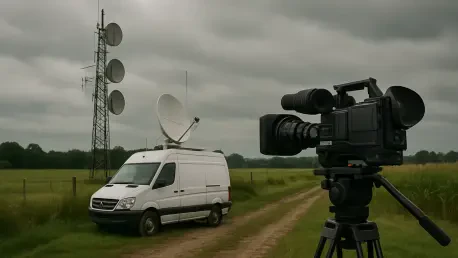

A Defining Battle for the Future of Local Broadcasting
A major proposed merger in the broadcast television industry has drawn sharp opposition from a prominent rural advocacy group, placing the interests of small-town America at the center of a high-stakes regulatory debate. The NTCA—The Rural Broadband Association has formally petitioned the Federal Communications Commission (FCC) to block the acquisition of Tegna by Nexstar, arguing the deal would create a media giant with unprecedented power to raise prices for consumers. This article will delve into the core arguments presented by the NTCA, explore the financial mechanics driving their concerns, and analyze the potential long-term consequences for both the broadcast industry and the rural communities it serves.
The Consolidated Landscape of Modern Media
To understand the current conflict, it is essential to recognize the industry dynamics that have shaped it. For decades, the broadcast landscape has been trending toward consolidation, with larger media corporations acquiring smaller station groups to expand their national footprint and negotiating leverage. A central element of this dynamic is the concept of “retransmission consent,” a legal framework that requires cable and satellite providers to pay local broadcast stations for the right to carry their signals. As station owners have grown larger, their ability to demand higher retransmission fees has increased, creating a recurring source of tension with the video distributors who must either absorb these costs or pass them on to subscribers. The proposed Nexstar-Tegna merger represents a pivotal moment in this ongoing trend, potentially creating the nation’s largest owner of local broadcast stations.
Dissecting the Opposition to a Broadcast Behemoth
The Anticipated Surge in Retransmission Consent Fees
At the heart of the NTCA’s opposition is the conviction that the merger would grant the combined Nexstar-Tegna entity unparalleled market power. The association, which represents approximately 850 community-based communication companies, argues that by adding Tegna’s 64 stations to its existing portfolio, Nexstar would be in a position to demand substantially higher retransmission consent fees. This increased leverage would make it nearly impossible for small, rural multichannel video programming distributors (MVPDs) to negotiate fair terms, effectively forcing them to accept whatever price the new broadcasting giant dictates. The NTCA asserts that research consistently shows large, consolidated broadcast groups charge significantly more for their programming than smaller, independent stations do.
The Direct Financial Impact on Rural Consumers
The NTCA supports its claims with compelling survey data illustrating a clear and accelerating financial burden on rural America. According to its filing, recent negotiations have already resulted in average fee increases of $128,351 for rural video providers, a steep climb from previous years. The association emphasizes that these are not abstract corporate costs; they have a direct and tangible impact on household budgets. The data reveals that an overwhelming 87% of these rural providers pass the increased fees directly on to their subscribers. This pass-through mechanism means that if the merger is approved and fees rise as predicted, it will be rural families and local businesses who ultimately pay the price through higher monthly bills for their television service.
An Appeal to the FCC’s Public Interest Mandate
The NTCA frames its petition as a matter of public interest, urging the FCC to fulfill its stated commitment to serving rural communities. The group contends that the merger is fundamentally inconsistent with this goal, as it would further weaken the already limited negotiating power of the small operators that are often the sole providers of video services in their areas. By allowing such a powerful entity to form, the NTCA argues, the FCC would be prioritizing corporate consolidation over consumer welfare. While Nexstar and Tegna have countered in other forums that their deal would create efficiencies and benefit the industry, the NTCA maintains that the disproportionate harm to rural America outweighs any potential corporate advantages.
Projecting the Future of Broadcast Negotiations
The FCC’s decision on the Nexstar-Tegna merger will have ramifications that extend far beyond this single transaction. An approval could signal a new era of deregulation, potentially triggering a wave of further consolidation in the broadcast industry and emboldening other large station groups to demand even higher fees. This could accelerate the trend of “cord-cutting” as consumers become unwilling or unable to afford rising cable and satellite bills. Conversely, a decision to block the merger would be seen as a major victory for smaller operators and consumer advocates, potentially reasserting the FCC’s role in protecting local markets from the pressures of national media consolidation.
Strategic Insights for Providers and Consumers
The key takeaways from the NTCA’s filing are clear: media consolidation directly correlates with higher retransmission fees, and these costs are overwhelmingly borne by end consumers, particularly in rural markets. For small MVPDs, the case underscores the critical importance of collective advocacy and presenting a unified front in regulatory proceedings. For consumers, it serves as a crucial reminder that industry mergers and acquisitions are not distant corporate maneuvers but have direct consequences for household expenses. Staying informed about such regulatory battles is the first step toward understanding the forces that shape the cost and availability of local news and entertainment.
A Call for a Consumer-Focused Regulatory Approach
In conclusion, the NTCA’s challenge to the Nexstar-Tegna merger encapsulates a fundamental tension in modern medithe drive for corporate scale versus the need to protect local consumer interests. The association has laid out a compelling case that the creation of a new broadcast behemoth would disproportionately harm rural communities through unavoidable price hikes. As the FCC weighs its decision, the outcome will serve as a powerful statement on whether the future of broadcasting will be defined by the interests of massive corporations or by a commitment to ensuring affordable access for all Americans, regardless of where they live.