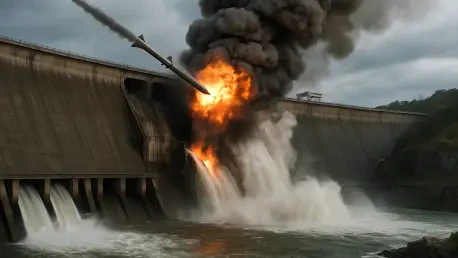

Russian forces have recently escalated their campaign in the Kharkiv region by targeting a critical piece of civilian infrastructure, the dam of the Pechenihy reservoir, disrupting essential services and raising alarms about the potential for a wider humanitarian and ecological crisis. This deliberate attack on December 7 in the Chuhuiv district immediately severed a key traffic artery, but the long-term implications for the region’s water supply and environmental stability are of far greater concern for the communities that depend on it. The reservoir, a vital water source for the city of Kharkiv, is now at the center of a strategic conflict that extends beyond the battlefield. The targeting of the dam, located approximately 45 kilometers from the frontline north of Kharkiv and the Kupiansk axis, signals a tactical approach that puts tens of thousands of civilians at risk and poses a significant challenge to both local authorities and Ukrainian military logistics. Local officials are now grappling with the immediate fallout while bracing for potential future scenarios, including catastrophic flooding, as emergency services review and update their comprehensive evacuation protocols to safeguard the population.
1. A Deliberate Strike on Civilian Lifelines
Following the attack, the head of the Pechenihy village, Oleksandr Husarov, confirmed the traffic disruptions while providing a cautious assessment of the immediate flood risk, stating that while there is no current threat to settlements, the possibility remains a constant and serious concern. This precarious situation has prompted emergency services to prepare for various contingencies, ensuring that updated evacuation plans are in place. The gravity of the incident was underscored by the 16th Army Corps, which unequivocally identified the Russian attack as a war crime. In their statement, they highlighted the dam’s essential role, describing it as a “critical object which provides water supply, ecosystem stability, and security for dozens of settlements in the Kharkiv region.” The targeting of such a facility is not merely a tactical maneuver but a direct assault on the resources necessary for civilian survival, deliberately creating instability and hardship for the local population far from the immediate frontlines of the conflict. This act has drawn international scrutiny and condemnation for its blatant disregard for civilian well-being and its potential long-term environmental consequences.
2. Strategic Aims and Military Preparedness
Analysts from the Institute for the Study of War (ISW) have interpreted the strike on the Pechenihy dam as part of a calculated Russian strategy aimed at hampering Ukrainian military logistics and creating favorable conditions for a broader offensive in the Kharkiv region. By damaging key infrastructure, Russian forces likely seek to disrupt supply lines, slow troop movements, and create widespread panic and resource shortages that could weaken local defenses. However, the 16th Army Corps indicated that the military had anticipated such actions and was prepared for this scenario. “We developed alternative routes for such a situation,” a representative noted, adding, “We used it actively before, and now they fully enable the necessary logistics to be provided.” This forward planning demonstrates an awareness of Russia’s tactics. The dam attack was not an isolated incident; on the same day, Russian forces also targeted a bridge in the Staryi Saltiv settlement, reinforcing the assessment that this is a coordinated effort to cripple regional infrastructure and gain a strategic advantage on the battlefield.
3. Fortifying Infrastructure Amidst Ongoing Threats
The events of December 7 underscored the persistent vulnerability of critical infrastructure and the resilience of the Ukrainian response. The coordinated strikes on both the dam and a nearby bridge illustrated a clear strategic pattern aimed at destabilization, which prompted an immediate recalculation of logistical and civilian defense strategies within the Kharkiv region. While military contingency plans for alternative supply routes proved effective in the short term, the incident highlighted the urgent and ongoing need to fortify civilian infrastructure against such deliberate attacks. The focus shifted from merely reacting to incidents to proactively reinforcing essential services and developing more robust, decentralized systems for water and power distribution. These efforts reflected a broader understanding that the protection of civilian lifelines was as critical to the region’s defense as conventional military preparedness, shaping future resource allocation and strategic planning. This proactive stance aimed to mitigate the impact of future strikes and ensure the continuity of essential services for the civilian population.