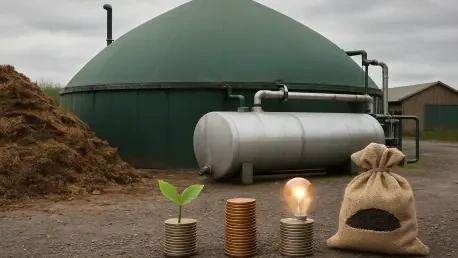

A sudden and unexpected halt in federal loan guarantees for on-farm anaerobic digesters has cast a long shadow over a technology once hailed as a cornerstone of sustainable agriculture and renewable energy. The U.S. Department of Agriculture’s recent, unexpected 90-day moratorium on new financial backing signals a major re-evaluation of the technology’s financial viability, challenging its role in the nation’s green energy portfolio. This article will analyze the economic drivers, troubling financial performance data, and the heated debate surrounding federal support for anaerobic digesters, culminating in a look at the future of this controversial technology.
The Cracks in the Foundation: Financial Performance and Federal Intervention
An Alarming Trend of Loan Delinquency
The primary catalyst for the USDA’s decisive policy shift is a pattern of severe financial underperformance within its loan portfolio. An internal letter from the Rural Business Cooperative Service (RBCS) revealed a stark reality: 21 loans extended to anaerobic digester projects, totaling $386.4 million, are currently facing a 27% delinquency rate. This figure points to a significant portion of federally-backed projects failing to meet their financial obligations, raising serious questions about their initial underwriting and long-term economic stability.
These concerns are not isolated to the digester sector alone, suggesting a broader issue with ambitious, high-tech agricultural investments. The same RBCS communication highlighted an even more severe 43% delinquency rate in the “controlled environment agriculture” category, which includes ventures like vertical farming. This wider context of financial instability across multiple advanced agricultural technologies likely solidified the agency’s decision to pause and conduct a comprehensive review to ensure the “prudent stewardship of federal resources.”
The Real-World Impact of the USDA’s Moratorium
The federal policy intervention has had immediate and tangible consequences for the agricultural community. The moratorium explicitly suspends the acceptance, processing, and awarding of new loan note guarantees, effectively freezing the pipeline for new projects seeking federal support. This has left numerous applicants under the popular Rural Energy for America Program (REAP) in a state of limbo. Projects that had already been selected for funding but had not yet finalized their loan agreements are now unable to move forward, stalling construction plans and creating significant financial uncertainty for farmers and developers.
However, the USDA’s action was carefully targeted to avoid disrupting projects already underway. The agency clarified that the suspension does not affect projects where loan agreements have been fully executed. This distinction ensures that existing operations with finalized funding can continue, but it underscores the agency’s specific concern with introducing new, potentially high-risk projects into its portfolio until a thorough re-evaluation is complete.
A Divided Industry: Competing Views on Digester Viability
The Critics’ View: An Inefficient and Costly Investment
The USDA’s moratorium did not occur in a vacuum; it followed a formal petition from a coalition of 34 environmental and agricultural organizations urging the agency to make digesters ineligible for REAP funding altogether. The core of their argument is that these systems are fundamentally weak financial ventures that depend heavily on external revenue sources, such as high electricity prices or state-level incentives like California’s Low Carbon Fuel Standard, to remain solvent. This reliance, they contend, makes them a risky investment for taxpayer money.
The coalition’s critique is supported by data comparing the cost-effectiveness of digesters to other renewable technologies. The petition noted that the average REAP grant for an on-farm digester was $855,701, a figure disproportionately higher than grants for less capital-intensive projects like solar. Furthermore, their analysis found that digester projects generated over four times less energy per dollar than solar projects funded through the same program, leading to the conclusion that “these projects clearly are not worth their cost.”
The Proponents’ Defense: A Vital Tool for Farmers and the Climate
In sharp contrast, industry advocates led by the American Biogas Council (ABC) have mounted a robust defense of the technology. They argue that digesters provide a crucial, diversified revenue stream for farmers while offering a cost-effective and environmentally superior method for managing manure. By capturing potent methane emissions that would otherwise escape into the atmosphere, these systems serve as a critical tool in the fight against climate change.
Proponents point to significant private sector confidence as evidence of the technology’s value, citing nearly $3 billion invested in over 200 on-farm digesters in the last three years alone. Patrick Serfass, executive director of the ABC, expressed surprise at the USDA’s delinquency figures, noting the data is not publicly available and the 27% rate was “news to us.” He reinforced the industry’s position on the technology’s value, stating, “The most important thing for Americans and rural communities is to help farmers recycle their manure into renewable energy and soil products.”
Future Outlook: Re-evaluating the Path Forward for Digester Economics
The Shadow of Policy and Political Shifts
The debate over digester economics is unfolding against a backdrop of shifting federal policy. The REAP program, which received a major funding boost under the Inflation Reduction Act, has been a key component of the Biden administration’s climate agenda. However, the program’s direction has not been static, having been repositioned under the previous administration to focus on a different energy agenda. This history of ideological shifts, combined with the recent overwhelming demand that forced a pause in all new applications, illustrates the volatile policy environment in which these projects operate.
The outcome of the USDA’s 90-day review is now a critical variable for the industry’s future. This internal assessment could lead to a range of outcomes, from the implementation of stricter underwriting standards and altered eligibility criteria to a prolonged freeze on funding for digester projects. The decision will not only impact individual farmers but will also signal the federal government’s long-term stance on supporting this specific form of renewable energy.
The Challenge of Proving Long-Term Sustainability
Ultimately, the central challenge for the anaerobic digester industry is to convincingly address the high delinquency rates and prove the long-term operational and financial sustainability of its projects. Regaining federal confidence will require demonstrating a viable economic model that is resilient and not overly dependent on fluctuating government incentives or volatile external market conditions, such as energy prices.
Should the industry succeed in stabilizing its economic model, the inherent benefits of the technology remain compelling. Digesters offer a unique dual advantage in waste-to-energy conversion and direct methane capture from agricultural sources. The current financial scrutiny may force an evolution in project design and financing, potentially leading to more robust, hybrid models that ensure these environmental benefits can be realized without placing an undue burden on taxpayers.
Conclusion: At a Crossroads of Technology and Taxpayer Trust
The USDA’s moratorium exposed significant financial underperformance in the anaerobic digester sector, bringing a simmering debate over the technology’s public value to a boil. This decisive federal action highlighted a fundamental conflict: while proponents championed digesters as a vital tool for both agriculture and the climate, a growing body of data, supported by critics, painted a picture of an expensive and risky investment of public funds. The 90-day review period marked a critical turning point, and its outcome ultimately determined whether anaerobic digesters could secure a sustainable economic future or would be remembered as a cautionary tale in the complex world of renewable energy financing.Fixed version:
A sudden and unexpected halt in federal loan guarantees for on-farm anaerobic digesters has cast a long shadow over a technology once hailed as a cornerstone of sustainable agriculture and renewable energy. The U.S. Department of Agriculture’s recent, unexpected 90-day moratorium on new financial backing signals a major re-evaluation of the technology’s financial viability, challenging its role in the nation’s green energy portfolio. This article will analyze the economic drivers, troubling financial performance data, and the heated debate surrounding federal support for anaerobic digesters, culminating in a look at the future of this controversial technology.
The Cracks in the Foundation: Financial Performance and Federal Intervention
An Alarming Trend of Loan Delinquency
The primary catalyst for the USDA’s decisive policy shift is a pattern of severe financial underperformance within its loan portfolio. An internal letter from the Rural Business Cooperative Service (RBCS) revealed a stark reality: 21 loans extended to anaerobic digester projects, totaling $386.4 million, are currently facing a 27% delinquency rate. This figure points to a significant portion of federally-backed projects failing to meet their financial obligations, raising serious questions about their initial underwriting and long-term economic stability.
These concerns are not isolated to the digester sector alone, suggesting a broader issue with ambitious, high-tech agricultural investments. The same RBCS communication highlighted an even more severe 43% delinquency rate in the “controlled environment agriculture” category, which includes ventures like vertical farming. This wider context of financial instability across multiple advanced agricultural technologies likely solidified the agency’s decision to pause and conduct a comprehensive review to ensure the “prudent stewardship of federal resources.”
The Real-World Impact of the USDA’s Moratorium
The federal policy intervention has had immediate and tangible consequences for the agricultural community. The moratorium explicitly suspends the acceptance, processing, and awarding of new loan note guarantees, effectively freezing the pipeline for new projects seeking federal support. This has left numerous applicants under the popular Rural Energy for America Program (REAP) in a state of limbo. Projects that had already been selected for funding but had not yet finalized their loan agreements are now unable to move forward, stalling construction plans and creating significant financial uncertainty for farmers and developers.
However, the USDA’s action was carefully targeted to avoid disrupting projects already underway. The agency clarified that the suspension does not affect projects where loan agreements have been fully executed. This distinction ensures that existing operations with finalized funding can continue, but it underscores the agency’s specific concern with introducing new, potentially high-risk projects into its portfolio until a thorough re-evaluation is complete.
A Divided Industry: Competing Views on Digester Viability
The Critics’ View: An Inefficient and Costly Investment
The USDA’s moratorium did not occur in a vacuum; it followed a formal petition from a coalition of 34 environmental and agricultural organizations urging the agency to make digesters ineligible for REAP funding altogether. The core of their argument is that these systems are fundamentally weak financial ventures that depend heavily on external revenue sources, such as high electricity prices or state-level incentives like California’s Low Carbon Fuel Standard, to remain solvent. This reliance, they contend, makes them a risky investment for taxpayer money.
The coalition’s critique is supported by data comparing the cost-effectiveness of digesters to other renewable technologies. The petition noted that the average REAP grant for an on-farm digester was $855,701, a figure disproportionately higher than grants for less capital-intensive projects like solar. Furthermore, their analysis found that digester projects generated over four times less energy per dollar than solar projects funded through the same program, leading to the conclusion that “these projects clearly are not worth their cost.”
The Proponents’ Defense: A Vital Tool for Farmers and the Climate
In sharp contrast, industry advocates led by the American Biogas Council (ABC) have mounted a robust defense of the technology. They argue that digesters provide a crucial, diversified revenue stream for farmers while offering a cost-effective and environmentally superior method for managing manure. By capturing potent methane emissions that would otherwise escape into the atmosphere, these systems serve as a critical tool in the fight against climate change.
Proponents point to significant private sector confidence as evidence of the technology’s value, citing nearly $3 billion invested in over 200 on-farm digesters in the last three years alone. Patrick Serfass, executive director of the ABC, expressed surprise at the USDA’s delinquency figures, noting the data is not publicly available and the 27% rate was “news to us.” He reinforced the industry’s position on the technology’s value, stating, “The most important thing for Americans and rural communities is to help farmers recycle their manure into renewable energy and soil products.”
Future Outlook: Re-evaluating the Path Forward for Digester Economics
The Shadow of Policy and Political Shifts
The debate over digester economics is unfolding against a backdrop of shifting federal policy. The REAP program, which received a major funding boost under the Inflation Reduction Act, has been a key component of the Biden administration’s climate agenda. However, the program’s direction has not been static, having been repositioned under the previous administration to focus on a different energy agenda. This history of ideological shifts, combined with the recent overwhelming demand that forced a pause in all new applications, illustrates the volatile policy environment in which these projects operate.
The outcome of the USDA’s 90-day review is now a critical variable for the industry’s future. This internal assessment could lead to a range of outcomes, from the implementation of stricter underwriting standards and altered eligibility criteria to a prolonged freeze on funding for digester projects. The decision will not only impact individual farmers but will also signal the federal government’s long-term stance on supporting this specific form of renewable energy.
The Challenge of Proving Long-Term Sustainability
Ultimately, the central challenge for the anaerobic digester industry is to convincingly address the high delinquency rates and prove the long-term operational and financial sustainability of its projects. Regaining federal confidence will require demonstrating a viable economic model that is resilient and not overly dependent on fluctuating government incentives or volatile external market conditions, such as energy prices.
Should the industry succeed in stabilizing its economic model, the inherent benefits of the technology remain compelling. Digesters offer a unique dual advantage in waste-to-energy conversion and direct methane capture from agricultural sources. The current financial scrutiny may force an evolution in project design and financing, potentially leading to more robust, hybrid models that ensure these environmental benefits can be realized without placing an undue burden on taxpayers.
Conclusion: At a Crossroads of Technology and Taxpayer Trust
The USDA’s moratorium exposed significant financial underperformance in the anaerobic digester sector, bringing a simmering debate over the technology’s public value to a boil. This decisive federal action highlighted a fundamental conflict: while proponents championed digesters as a vital tool for both agriculture and the climate, a growing body of data, supported by critics, painted a picture of an expensive and risky investment of public funds. The 90-day review period marked a critical turning point, and its outcome ultimately determined whether anaerobic digesters could secure a sustainable economic future or would be remembered as a cautionary tale in the complex world of renewable energy financing.