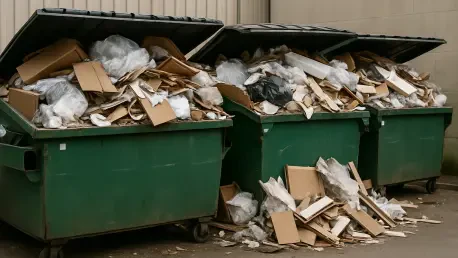

A comprehensive proposal from the Thompson-Nicola Regional District (TNRD) seeks to fundamentally reshape waste management in Sun Peaks, sparking a critical debate about financial responsibility and environmental stewardship in the resort community. At the heart of the proposed overhaul is a decisive shift to make commercial enterprises accountable for the waste they generate, ending a long-standing system where residential taxpayers have shouldered a significant portion of the cost. The plan, presented to the Sun Peaks Mountain Resort Municipality council, hinges on two major initiatives: redirecting commercial loads away from the local transfer station and implementing a ban on commercial organic waste in landfills. These measures are designed to correct operational inefficiencies, resolve financial imbalances, and align Sun Peaks with modern sustainability practices.
Reforming the Transfer Station
The Problem a Residential Facility Overwhelmed by Commerce
The Sun Peaks Transfer Station, originally established in 2005 with the explicit purpose of serving residential users with small, car-sized loads, has seen its intended function gradually eroded over the years. In the absence of formal restrictions, the facility has become a de facto disposal site for commercial operators, who frequently arrive with large trucks and trailers filled with commercial-grade waste. This surge in unintended usage has created a cascade of operational problems, most notably severe traffic congestion that creates long delays for all users, including the residents the station was built for. The constant flow of heavy vehicles not only strains the physical infrastructure but also escalates operational costs, transforming a modest community service into a strained, inefficient hub struggling to cope with demands far beyond its design capacity. The situation represents a classic case of infrastructure mismatch, where the growth of commercial activity has outpaced the development of corresponding waste management services, leaving a residential facility to bear the burden.
This operational strain is directly linked to a significant financial imbalance that places an undue burden on the local tax base. Under the current system, the Sun Peaks Mountain Resort Municipality is responsible for paying all disposal fees for waste deposited at the transfer station, while the TNRD’s solid waste services—funded in part by property taxes from Sun Peaks residents—cover the substantial costs of hauling that waste to its final destination. Consequently, when large commercial loads are dropped off, both of these cost categories become inflated, creating a scenario where local taxpayers are effectively subsidizing the waste disposal of private businesses. This financial inequity is further exacerbated by the handling of commercial cardboard. Unlike residential recycling, which is supported by the provincial Extended Producer Responsibility program managed by RecycleBC, commercial cardboard recycling is not subsidized. This leaves the municipality to cover the higher processing costs, adding another layer to the taxpayer-funded support of commercial operations.
The Solution Shifting Costs and Volume
To rectify this imbalance, the TNRD’s proposal outlines a clear and direct solution: redirect all commercial-sized loads from the over-capacity Sun Peaks Transfer Station to the Heffley Creek Eco-Depot. Opened in 2013, the Heffley Creek facility is a full-service site specifically engineered to manage large commercial volumes, including challenging materials from construction and demolition projects. Its design prioritizes safety and efficiency, featuring ample turnaround space for large trucks and trailers, which mitigates the congestion issues currently plaguing the Sun Peaks site. Furthermore, the eco-depot offers expanded recycling services tailored to commercial needs. By mandating that commercial waste be taken to a facility built for that purpose, the plan aims to restore the Sun Peaks Transfer Station to its original function as a convenient and efficient service for residential users, while ensuring commercial waste is handled in an appropriate and cost-effective manner.
A critical component of this strategic shift is the Heffley Creek Eco-Depot’s integrated weigh scale system, which enables the implementation of an equitable “producer pays” model. This technology allows for the precise measurement of waste from each vehicle, facilitating the direct billing of disposal fees to the commercial clients who generate the waste. This change is fundamental, as it systematically dismantles the existing subsidy structure and places the financial responsibility squarely on the businesses creating the refuse. This model is not only fairer to residential taxpayers but also incentivizes businesses to reduce their waste output as a direct cost-saving measure. By tying disposal fees directly to the volume of waste produced, the new system encourages more sustainable practices, such as improved recycling and composting, and fosters a more conscious approach to waste management within the commercial sector, aligning financial incentives with environmental goals.
Broader Changes and Community Impact
Tackling Organic Waste
The second pillar of the TNRD’s waste management overhaul is the introduction of a ban on commercial organic waste from landfill disposal, a policy aimed at diverting significant volumes of compostable material. This initiative will specifically target food scraps and other organic materials generated by high-volume producers, such as restaurants, hotels, and grocery stores. The ban would not be limited to Sun Peaks but would extend to Kamloops and other surrounding areas with access to commercial composting facilities, creating a regional standard for sustainable waste practices. By requiring businesses to separate and compost their organic waste, the TNRD aims to dramatically reduce landfill inputs, which in turn lowers methane gas emissions—a potent greenhouse gas—and extends the lifespan of regional landfills. This move reflects a growing trend across North America to treat food waste as a valuable resource for compost rather than a disposable byproduct.
To ensure a smooth transition and encourage compliance, the TNRD plans to implement the organics ban using a carefully phased “carrot-and-stick” approach. The initial focus will be on collaboration and education, with the district working alongside businesses and private waste haulers to ensure the necessary systems and infrastructure for organic waste collection are established. To facilitate this adjustment period, financial penalties for non-compliance will be deferred until late 2027, giving businesses ample time to adapt their operations. When enforcement begins, it will be targeted strategically. Instead of inspecting individual business bins, fines will be levied at the disposal facilities on haulers whose loads are found to exceed the allowable threshold for organic content. This method incentivizes haulers to work with their clients to ensure proper separation, creating a system of shared responsibility that promotes compliance throughout the entire waste collection chain without being overly punitive at the business level.
Implementation Timeline and Local Dialogue
The proposed changes are on a clear path toward implementation, with the TNRD Solid Waste Management Committee scheduled to review the recommendation in April, followed by a final decision from the TNRD board in May. If the proposal receives approval, the new restrictions at the Sun Peaks Transfer Station will not take effect until December 1, 2026. This extended timeline is intentional, designed to accommodate a comprehensive communication and education campaign. This campaign will target local businesses and strata corporations, ensuring they are fully informed about the upcoming changes and have sufficient time to make necessary arrangements, such as contracting with private waste management companies for collection services. Officials emphasized this shift would create a standard “business-to-business” model, consistent with practices in other British Columbia resort municipalities like Whistler, where commercial waste collection is handled by the private sector.
During the council meeting where the plan was presented, the proposal spurred important dialogue about its potential impacts. Concerns were raised by Councillor Kelly Dye, a local restaurant co-owner, who questioned whether the organics ban would meaningfully reduce the total volume of garbage, pointing out that packaging and other non-compostable materials still constitute a large portion of commercial refuse. In response, TNRD General Manager of Operations Jamie Vieira acknowledged these points but reiterated the core principle driving the reforms: the costs of waste management must be borne by those who generate the waste. The proposed changes were framed as a necessary and equitable realignment, designed to end the taxpayer subsidy of commercial disposal. In the end, the TNRD committed to conducting further stakeholder consultations with businesses, strata corporations, and private haulers. This collaborative process aimed to refine the final bylaw amendments, ensuring a smooth and fair transition before the new regulations were officially adopted.