
The global telecommunications industry currently faces a defining moment where the unbridled infrastructure spending of the past decade is finally meeting a rigorous new era of fiscal discipline and algorithmic intelligence. While the initial fervor surrounding the deployment of 5G networks has largely subsided, a significant two percent decline in capital expenditures throughout 2026 highlights a strategic cooling period among major service providers. This contraction does not necessarily signal a lack of ambition, but rather a calculated pivot toward long-term sustainability and the integration of advanced technologies. Industry analysts anticipate a modest cumulative average growth rate of approximately one percent over the coming years, suggesting that the sector is recalibrating its financial commitments. As operators balance immediate budget constraints against the necessity of network evolution, the focus is shifting away from raw hardware expansion toward a more nuanced, software-driven architecture that prioritizes operational efficiency over sheer physical footprint.
Shifting Dynamics in Network Infrastructure Allocation
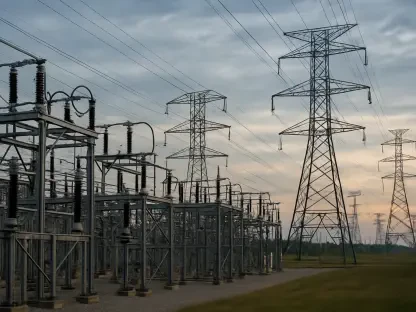
Even as traditional carriers tighten their belts, the underlying landscape of infrastructure investment is undergoing a profound transformation driven by non-traditional players. During the previous year, equipment manufacturer revenues actually outpaced overall capital expenditure growth, rising by four percent despite stagnant spending from legacy telecommunications firms. Much of this discrepancy was fueled by cloud service providers, who now account for nearly half of the growth in infrastructure hardware procurement. This shift indicates that the responsibility for maintaining the backbone of global connectivity is increasingly shared between traditional telecom giants and massive hyperscale data center operators. Furthermore, wireless capital intensity is projected to drop significantly, reaching roughly eleven percent by 2029, which represents a sharp seven-percentage-point decrease from the peak of the 5G cycle. This transition suggests that the industry is moving into a maintenance and optimization phase where the emphasis lies in maximizing the utility of existing assets rather than rushing to install the next generation of physical towers.
Future Considerations for Artificial Intelligence Integration
The industry eventually recognized that the path to profitability required a fundamental rejection of legacy spending habits in favor of autonomous network management solutions. Strategic planners moved beyond the hype of early generative tools to implement deep-learning algorithms that optimized energy consumption and predicted hardware failures before they occurred. By stabilizing the capital-expenditure-to-revenue ratio near fourteen percent, organizations successfully created a buffer that allowed for the targeted adoption of edge computing and private network slices. The most successful operators were those who prioritized high-tech integration over the simple expansion of coverage areas, effectively transforming their networks into intelligent ecosystems. Moving forward, stakeholders should invest heavily in standardized data protocols to ensure that AI models remain interoperable across diverse hardware platforms. Prioritizing the upskilling of technical staff also became a critical step in ensuring that the transition from a hardware-centric model to a software-defined future remained seamless. These measures effectively prepared the global market for a more resilient and automated era of digital communication.