
The transition from pilot-scale operations to heavy industrial integration represents a pivotal moment for the circular economy. Christopher Hailstone, an expert in utility management and renewable infrastructure, provides a deep dive into the logistical and technical evolution of plastic upcycling. With a background in grid reliability and energy delivery, he offers a unique perspective on how large-scale facilities in major European hubs are transforming waste into a high-value commodity. This discussion explores the scaling of batch pyrolysis technology and the environmental milestones necessary to reshape the petrochemical landscape.
Moving from a 20,000-ton facility in Denmark to an 80,000-ton plant in the Port of Rotterdam requires significant logistical planning. How does proximity to an existing refinery influence your operational efficiency, and what specific milestones are necessary to successfully quintuple your current recycling capacity?
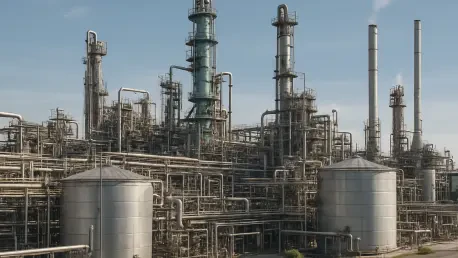
The decision to build adjacent to an existing refinery is a strategic move that significantly streamlines our infrastructure needs. By situating the new 80,000-ton plant in the Port of Rotterdam, we can tap into established utility networks and logistics hubs, which drastically reduces the “ground-up” complexity of such a massive expansion. Our primary milestones involve successfully porting the proprietary batch pyrolysis technology used in Denmark to this much larger scale while ensuring it integrates seamlessly with Vitol’s existing refinery operations. This quintupling of capacity is not just about building more furnaces; it is about synchronizing the flow of 100,000 metric tons of total capacity across our European footprint. The proximity allows for immediate feedstock transfer and shared expertise, ensuring that the operational reliability we established at the 20,000-ton Farevejle plant is maintained as we scale.
Batch pyrolysis converts end-of-life plastics into oil that targets a lower carbon intensity than fossil naphtha. Could you detail the technical challenges of maintaining this oil’s quality for chemical producers and explain the step-by-step process of integrating this feedstock into existing plastic manufacturing streams?
The most significant technical hurdle is ensuring the pyrolysis oil meets the rigorous purity standards required to act as a direct replacement for fossil naphtha. Because post-consumer plastic waste is inherently “dirty” and inconsistent, our batch pyrolysis process must be finely tuned to handle various polymer types while stripping out contaminants that could foul downstream chemical reactors. Once the oil is produced, it undergoes a refinement process where it is stabilized and prepared for use as a “circular” intermediate. This feedstock is then delivered to petrochemical plants where it enters the steam crackers, effectively replacing a portion of the traditional crude-oil-derived naphtha. By following this step-by-step integration, we can produce new, high-quality plastics that carry a much lower carbon footprint, satisfying the heavy demand from manufacturers for sustainable raw materials.
Incorporating state-of-the-art furnace technology has led to substantial reductions in nitric oxide and sulfur dioxide emissions. What metrics do you use to track these environmental gains during daily operations, and how does this energy-efficient approach impact the overall cost-competitiveness of your recycled products?
Our operational monitoring is centered on three core environmental metrics: a 50 percent reduction in nitric oxide (NOx), an 80 percent reduction in sulfur dioxide (SO2), and a 40 percent reduction in overall energy consumption. These aren’t just abstract goals; they are hard numbers derived from technology already proven at the Rotterdam refinery, and we track them in real-time to ensure the facility remains a “good neighbor” in the port. From a cost perspective, a 40 percent drop in energy use is a massive competitive advantage, especially in a volatile European energy market where utility costs can make or break a recycling project. These efficiencies allow us to produce circular chemicals at a price point that is increasingly attractive to the petrochemical sector, proving that environmental stewardship and profitability can go hand-in-hand.
Scaling a circular economy for the plastics sector involves balancing feedstock availability with market demand for alternative raw materials. What strategies are you employing to secure 80,000 metric tons of post-consumer plastic annually, and what role do European ports play in the future of chemical recycling?
Securing a consistent stream of 80,000 metric tons of plastic waste annually requires a robust supply chain that leans heavily on the logistical advantages of the Port of Rotterdam. We are positioning ourselves as a critical “sink” for end-of-life plastics that would otherwise be destined for landfills or incineration across the continent. European ports are essentially the heart of this new economy because they serve as the meeting point for international waste shipments and the massive industrial infrastructure needed to process them. By locating our facility at such a major maritime hub, we minimize the carbon footprint associated with transporting waste by road and maximize our ability to receive large-scale shipments from diverse sources. This proximity to the market demand in the petrochemical clusters of the Netherlands and Germany ensures that our circular oil has a short, efficient trip to the end-user.
What is your forecast for chemical recycling?
I believe we are entering an era where chemical recycling will shift from a niche technology to a fundamental pillar of the global plastic supply chain. As the World Bank predicts no slowdown in waste generation, the pressure on manufacturers to find sustainable alternatives to fossil naphtha will only intensify. We are likely to see the emergence of massive “recycling hubs” in major industrial ports, where 100,000-ton facilities like ours become the standard rather than the exception. In the coming decade, I expect the integration between traditional refineries and upcycling plants to become so seamless that the distinction between “virgin” and “circular” plastics begins to blur, driven by both strict European environmental mandates and the sheer economic necessity of resource efficiency.