
Investment in technologies capable of extracting minerals from complex industrial matrices and closed mining sites is a top priority for Italian industrial research. This focus marks a significant departure from previous decades when the nation largely accepted its status as a resource-poor entity within the European landscape. Today, the Italian government is aggressively pursuing a transformation that positions the country as a vital processing and stockpiling hub for the minerals necessary to drive the green and digital revolutions. By shifting the national strategy from traditional extraction toward advanced refining and secondary resource recovery, Rome is attempting to insulate its expansive manufacturing sector from the inherent volatility of global commodity markets. This metamorphosis is not merely an internal policy shift but a calculated bid to enhance the strategic autonomy of the entire European Union as it navigates the complex transition from fossil fuel reliance to mineral dependency.
Logistics and Strategy: The Porto Marghera Hub
A primary component of the current agenda is the bid to host the first European strategic stockpiling site for critical raw materials at Porto Marghera. Located in the Veneto region, this site is envisioned as a natural gateway for the continent, providing a secure and geographically advantageous location to manage the flow of essential resources. The government has identified this area as the cornerstone of its mineral security policy, specifically targeting the storage of rare earth elements and battery minerals. This selection is not a localized decision but part of a larger logistical network designed to link maritime entry points with domestic industrial centers. By ensuring that materials move efficiently from ports to inland processing plants, Italy aims to provide the necessary stability for its automotive and electronics sectors. The infrastructure at Porto Marghera serves as a buffer against sudden supply shocks that have historically crippled production lines.
The government’s plan effectively connects Porto Marghera with other key locations, including the ports of Trieste and Ravenna, alongside major inland freight terminals like the Quadrante Europa. By establishing this integrated system of ports and logistics, Italy seeks to create a seamless infrastructure that attracts significant international investment from tech giants and mineral refiners. This network is specifically intended to bolster the India-Middle East-Europe Economic Corridor, positioning Italy as a critical bridge between global suppliers and the European market. Rather than being a simple transit point, these hubs are being equipped with high-tech sensors and automated tracking systems to manage mineral inventory in real-time. This logistical sophistication is expected to draw interest from partners across the Atlantic and within the Indo-Pacific, as they look for reliable nodes in a fragmented global trade environment where traditional routes are often compromised.
Circular Economy: Advancing Mineral Recycling
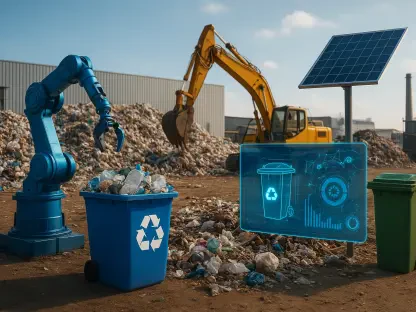
Italy is distinguishing itself through a whole-of-value-chain philosophy that prioritizes the entire lifecycle of raw materials over simple primary extraction. The national ambition is to lead Europe in mineral recycling, leveraging the country’s existing expertise in the circular economy to recover resources from industrial waste and end-of-life products. This approach aims to reduce environmental impact while simultaneously mitigating the risks associated with primary mining and global supply disruptions. Italian researchers are currently perfecting hydrometallurgical techniques that allow for the recovery of cobalt and lithium from discarded electric vehicle batteries at a fraction of the energy cost of traditional methods. By focusing on secondary resources, the industrial sector creates a closed-loop system that transforms yesterday’s waste into tomorrow’s high-tech components. This model treats mineral security as a multi-dimensional industrial challenge.
To support this industrial scaling, the administration is implementing new regulatory frameworks and financial incentives through the latest budget laws. These measures are specifically aimed at streamlining the permitting process for recycling facilities, which has historically been a significant bottleneck for domestic growth. By providing clear pathways for project approval, the government encourages private capital to enter the recycling sector, which is essential for meeting the European Union’s requirements for 2026 and beyond. These financial tools are coupled with specialized grants for small and medium enterprises that develop innovative sorting technologies. The goal is to cultivate a sustainable and resilient supply of materials that does not depend on the whims of distant mining conglomerates. This shift toward self-sufficiency through innovation ensures that the manufacturing base remains competitive even as global prices for raw lithium fluctuate wildly.
National Autonomy: Balancing Energy Security
Policymakers are increasingly wary of trading one form of dependency for another as the world moves away from a historical reliance on oil and gas. There is a significant concern that the transition to renewable energy could lead to a new, more rigid reliance on a few geographical regions for the minerals needed for batteries and wind turbines. To counter this, Italy is advocating for energy multiplicity, a strategy that relies on a diverse array of sources and technologies to maintain national autonomy. This involves not only securing minerals like copper and nickel but also investing in alternative battery chemistries that use more abundant materials like sodium. By diversifying the types of materials used in the energy grid, Italy reduces the leverage that any single supplier can exert. This strategic flexibility is seen as essential for maintaining national sovereignty during a period of intense global geopolitical realignment and competition.
By diversifying both the types of materials used and the countries they are sourced from, the nation aims to prevent adversarial actors from using mineral supplies as geopolitical leverage. This focus on resilience ensures that the country’s energy transition remains secure and stable throughout the next decade. The goal is to build a mineral supply chain that is as robust as the traditional energy infrastructures of the past, protecting the Italian economy from sudden bottlenecks in the global flow of rare earth oxides. To achieve this, the government has increased its coordination with the European Commission to ensure that national stockpiling efforts are synchronized with the broader Union’s defense and energy goals. This collaborative approach minimizes the risk of internal competition within Europe, ensuring that all member states benefit from Italy’s logistical and processing capabilities while maintaining a unified front against external economic coercion.
Future Outlook: Synthesizing Innovation and Policy
The Italian government successfully initiated a series of international partnerships that redefined the nation’s role on the global stage. Through the execution of the Mattei Plan, Rome expanded its engagement with nations in Africa and Latin America to foster mutually beneficial mining and processing projects. These agreements focused on local value addition, ensuring that partner countries benefited from technology transfers while Italy secured a steady stream of refined concentrates. On the domestic front, technical experts identified and began solving structural pressure points, such as the shortage of chemical engineers specialized in mineral processing. Educational institutions launched new curricula in 2026 to address these gaps, ensuring a steady pipeline of talent. These steps proved essential for maintaining the operational capacity of the new recycling centers and processing hubs that emerged as central pillars of the industrial economy.
To ensure long-term stability, policymakers integrated accurate demand projections into the national industrial strategy, allowing for more precise infrastructure investments. The successful deployment of sophisticated processing technologies permitted the industry to extract value from complex matrices that were previously considered economically unfeasible. By synthesizing domestic innovation with proactive diplomacy, the country established itself as a central pillar of the global green economy. Future considerations included the expansion of the Porto Marghera model to other coastal regions, creating a decentralized but highly connected network of mineral processing zones. These actions provided a clear blueprint for other European nations struggling with resource scarcity, demonstrating that a combination of logistics, technology, and strategic alliances could overcome traditional geographic limitations. The Italian model ultimately served as a stabilizer for the entire European manufacturing sector.