
The Section 48E investment tax credit allows public entities to modernize infrastructure by receiving direct cash payments from the U.S. Treasury for renewable installations. This federal provision serves as a catalyst for institutional and industrial energy management, moving projects from theoretical concepts to financially viable realities. Facilities ranging from rural healthcare centers to mid-sized manufacturing plants are increasingly abandoning the noise and emissions of traditional diesel generators in favor of sophisticated, multi-technology renewable systems. This transition is not merely about environmental stewardship but is fundamentally driven by the need for long-term resilience and fiscal responsibility. As energy costs fluctuate and grid reliability becomes a growing concern, the ability to offset massive capital expenditures through federal incentives has become the cornerstone of modern facility planning. The strategic application of these credits allows developers to re-envision power generation as a core financial asset.
Strategic Financial Foundations for Renewable Integration
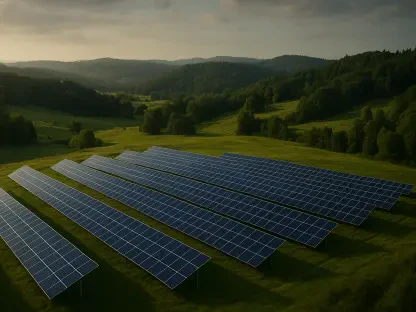
A recent sixty-five million dollar expansion of a rural hospital in Colorado serves as a quintessential example of this fiscal shift. Originally, the design specifications prioritized traditional full-building generators to ensure continuous power during emergencies. However, after a thorough analysis of federal incentives, the facility pivoted toward an integrated system featuring combined heat and power, geothermal energy, and solar arrays. This entire setup is tethered to a robust battery energy storage system, creating a microgrid that offers far greater autonomy than a standard fossil-fuel backup. In a project of this magnitude, nearly twenty percent of total development costs are typically tied to energy and HVAC infrastructure. By leveraging Section 48E, the hospital expects to recoup millions, effectively lowering the financial barrier that often prevents the adoption of advanced technology. This capital recovery ensures that high-tech systems remain competitive against less efficient alternatives.
Direct Pay and Market Transferability Mechanics
The current tax credit framework is uniquely accessible because it accommodates various organizational structures through direct pay and market transferability. Historically, such credits only benefited entities with high tax liabilities, leaving nonprofit hospitals and public schools without a clear path to federal support. Now, for organizations that do not pay federal income tax, the credit functions as a direct cash injection from the Treasury, empowering the public sector to modernize with the same financial agility as private industry. Conversely, for-profit companies can engage in credit transferability, selling their earned credits to third-party investors. In the current market, these credits trade at roughly eighty-five to ninety-three cents on the dollar, providing developers with immediate, tax-free liquidity. This liquidity can be immediately reinvested into operational upgrades, removing the need to wait years to realize the full value of the investment through traditional depreciation or tax offsets.
Operational Advantages of Battery Storage Technology
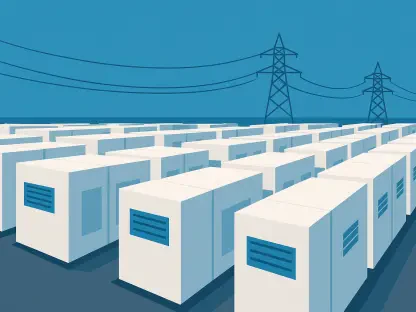
Beyond the initial recovery of capital, Section 48E credits incentivize the adoption of technologies that yield significant long-term operational savings. A primary strategy involves utilizing battery energy storage systems to manage electrical loads through peak shaving and load shifting. For instance, a manufacturing facility can draw electricity from the grid during nighttime hours when demand is low and utility rates are at their most affordable. This stored energy is then discharged during the day to power energy-intensive machinery, such as industrial kilns or heavy lathes, precisely when peak demand charges would otherwise be at their highest. This approach effectively bypasses the most expensive utility windows, drastically reducing the monthly energy footprint and increasing the facility’s overall market competitiveness. By smoothing out the demand profile of a building, these storage solutions provide a predictable cost structure that stabilizes budgets and protects against future rate hikes.
Technological Maturation and Infrastructure Safety
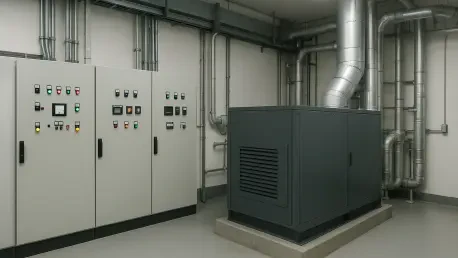
Technological advancements have further accelerated the adoption of these integrated systems, particularly as modern battery designs offer enhanced reliability and safety. Previous iterations of large-scale storage were often hindered by concerns regarding fire risks and relatively short operational lifespans. However, the current generation of storage technology has matured significantly, featuring advanced thermal management systems and chemistry that minimizes hazards. This maturation, paired with the financial security of federal credits, has positioned solar-plus-storage solutions as the preferred alternative to traditional combustion engines. Unlike diesel generators, which are notoriously loud and require constant fuel deliveries, renewable-battery systems provide a clean and quiet energy source with minimal maintenance requirements. For critical infrastructure like schools and municipal buildings, the shift represents a move toward a more stable power source that eliminates the logistical headaches and carbon emissions.
Regulatory Requirements and Domestic Content Strategy
Navigating the path to these credits requires a meticulous approach to regulatory compliance, particularly regarding domestic content requirements. To qualify for the most substantial tiers of the incentive, projects must verify that a specific percentage of their components are manufactured within the United States. While the industry continues to monitor updates regarding foreign-entity exclusions, many developers are moving forward by pricing these regulatory uncertainties into their financial models to avoid costly project delays. This proactive stance allows organizations to capitalize on existing incentives while simultaneously supporting the growth of a domestic energy supply chain. By prioritizing American-made hardware, facilities not only secure their tax benefits but also contribute to a more robust national infrastructure that is less susceptible to disruptions. This focus on domestic sourcing has encouraged manufacturers to expand local operations, creating a cycle of investment that benefits facility owners and the national economy.
Evolutionary Standards for Resilient Energy Systems
The integration of Section 48E tax credits represented a fundamental shift in how facility managers and developers approached the financing of energy projects. By transforming energy infrastructure from a simple expense into a strategic financial asset, these credits enabled facilities to achieve dual goals of operational resilience and fiscal responsibility. Moving forward, stakeholders should prioritize a comprehensive audit of their existing electrical architecture to identify areas where battery storage and renewable generation can replace aging fossil-fuel components. It was observed that early adopters who engaged with specialized energy consultants realized the highest returns by optimizing their system sizing to match both credit requirements and specific load profiles. Future facility planning must incorporate these federal incentives into the earliest stages of the design process to maximize liquidity through direct pay or transferability. This proactive approach ensures that critical infrastructure remains independent and cost-effective.